Sponsored Ad

Ad 1
Ad 2
Ad 3
Ad 4
Ad 5
Ad 6
24.8 C
Kenya
Saturday, April 4, 2026
Home Blog Page 775

Tanzania Opposition Rejects Samia Suluhu’s Landslide Win as ‘Fabricated’

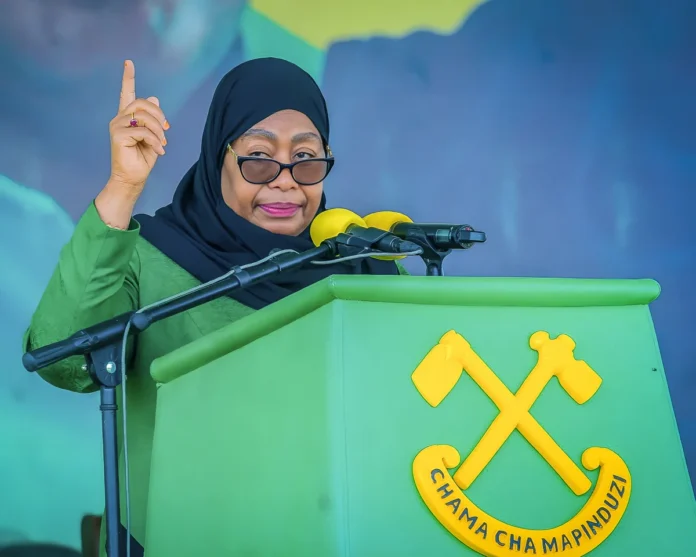
Tanzania’s main opposition party, CHADEMA, has rejected President Samia Suluhu Hassan’s landslide election victory, denouncing the results as “completely fabricated” and accusing the government of staging a sham vote marred by repression and exclusion.

The party, which was barred from participating after refusing to sign an electoral code of conduct, issued a blistering statement late on Saturday, saying the poll lacked credibility and legitimacy. Its leader, Tundu Lissu, has been in custody since April on treason charges.

“CHADEMA strongly rejects the so-called election results announced by the National Electoral Commission. These results have no basis in reality, as no genuine election took place in Tanzania,” the party said on X, adding that nationwide demonstrations reflected the public’s rejection of the process.

The government has yet to respond formally to CHADEMA’s statement.

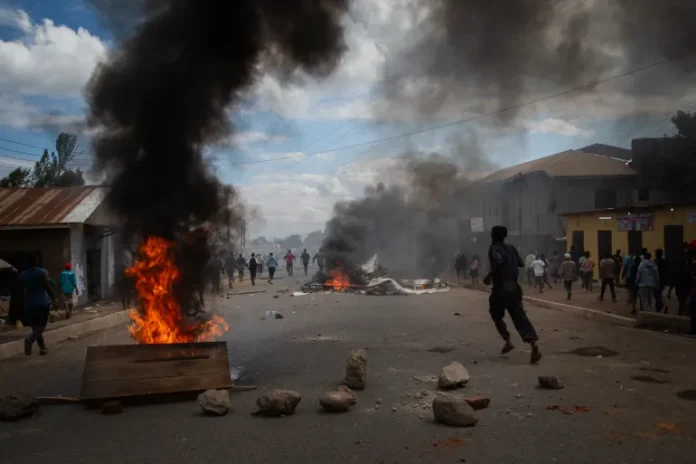
Protests erupted across several regions following Wednesday’s vote, with witnesses reporting violent confrontations between demonstrators and police. Crowds tore down posters of President Hassan, set government buildings ablaze, and clashed with security forces who responded with tear gas and live ammunition.

CHADEMA claimed on Friday that hundreds had been killed in the unrest, though the UN human rights office put the confirmed death toll at ten, spread across three cities. Reuters said it could not independently verify the figures. Human rights groups have also cited widespread arrests and abductions of opposition figures in the lead-up to the polls.

The government dismissed the opposition’s death toll as “hugely exaggerated” and defended its handling of the elections, insisting that order and security must be maintained.

Speaking from the capital, Dodoma, after being certified as the winner, President Hassan condemned the protests as “neither responsible nor patriotic.”

“When it comes to the security of Tanzania, there is no debate we must use all available security avenues to ensure the country remains safe,” she declared.

Authorities have since imposed a nationwide curfew and restricted internet access, with international flights cancelled and operations at the Port of Dar es Salaam severely disrupted.

The unrest has left Tanzania facing its gravest political crisis in years — and questions over whether its democratic institutions can still command public trust.

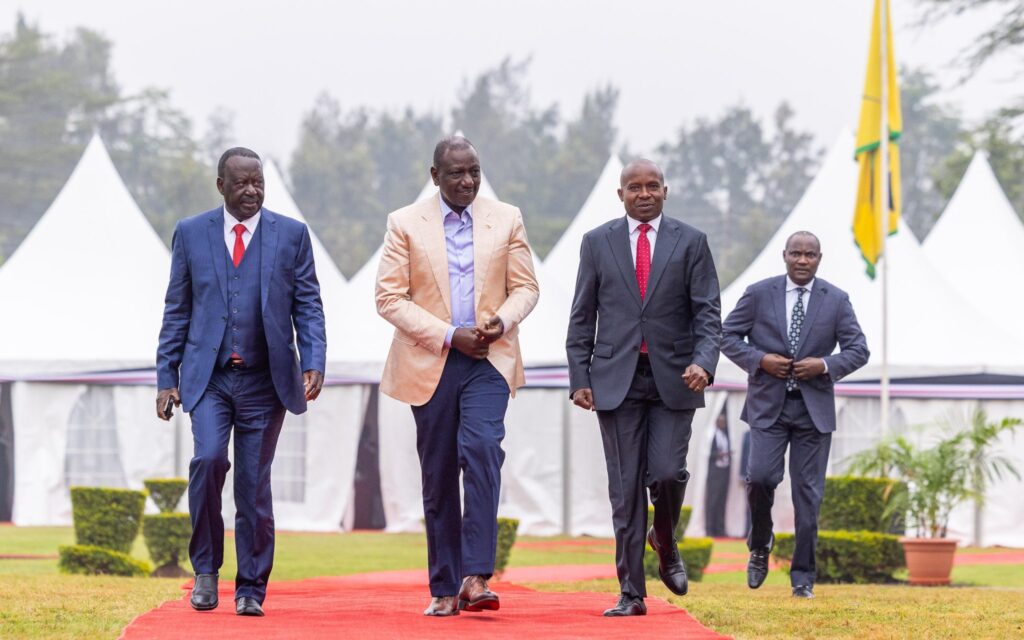
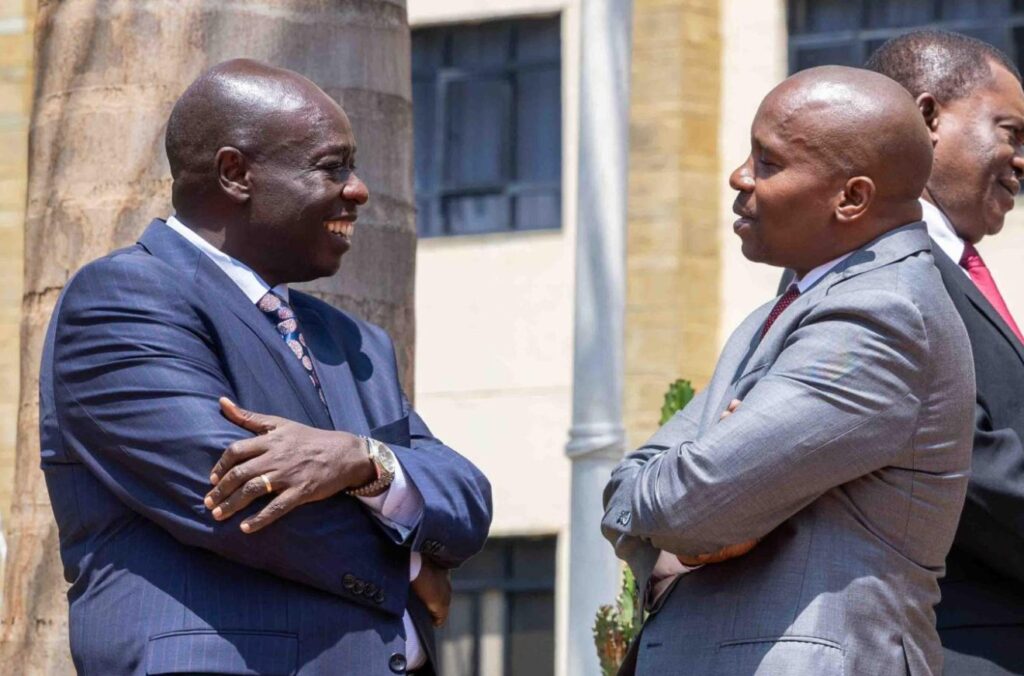
Kithure Kindiki: The Smooth Operator Marks One Year As DP

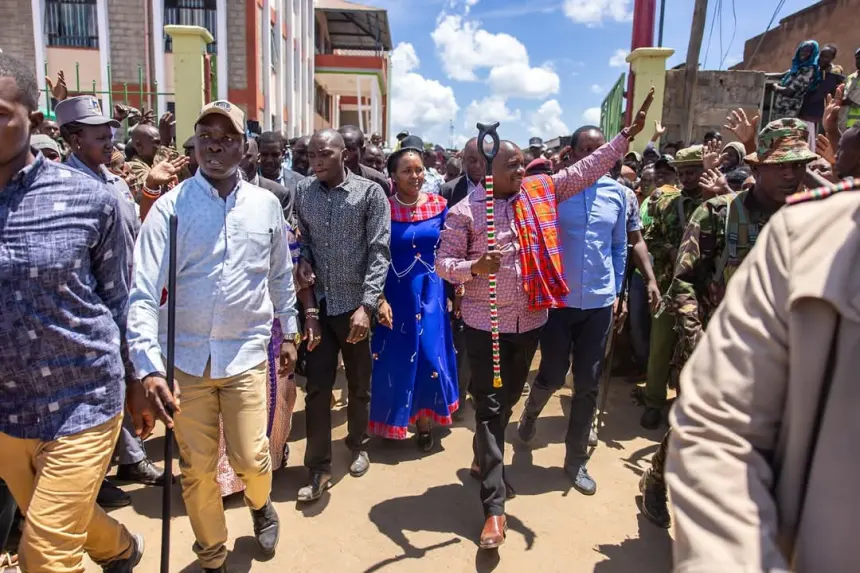
Ni fire si fire? Ni noma si noma? Ni mbwekse si mbwekse? Deputy President Kithure Kindiki roared before a charged crowd in Kasipul, his voice cutting through the air as thousands erupted in cheers, flashing his now-signature two-finger salute to the sky.

It was an unlikely sight, the once reserved law professor, long known for his measured tone and legal precision, now fully immersed in the raw rhythm of street politics. Few Kenyans would have imagined the professor trading his composure for campaign swagger, but Kindiki has mastered the shift with surprising ease.

A year into his tenure as Kenya’s Deputy President, Professor Kithure Kindiki has managed what few in his position have achieved, relevance without noise.

Once passed over as William Ruto’s running mate in 2022, Kindiki’s steady ascent to the second most powerful office came full circle after the impeachment of Rigathi Gachagua.

His promotion from Interior Cabinet Secretary to Deputy President marked a calculated transition from enforcer to statesman.

At the Interior Ministry, Kindiki earned a reputation for discipline and precision, launching decisive security operations in the North Rift and curbing terrorism threats.

Supporters hailed him as tough and methodical; critics called him heavy-handed. The memory of that no-nonsense administrator still defines his public image, even as he now seeks to project calm authority at the heart of government.

President Ruto has described Kindiki as the “perfect deputy”. Loyal, composed, and supportive. The label has stuck, though not always as a compliment.

Detractors accuse him of being a “Mr Yes Sir,” too compliant to challenge his boss even when policy missteps glare. In the fractious world of Kenyan politics, where deputies often morph into rivals, Kindiki’s restraint may be his greatest political skill.

In his first year, he has focused on youth and women empowerment programmes under initiatives such as the National Youth Opportunities Towards Advancement (NYOTA) and Kenya Jobs Economic Transformation.

Critics deride these as political theatre; Kindiki insists they’re lifelines for grassroots enterprise.

“Anyone opposed to it is a selfish man who doesnt doesn’t understand how KSh 10,000 can transform a hustle,” he said in Meru.

He has also proven a loyal defender of the Ruto administration, publicly rebuking opposition leaders, including his predecessor Gachagua, for what he terms divisive politics.

After being accused of lacking any political clout, Kindiki went to work. He has upped his slogan games, and has been on the forefront in ensuring President Ruto’s bid for a second term has the support of the majority women and youth.

His legal intellect gives his rebuttals an academic sharpness, as seen when he countered former President Uhuru Kenyatta’s criticism of Kenya Kwanza’s social health reforms.

Still, his political challenge remains. The Deputy President’s office has faced scrutiny over budget allocations, and his understated style has been read by some as political invisibility. Yet Kindiki’s quiet pragmatism stands in contrast to the bluster of his predecessor, a stability Ruto appears to prize.

Whether this loyalty cements his legacy or confines him to the shadow of power depends on how long he can balance intellect with independence in Kenya’s restless political theatre.

Kenya Bans Milk Powder Imports to Protect Local Farmers

The government has imposed an immediate ban on the importation of milk powder from neighboring countries in an effort to protect local dairy farmers from what it describes as unfair market competition.

Agriculture Cabinet Secretary Mutahi Kagwe, speaking in Naivasha, said the decision follows a notable rise in local milk production, which now places Kenya as Africa’s second-largest dairy producer after Egypt.

Kagwe explained that the influx of imported milk powder had destabilised local prices, undermining the profitability of small-scale farmers.

“We want to warn those illegally importing milk powder into the country that we know what they’re doing, and they must stop,” Kagwe said. “Everything consumed by human beings must be vetted and verified. That’s why we also banned the street hawking of milk, because it had become a public health concern.”

The CS said the ministry had received reports of consumers, particularly children, falling ill after consuming unregulated milk sold in informal markets. “We started getting complaints from mothers about children suffering from diarrhoea. The milk industry has to be properly regulated, and the regulations have already been published,” he said.

Kagwe added that the government is inviting stakeholders in the dairy sector to participate in consultations on the new regulatory framework to strengthen consumer safety and industry standards.

The move has sparked mixed reactions—farmers have praised the ban as long overdue protection against cheap imports, while traders warn that it could temporarily affect milk prices and supply. The ministry insists the suspension is a short-term measure meant to stabilise the domestic market and ensure food safety.

Arsenal Go Seven Points Clear but Injury Concerns for Gyökeres and Zubimendi

Gyökeres did not return for the second half, before Zubimendi limped off with around 15 minutes remaining.

Arsenal moved seven points clear at the top of the Premier League with a 2–0 victory over Burnley at the Emirates Stadium, but the win was tempered by injuries to Viktor Gyökeres and Martín Zubimendi.

Gyökeres opened the scoring in the first half before Declan Rice doubled the lead, capping a dominant display that saw the Gunners create several clear chances from open play. The Swedish striker, however, did not return after half-time, while Zubimendi limped off late in the second half.

“Before that, I think it was one of the best games he’s played,” Mikel Arteta said of Gyökeres. “He was exceptional — his high press, movement, link-up play, everything. He felt a niggle and we had to take him off, so we’ll have to wait and see.”

Arteta confirmed that both players suffered muscular problems, with medical assessments expected in the coming days. “He [Zubimendi] asked to be subbed, so we’ll have to wait. Muscular, yes,” the manager said.

Despite the injuries, Arteta was full of praise for his team’s first-half performance. “I think the first half was one of the best we’ve played — two goals, two or three more big chances, and nothing conceded. That was the platform.”

Although Arsenal’s intensity dropped after the break, their defence held firm to secure a fourth straight win. Bournemouth host Manchester City on Sunday, where Pep Guardiola’s side will attempt to close the gap.

Mbappé Double Fires Real Madrid past Valencia to Extend La Liga Lead

Kylian Mbappé scored twice as Real Madrid cruised to a 4–0 victory over Valencia at the Santiago Bernabéu, stretching their lead at the top of La Liga to seven points.

The French forward opened the scoring from the penalty spot in the 19th minute after Cesar Tarrega handled Franco Mastantuono’s corner. Mbappé doubled the advantage 12 minutes later, volleying in from Arda Guler’s cross after a clever pass from Jude Bellingham.

Vinicius Jr missed a chance to add a third before half-time when his penalty, hit straight down the middle, was saved by Valencia goalkeeper Julen Agirrezabala. But Bellingham made amends moments later with a sublime curling finish from the edge of the box.

Alvaro Carreras rounded off the win with a spectacular strike into the top corner eight minutes from time, capping Real’s fourth consecutive league victory and their tenth in eleven matches.

Much of the pre-match focus had centred on Vinicius after his angry reaction to being substituted during last week’s El Clasico, but the Brazilian winger kept his composure throughout as Real dominated from the outset.

The result piles pressure on the chasing pack, with Villarreal sitting second after a 4–0 win over Rayo Vallecano earlier in the day. Barcelona, currently third, can close the gap to five points if they defeat Elche on Sunday.

For Real, the victory further underlines their title credentials, with Mbappé, Bellingham and Vinicius continuing to form one of Europe’s most formidable attacking trios.

Adventist Leaders Deploy Resources Across Caribbean after Hurricane Melissa

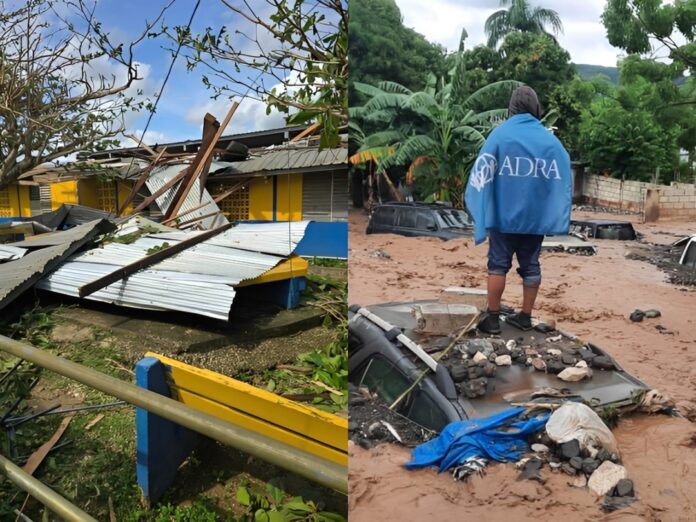
Seventh-day Adventist leaders across Jamaica, Cuba, Haiti, and the Dominican Republic are assessing damage and locating members after Hurricane Melissa battered the Caribbean from October 27 to 30, leaving at least 34 people dead.

The storm uprooted trees, toppled power lines, and destroyed homes and churches across the region.

In Jamaica, hundreds of Adventist members “lost everything,” according to Pastor Everett Brown, president of the Jamaica Union. He confirmed damage to Northern Caribbean University in Mandeville and said many members lost roofs, farms, and livelihoods.

Pastor Glen Samuels of the West Jamaica Conference described the destruction in St. Elizabeth Parish as “colossal,” with up to 90 percent of buildings damaged and 100 of 246 Adventist churches destroyed or partly collapsed.

Despite impassable roads and flooding, church members from across the island have begun delivering food, lamps, and essential supplies. The Adventist Development and Relief Agency (ADRA) has distributed emergency kits to hundreds of families and plans to reach thousands more across Jamaica, Haiti, and the Dominican Republic.

In Cuba, church leaders reported catastrophic flooding and widespread damage in Santiago de Cuba and Holguín. Entire towns were submerged, though no Adventist fatalities have been confirmed. Pastor Aldo Pérez, president of the Cuban Union, said communication and electricity remain cut off in several provinces.

In Haiti, two churches and several schools were destroyed. Pastor Abner De los Santos, president of the Inter-American Division, said the Church’s regional offices had activated emergency response plans and would continue supporting affected communities.

Georgia Teenager Charged with Murdering Grandmother Inside Church

A 17-year-old boy in Georgia has been charged with murdering his grandmother inside a church in Monroe County, in what authorities have described as a “tragedy of the worst kind.”

Police said the victim, 73-year-old Ollie Hamilton, was found dead on Wednesday evening at Smith Chapel Holiness Church in Athens, Monroe County.

Officers responded to a 911 call around 5:45 p.m. and discovered her body in a hallway leading to the church kitchen, according to county coroner Alan Gurley.

Her grandson, 17-year-old Jadynn Hamilton, was later arrested and charged with first-degree murder after allegedly confessing to the killing. Sheriff Kevin Crook told reporters that as the investigation progressed, evidence began pointing toward the teenager, who had initially sought help after the attack.

“This is a tragedy of the worst kind,” Crook said. “You’ve got a beloved church member, family member and community member killed, and then you find out she was killed by another beloved family member.”

Crook added that the case should serve as a warning about unaddressed emotional and behavioural struggles among young people. “Try to learn from every tragedy,” he said. “Were there signs? Were there things we could have caught earlier? A lot of stuff happens among our youth that isn’t communicated.”

The sheriff’s office said the investigation remains ongoing. Jadynn Hamilton is being held on a $500,000 bond.

Comoros joins South Africa’s Genocide Case against Israel at International Court of Justice

The Comoros has formally declared its intention to join South Africa’s genocide case against Israel at the International Court of Justice (ICJ), the UN’s top judicial body announced on Friday.

According to a statement from the court, the Indian Ocean island nation filed its declaration of intervention on 29 October, citing Article 63 of the ICJ Statute, which allows states to join proceedings involving the interpretation of a convention to which they are parties.

South Africa lodged the case in December 2023, accusing Israel of committing acts of genocide during its military operations in Gaza. The case has since drawn support from several countries, including Spain, Ireland, Libya, Mexico, Belgium and Türkiye, all of which have filed similar interventions.

The ICJ has issued three provisional measures in the case, directing Israel to take all possible steps to prevent genocidal acts and to ensure the flow of humanitarian aid into the besieged enclave.

More than 68,000 people have been killed in Gaza since Israel began its assault in October 2023, according to local authorities. Despite a ceasefire agreement announced on 10 October 2025 under a 20-point peace plan brokered by US President Donald Trump, reports indicate that Israeli forces have repeatedly breached the truce.

Comoros, a small Muslim-majority nation in the Indian Ocean, has long expressed solidarity with the Palestinian cause and previously supported legal action against Israel over its blockade of Gaza.

Mass Stabbing on Doncaster–London Train Leaves Ten Injured

A knife attack on a London North Eastern Railway (LNER) train travelling from Doncaster to London on Saturday night has left ten people injured, nine of them in critical condition.

The incident occurred shortly after 19:30 GMT as the train passed through Cambridgeshire, prompting a major emergency response.

Police received distress calls from passengers reporting a man armed with a knife attacking travellers on board.

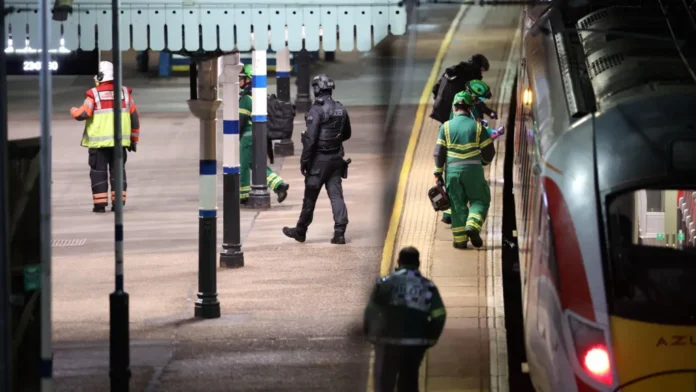
The train made an unscheduled stop at Huntingdon, about 15 minutes south of Peterborough, where armed officers stormed the carriages and arrested two suspects. Witnesses described scenes of chaos and panic as passengers fled through the aisles or barricaded themselves in toilets.

Emergency crews, including air ambulances, transported victims to Addenbrooke’s Hospital in Cambridge. British Transport Police declared a major incident and said counter-terrorism officers were assisting the investigation, though the motive remains unclear. At one stage, police invoked “Plato,” the national protocol for a suspected marauding terror attack, but later stood it down.

Passengers recounted the horror of the attack, with some attempting to stop the bleeding of victims using clothing. “People were screaming and running. I saw a man covered in blood trying to help a young girl,” one eyewitness said.

Prime Minister Sir Keir Starmer condemned the attack as “appalling” and expressed gratitude to emergency responders. Home Secretary Shabana Mahmood and Conservative leader Kemi Badenoch both urged the public to avoid speculation as the investigation continues.

Huntingdon Station and the surrounding area remain closed as forensic teams examine the scene. LNER has advised passengers to avoid travel on Sunday, with widespread cancellations across the East Coast Mainline and connecting services expected to persist into the week.

UK Warns Brits Against Travelling to Tanzania

The UK Foreign, Commonwealth and Development Office (FCDO) has advised against all but essential travel to Tanzania, citing widespread unrest, shortages, and communication disruptions following the national elections held on 29 October.

The advisory extends to staff at the British High Commission, who have also been instructed to avoid non-essential travel. The FCDO said the situation in Tanzania remains volatile, with reports of violent protests, curfews, and severe disruption to transport and essential supplies.

“Shortages of food, fuel and cash have been compounded by the lack of internet services,” the statement noted, warning of uncertainty around international transport options.

Tanzanian President Samia Suluhu Hassan has been declared the overwhelming winner of the country’s controversial presidential election, securing 97.66 percent of the vote after leading opposition figures were excluded from the race.

The results, announced by the national electoral commission on Saturday, confirmed Hassan’s dominance across all constituencies. State media reported that her swearing-in ceremony would take place later in the day.

The landslide victory came after a fraught week marked by violent protests, allegations of repression, and a heavy security crackdown. Demonstrations erupted across major cities as supporters of the opposition denounced what they described as a rigged process, following the barring of key rivals from contesting.

Travel has become increasingly difficult, with major roads blocked and several airports halting operations. International flights to and from Nyerere International Airport in Dar es Salaam have largely been cancelled, while Arusha and Kilimanjaro airports are only partially operational. Ferry services between Dar es Salaam and Zanzibar have been suspended, and the SGR rail line has been shut down.

The FCDO urged British nationals in Tanzania to limit movement, obey curfew regulations, monitor local media, and avoid all demonstrations. Mobile networks and social media remain heavily disrupted, making communication difficult.

For consular assistance, British nationals can contact the High Commission in Dar es Salaam at +255 22 229 0000 or reach the FCDO in London at +44 (0) 20 7008 5000.

The situation remains fluid, with authorities warning that further unrest is possible as election results continue to be contested.

Create a free account, or log in.

Gain access to read this content, plus limited free content.

Yes! I would like to receive new content and updates.

Sponsored Ad

Ad 1
Ad 2
Ad 3
Ad 4
Ad 5
Ad 6