Sponsored Ad

Ad 1
Ad 2
Ad 3
Ad 4
Ad 5
Ad 6
30.6 C
Kenya
Saturday, April 4, 2026
Home Blog Page 779

Trump nuclear testing order may boost Honeywell, BWX Technology and others

 (Reuters) – President Donald Trump’s order for the Defense Department to start testing nuclear weapons could lead to billions of dollars’ worth of contracts for a handful of specialized companies that dominate the United States’ nuclear weapons infrastructure.

The Trump announcement Wednesday night from South Korea ordered the Department of Defense to “immediately” start testing nuclear weapons, something the United States has not done since 1992.

The U.S. nuclear arsenal consists of land-launched nuclear missiles, nuclear missile-armed submarines and aircraft with nuclear bombs and missiles. It was unclear which portion of the arsenal Trump wanted to test.

COMPANIES IN LINE TO BENEFIT

An investment in nuclear weapons and testing could benefit Honeywell International (HON.O), opens new tab, BWX Technologies (BWXT.N), opens new tab, Chugach Alaska Corp, Jacobs Solutions, Inc. (J.N), opens new tab, Mele Associates, General Atomic Technologies Corporation and others due to their specialization in nuclear test site construction, operations, support and related engineering services, according to Govini, a defense software company.

BWXT works with nuclear materials, while Honeywell runs a key testing site, conducts tests and helps track the U.S. nuclear stockpile.

Mele helps manage parts of the nuclear stockpile while helping make sure nuclear material does not fall into the wrong hands.

“Restarting nuclear weapons testing is going to reverberate in a lot of ways, including by sending a shockwave of government funding to companies in test site construction and engineering support,” said Tara Murphy Dougherty, CEO of Govini.

Alongside a new testing program, the U.S. is modernizing its ground-launched intercontinental ballistic missile program, aimed at replacing the aging Minuteman III missiles.

Northrop Grumman (NOC.N), opens new tab was awarded a contract in 2020 to develop the Sentinel, with subcontractors including Lockheed Martin (LMT.N), opens new tab, General Dynamics (GD.N), opens new tab, Bechtel, Honeywell, Aerojet Rocketdyne (LHX.N), opens new tab, and Textron (TXT.N), opens new tab.

The program, which requires extensive testing while it is being built, represents one of the largest defense modernization efforts in decades.

The plan includes 634 new Sentinel missiles, plus an additional 25 missiles to support development and testing, being procured to replace the aging Minuteman III system deployed in 1970.

Canada’s Carney agrees to visit China after meeting Xi 

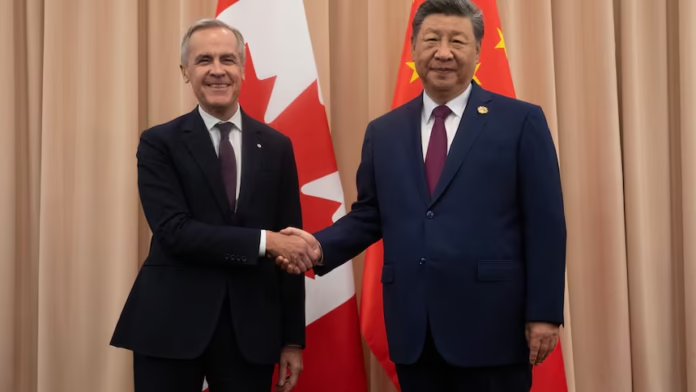
(Reuters) – Canada’s Prime Minister Mark Carney agreed to visit China after meeting with President Xi Jinping on Friday, in an encounter that may have marked a turning point but offered no breakthroughs on trade.

Xi and Carney met on the sidelines of the Asia-Pacific Economic Cooperation (APEC) forum in Gyeongju, South Korea, which was part of Carney’s tour of Asia aimed at deepening trade and security ties in the region as Canada strives to reduce its dependence on the U.S.

The last formal meeting between the leaders of Canada and China happened in 2017 when then-Prime Minister Justin Trudeau had a brief exchange with Xi at a meeting in San Francisco.

Canada remains embroiled in a trade dispute with the United States, its biggest trading partner.

China is Canada’s second-biggest trading partner, but recent disputes have complicated relations.

“The meeting signals a change in tone and an openness to relations at the highest levels, but this is not a return to strategic partnership,” said Vina Nadjibulla, vice president of the Asia Pacific Foundation of Canada. “Canada needs to proceed with caution because there’s nothing to suggest the Chinese Communist Party’s actions have changed since the prime minister named China as a foreign security threat.”

She said Carney should keep talking with Chinese leaders but stay mindful of China’s threats to Canada’s security interests, including its efforts to play a greater role in Arctic affairs.

Carney has previously stressed the need to restart broad engagement with China after years of worsening ties.

In recent years, Canadian citizens were detained and executed in China, and Canada’s security authorities concluded that China interfered in at least two federal elections.

Carney and Xi discussed trade issues including agriculture and agri-food products, such as canola, as well as seafood and electric vehicles, Carney’s office said.

“Prime Minister Carney accepted President Xi’s invitation to visit China at a mutually convenient time,” it said in a statement.

China announced preliminary anti-dumping duties on Canadian canola imports in August, a year after Canada said it would levy a 100% tariff on imports of Chinese electric vehicles.

XI SAYS CHINA IS WILLING TO WORK WITH CANADA

Xi told Carney that China values Canada’s stated readiness to improve bilateral relations, according to state broadcaster CCTV, adding that China was willing to work with Canada to put ties back on track.

Earlier on Friday, Carney told a business event that the world of rules-based liberalised trade and investment had passed, adding that Canada aimed to double its non-U.S. exports over the next decade.

Nadjibulla said China should not be viewed as the solution to Canada’s issues with the U.S., however.

“We should not diversify away from the U.S. and go deeper into China,” she said. “Canada’s overdependence on both the U.S. and China has been shown to be a vulnerability we cannot afford.”

Ukraine hands over suspected Russian war criminal to Lithuania

 (Reuters) – Ukraine has handed over a captured Russian soldier accused of torture and illegal detention to Lithuania for trial, in what Kyiv said was the first case of its kind involving the justice system of a third country during Russia’s nearly four-year-old war.

The soldier, described by Lithuania as a Russian marine, is suspected of working at a detention centre set up in Melitopol airport in 2022 in Russian-occupied southern Ukraine, where one of the victims was a Lithuanian citizen, Lithuanian General Prosecutor Nida Grunskiene told reporters in Vilnius on Friday.

The suspect was arrested on the frontline in Ukraine in 2023 and was handed over on Wednesday to Lithuania, where he was detained by a court for three months and charged with war crimes against civilians and prisoners of war, including their torture and illegal imprisonment, Grunskiene said.

Neither the Kremlin nor the Russian diplomatic mission in Vilnius responded immediately to a request for comment. Russia has previously denied using torture or other forms of maltreatment against detainees.

Ukraine’s Prosecutor General Ruslan Kravchenko said the transfer of the Russian soldier created an important historical precedent for international justice.

“For the first time since the start of (Russia’s) full-scale aggression, Ukraine has transferred a Russian serviceman to a foreign state – Lithuania – for real criminal prosecution for war crimes,” he said on the Telegram messaging app.

LITHUANIA DETAILS ALLEGED TORTURE OF POWS, CIVILIANS

Grunskiene said the marine was suspected, along with other Russian soldiers, not only of guarding illegally detained civilians and POWs but also of beating and torturing them.

The torture included imprisoning the victims in a metal safe, suffocating them until they lost consciousness, dousing them with icy water in cold weather and administering electric shocks, said Grunskiene.

Lithuanian and Ukrainian prosecutors said they had worked together to establish the identity of the detained soldier and some other servicemen at the camp.

The Lithuanian citizen believed to have been tortured by the defendant was a civilian and had not taken part in the war, said Kravchenko.

Kyiv has accused Russia of committing more than 180,000 war crimes during its invasion of Ukraine.

The vast majority of war crimes cases against Russia are being investigated by Ukraine and tried locally, but the International Criminal Court in the Hague, which Ukraine officially joined this year, has also conducted investigations into high-profile cases.

Grunskiene said Lithuania, a NATO and EU member state, was currently working to determine and sentence those guilty of atrocities against other Lithuanian citizens in Ukraine, including film director Mantas Kvedaravicius, killed in Mariupol in March 2022.

Last month, the U.N. human rights monitoring mission in Ukraine published a report accusing Russia of systematically torturing Ukrainian civilians in over 100 detention centres in occupied Ukraine and Russia since the start of the war.

Russia declined to comment on the report.

Angola diamond production totals 10.7 million carats in January-September

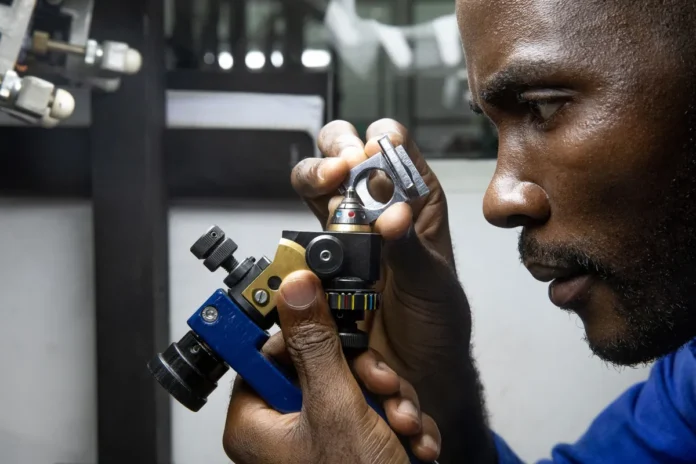
(Reuters) – Angola’s rough diamond production reached 10.7 million carats in the nine months to September, a government official said on Friday, as the country targets another record haul this year.

The southwest African country produced a record 14 million carats of rough diamonds in 2024, making it the third largest producer by output, behind Russia and Botswana. It targets 14.8 million carats this year.

Secretary of state for mineral resources Janio Correa Victor said output was 23.2% higher at the half-year mark but did not provide comparative figures for the first nine months of 2024.

The higher output was driven by operational stability at the Catoca Mining Company and the Luele Mining Company, Victor told a diamond industry event.

The two companies are jointly owned by Angola’s state-owned diamond company Endiama and Taadeen Investment LLC, a subsidiary of Oman’s sovereign wealth fund.

The Omani firm replaced Russian miner Alrosa as Angola’s partner in state-owned diamond projects in 2024, after Alrosa was hit by sanctions following Moscow’s invasion of Ukraine two years earlier.

Victor said the value of Angola’s rough diamond exports had fallen 14% during the nine months, despite doubling export volumes, due to the collapse in prices for the precious stones.

This was due to competition from synthetic diamonds, combined with global economic uncertainties, trade tariffs imposed by the United States, and the stagnation of the Chinese market since the COVID-19 pandemic, he said.

Angola, sub-Saharan Africa’s second biggest oil producer after Nigeria, has expanded its diamond output since the end of a civil war in 2002. Before that, the country was considered one of the three primary sources of conflict diamonds, alongside the Democratic Republic of Congo and Sierra Leone.

Angola has bid for a majority stake in De Beers, put up for sale by restructuring parent company Anglo American (AAL.L), opens new tab, potentially setting up a standoff with Botswana, which also seeks to control the giant diamond miner.

Tanzania opposition says hundreds killed in post-election protests

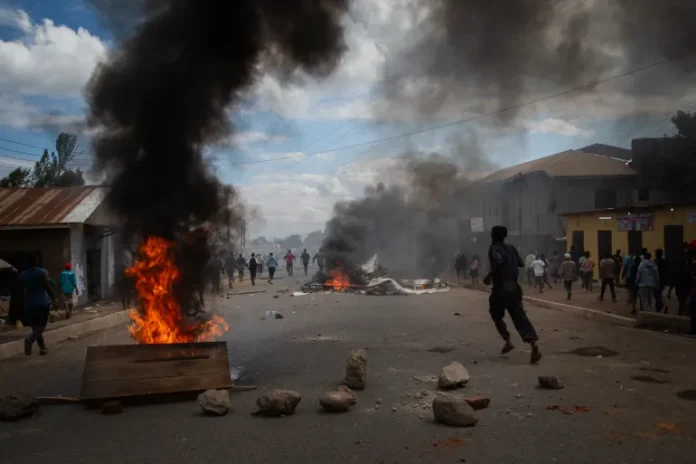
(Reuters) – Tanzania’s main opposition party said on Friday hundreds of people had been killed in protests over elections across the country this week, as the government said it was restoring order after “isolated incidents”.

The United Nations said credible reports indicated at least 10 people were killed in protests in three cities, the first public estimate of any fatalities by an international body since Wednesday’s vote.

The government has not released any estimates on casualties or responded to requests for comment. Reuters could not independently verify the figures.

Protesters have taken to the streets since Wednesday, angered by the exclusion of President Samia Suluhu Hassan’s two biggest challengers from the race and what they described as widespread repression.

Witnesses have said police fired tear gas and gunshots to break up some demonstrations.

Police have imposed an overnight curfew in the commercial capital Dar es Salaam over the past two nights after government offices and other buildings were set ablaze. Internet access has been disrupted since Wednesday.

HEAVY SECURITY PRESENCE

Military and police patrolled the streets of Dar es Salaam on Friday, preventing people from moving around without a valid reason. The government extended a work-from-home order to civil servants.

John Kitoka – a spokesperson for the CHADEMA party which was barred from the election for refusing to sign a code of conduct and had its leader arrested for treason in April – said the party had documented about 700 deaths since Wednesday based on accounts from health workers.

He said protests continued on Friday in several cities, although they had waned in some due to the heavy security deployment.

“We are calling for the protests to continue until our demands for electoral reforms are made,” he told Reuters.

The unrest presents a test for Hassan, who won praise after taking office in 2021 for easing repression but has more recently faced criticism from opposition parties and activists after a series of arrests and alleged abductions of opponents.

Hassan has denied allegations of widespread rights abuses. She said last year she had ordered an investigation into reports of abductions, but no official findings have been released.

The electoral commission began announcing provisional election results on Thursday, which showed Hassan winning commanding majorities in a number of constituencies.

GOVERNMENT: ‘NORMALCY WILL RETURN’

Her government issued its first comments directly addressing the unrest on Friday in a message from the foreign affairs ministry to diplomatic missions broadcast on state television.

The message said that, “owing to isolated incidents of breaching to law and order, the Government has heightened security and taken several other precautionary measures.

“The security measures in place are temporary but necessary and normalcy will return shortly,” it added.

In Geneva, U.N. human rights spokesperson Seif Magango told reporters there were credible reports of at least 10 people killed in Dar es Salaam, Shinyanga and Morogoro.

He called on security forces “to refrain from using unnecessary or disproportionate force,” and urged protesters to be peaceful.

One Dar es Salaam resident, who asked not to be named for safety reasons, told Reuters a family member had been shot dead outside a hospital when he was mistaken for a protester.

A police spokesperson did not respond to requests for comment.

In a statement on Thursday, the chair of the European Parliament’s committee on foreign affairs and two colleagues called the elections a “fraud”, saying they “unfolded in an atmosphere of repression, intimidation, and fear”.

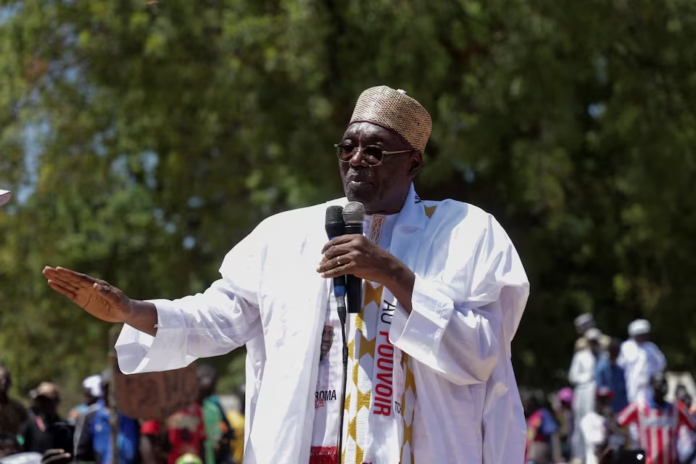
Cameroon opposition leader Tchiroma says loyal soldiers escorted him to safety

(Reuters) – Cameroon opposition leader Issa Tchiroma Bakary said on Friday he had been escorted to a secure location by soldiers loyal to him for his protection, a move that could signal a split within the army following a disputed election.

Tchiroma had been holed up in his house in the northern city of Garoua since a presidential election on October 12 in which he claimed victory.

Although he did not give the number of soldiers, his assertion that members of the army are loyal to him could indicate a split within the country’s security forces.

“I thank the loyalist army, which has shown its patriotism by escorting me to a safe location and is currently ensuring my protection,” Tchiroma said in a message on his Facebook page.

A spokesperson for the central African nation’s defence ministry declined comment to Reuters.

Cameroon’s Constitutional Council on Monday declared President Paul Biya, the world’s oldest ruler at 92, as the winner of the election, leading to violent protests in several cities of the oil- and cocoa-producing nation.

The disputed election has escalated tensions in the country, with security forces accused of killing at least 23 protesters and detaining over 500, according to a civil society group.

In a separate message on Facebook on Friday, Tchiroma called for a three-day national lockdown from Monday urging supporters to suspend activities and remain at home to show disagreement with the election results.

“Let the entire country come to a standstill, so that the whole world knows that we are resisting and that we will not yield,” Tchiroma said in a video.

“Let us keep our shops closed, suspend our activities, remain at home, in silence, to demonstrate our solidarity and to remind this regime that the strength of an economy is its people.”

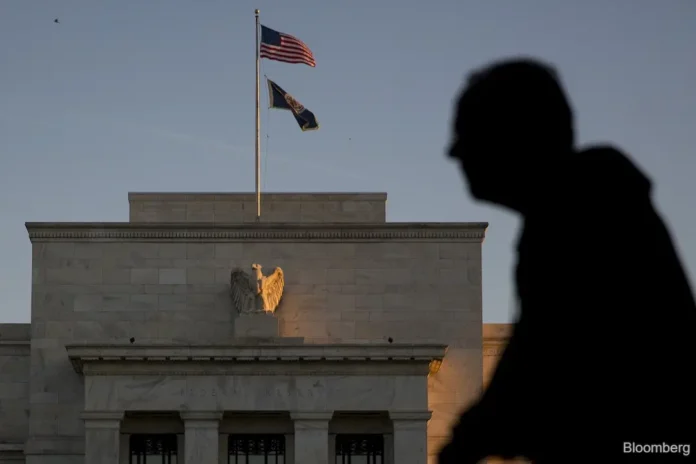
Fed hawks blast rate cut, say US inflation is too high

(Reuters) – Two regional Federal Reserve bank presidents on Friday aired their disagreement with the U.S. central bank’s decision to cut interest rates this week, saying the labor market doesn’t need the support and inflation is too high to warrant such a move.

The strikingly frank remarks – from Dallas Fed President Lorie Logan and Kansas City Fed President Jeffrey Schmid – underscore discomfort within the central bank over the direction of policy and suggest a rising bar for another rate cut at its December 9-10 meeting, unless something changes dramatically in the economy.

“I did not see a need to cut rates this week,” Logan told a Dallas Fed banking conference. “And I’d find it difficult to cut rates again in December unless there is clear evidence that inflation will fall faster than expected or that the labor market will cool more rapidly.”

It’s quite rare for a Fed policymaker to say so clearly and so far in advance of a rate-setting meeting what their rate-path preferences are.

On Wednesday, after the central bank’s policy-setting committee voted 10-2 to lower its benchmark interest rate to the 3.75%-4.00% range, Fed Chair Jerome Powell delivered his own unusually clear warning to markets: a December rate cut, he said, was “not a foregone conclusion, far from it.”

Logan’s remarks on Friday help show why.

“The risks to the labor market do lie mainly to the downside,” Logan said, nodding to the reason that Powell gave for this week’s rate cut. She added that she has a close eye on recent layoff announcements and noted that a sudden drop in the stock market and a longer-than-expected government shutdown could pose risks to spending and economic activity.

But “the remaining risks to employment are ones we can monitor closely and respond to if they are becoming more likely to materialize, not ones that currently warrant further preemptive action,” Logan said.

She added that inflation is too high and too slow to return to the Fed’s 2% target.

Logan is not a policy-voting member this year.

FINANCIAL MARKETS STILL EXPECT RATE CUT IN DECEMBER

Schmid, who does have a vote on the policy-setting committee this year and dissented on this week’s move, explained on Friday in a written release that he, like Logan, feels the labor market is largely in balance.

Any weakness, he said, is “more likely than not” due to structural changes in technology and demographics rather than slowing underlying demand.

Judging from healthy consumer spending and business investment, the economy still has momentum, he said.

“I do not think a 25-basis-point reduction in the policy rate will do much to address stress in the labor market,” Schmid said.

A cut, however, “could have a longer-lasting effect on inflation if the Fed’s commitment to its 2% inflation target comes into question,” he said.

Fed Governor Stephen Miran also dissented this week, but in favor of a larger half-percentage-point cut.

Financial markets pared expectations on a rate cut in December after Powell signaled it could be in doubt, but are still betting two-to-one the central bank will cut rates by a quarter of a percentage point at its final meeting of the year.

Even with the U.S. government shutdown and the lack of official economic data creating uncertainty about current conditions – one reason Powell gave for a possible pause in December – Logan said she feels she has visibility into the state of the economy.

Lifelong monarchist says Britain’s king had a duty to punish Andrew

(Reuters) – For lifelong monarchist Anita Atkinson, who owns one of the world’s largest collections of British royal memorabilia, King Charles’s decision to strip his younger brother Andrew of all his titles was nothing more than a monarch’s duty.

“When you are born into the royal family, duty must come first,” the 68-year-old said.

Charles’s mother, the late Queen Elizabeth, had always protected the institution “at all costs”, and her oldest son’s actions showed he was following in her footsteps, Atkinson added.

Andrew, 65, has come under mounting pressure in recent years over his behaviour and his ties to the late sex offender Jeffrey Epstein.

The king stripped his brother of the title prince on Thursday and forced him to surrender the lease of his Royal Lodge mansion on the Windsor Estate, west of London. Andrew, who has denied wrongdoing, will move to accommodation on the Sandringham estate in eastern England.

Atkinson, who lives on a farm near the northeastern English city of Durham, developed a fascination with royal history at a young age.

She said she had been “shocked and surprised” by the king’s move, but added: “I don’t disagree with it.”

“This is absolutely monumental in the history of the monarchy,” she told Reuters in a video call, seated in front of the cabinet where her mother once kept her own collection of royal-themed mugs.

Atkinson has now amassed more than 16,000 pieces of royal memorabilia, some dating back to the 17th century, and runs a museum on her farm to showcase the collection.

Andrew’s continued association with Epstein had been “unforgivable”, but she had no time for the arguments of campaigners who say the case provides yet another reason for abolishing the monarchy.

“I am a monarchist, and I will remain a fervent monarchist,” she said, “because there is no better form of government.”

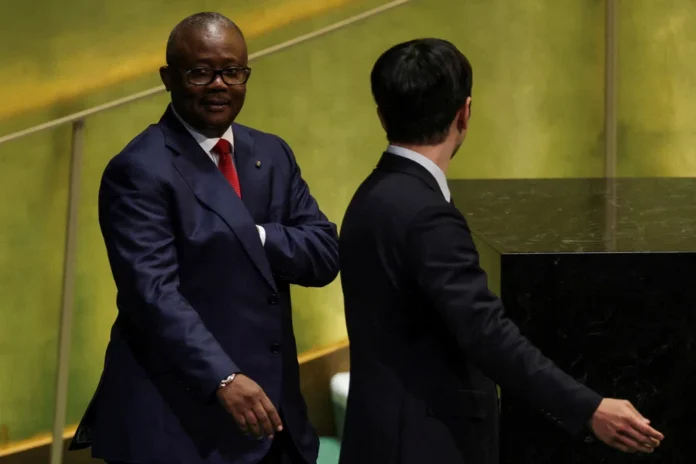
Senior officers arrested in Guinea-Bissau for alleged coup attempt

(Reuters) – A group of senior officers of Guinea-Bissau’s army have been arrested on accusations of attempting a coup, deputy chief of staff of the armed forces Mamadou Kourouma said on Friday.

Coups and unrest have been common in the West African country since independence from Portugal in 1974.

General Dahaba Na Walna, Commanders Domingos Nhanke and Mario Midana were among senior officers of the armed forces arrested on Thursday in their homes in the capital Bissau, Kourouma said.

He didn’t provide all the names of arrested officers. Reuters was unable to reach the officers or representative for comment about the allegation.

“This is indeed a new attempt to subvert the constitutional order, on the eve of the start of the election campaign for the legislative and presidential elections on November 23,” Kourouma told a press conference.

According to President Umaro Sissoco Embalo, there have been two attempts to overthrow him during his presidency, the latest in December 202.

Embalo has been at odds with the political opposition, which says his current five-year term ran out at the end of February, while the Supreme Court of Justice has ruled that it ends on September 4.

In March, Embalo said he would run for a second term in November, backtracking on earlier vows to step down.

Men shot by the hundreds, disappeared after Sudanese city falls to paramilitaries, witnesses say

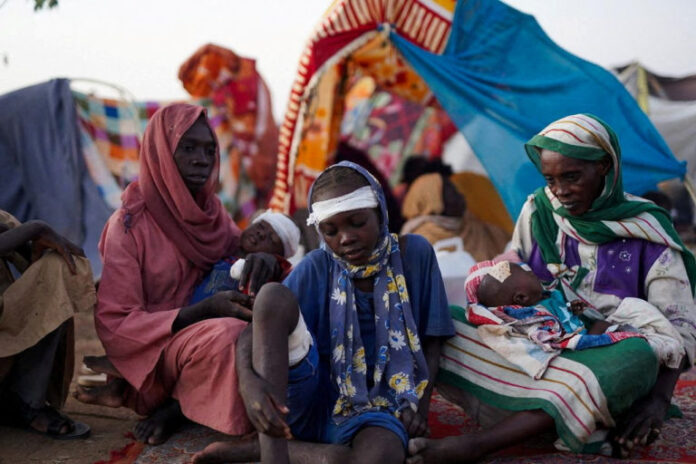
The grandmother of Ikram Abdelhameed looks on next to her family while sitting at a camp for displaced people who fled from al-Fashir to Tawila, North Darfur, Sudan, October 27, 2025. REUTERS/Mohammed Jamal

(Reuters) – Fighters riding camels rounded up a couple of hundred men near the Sudanese city of al-Fashir at the weekend and brought them to a reservoir, shouting racial slurs before starting to shoot, according to a man who said he was among them.

One of the captors recognized him from his school days and let him flee, the man, Alkheir Ismail, said in a video interview conducted by a local journalist known to Reuters in the nearby town of Tawila in the country’s western Darfur region.

“He told them, ‘Don’t kill him,'” Ismail said. “Even after they killed everyone else – my friends and everyone else.”

He said he had been bringing food to relatives still in the city when it was captured by the Rapid Support Forces on Sunday – and, like the other detainees, was unarmed. Reuters could not immediately verify his account due to the conflict but has verified earlier material obtained from the journalist.

Ismail was one of four such witnesses and six aid workers interviewed by Reuters who also said people fleeing al-Fashir had been gathered in nearby villages and men separated from women and removed. In an earlier account, one of the witnesses said gunshots then rang out.

Activists and analysts have long warned of revenge killings based on ethnicity by the paramilitary Rapid Support Forces (RSF) if they seized al-Fashir – the last stronghold of the Sudanese military in Darfur.

The U.N. human rights office shared other accounts on Friday, estimating hundreds of civilians and unarmed fighters may have been executed. Such killings are considered war crimes.

The RSF, whose victory in al-Fashir marks a milestone in Sudan’s two-and-a-half-year civil war, has denied such abuses – saying the accounts have been manufactured by its enemies and making counter-accusations against them.

RSF SAYS MEN REMOVED FOR INTERROGATION

Reuters has verified at least three videos posted on social media showing men in RSF uniforms shooting unarmed captives and a dozen more showing clusters of bodies after apparent shootings.

A high-level RSF commander called the accounts “media exaggeration” by the army and its allied fighters “to cover up for their defeat and loss of al-Fashir.”

The RSF’s leadership had ordered investigations into any violations by RSF individuals and several had been arrested, he said, adding that the RSF had helped people leave the city and called on aid organisations to assist those who remained.

He said soldiers and fighters pretending to be civilians had been taken away for interrogation. “There were no killings as has been claimed,” the commander told Reuters in response to a request for comment.

The RSF’s capture of al-Fashir entrenches the geographical division of a country already reduced by the independence of South Sudan in 2011 after decades of civil war.

In a speech on Wednesday night, RSF head Mohamed Hamdan Dagalo called on his fighters to protect civilians and said violations will be prosecuted. He appeared to acknowledge reports of detentions by ordering the release of detainees.

Most of the fighters holding back the RSF advance in al-Fashir came from the Zaghawa ethnic group whose enmity with the largely Arab RSF fighters dates from the early 2000s, when, as the Janjaweed militias, they were accused of atrocities in Darfur.

Alex de Waal, a genocide expert and specialist on Darfur, said the reported RSF acts in al-Fashir looked “very similar to what they did in Geneina and elsewhere,” referring to another Darfur city the RSF took during the latest war’s early stages as well as the early 2000s conflict.

The U.S. said the RSF had committed genocide in Geneina and the attack is under investigation by the International Criminal Court. The Sudanese army and others accuse the United Arab Emirates of supporting the RSF, charges the Gulf state denies.

‘WE CAN’T SAY THEY ARE ALIVE’

Mary Brace, a protection adviser at Nonviolent Peaceforce, an NGO working in Tawila, said those arriving “are women, children, and older men generally,” adding that trucks organised by the RSF have taken some people from Garney to Tawila while others have been taken elsewhere.

The RSF on Thursday posted a video it said showed the provision of food and medical aid to people displaced in Garney. Aid workers said the force may also be trying to keep people in towns it controls to attract foreign aid.

Some 260,000 people were still in al-Fashir around the time of the attack, but only 62,000 have been counted elsewhere, and only several thousand of them in Tawila, which is controlled by a neutral force.

In another of the testimonies obtained and verified by Reuters, Tahani Hassan, a former hospital cleaner, said she fled to Tawila early on Sunday after her brother-in-law and uncle were killed by stray bullets.

On the way, she and her family were apprehended by three men in RSF uniforms who searched them, beat them and insulted them, she said.

“They hit us hard. They threw our clothes on the ground. Even I, as a woman, was searched,” she said, adding that their food and water was also spilled on the ground.

They eventually made it to Garney where the fighters separated women and children from the men, most of whom they did not see again, including her brother and brother-in-law.

“We can’t say they are alive, because of how they treated us,” Hassan said. “If they don’t kill you, the hunger will kill you, the thirst will kill you.”


Create a free account, or log in.

Gain access to read this content, plus limited free content.

Yes! I would like to receive new content and updates.

Sponsored Ad

Ad 1
Ad 2
Ad 3
Ad 4
Ad 5
Ad 6