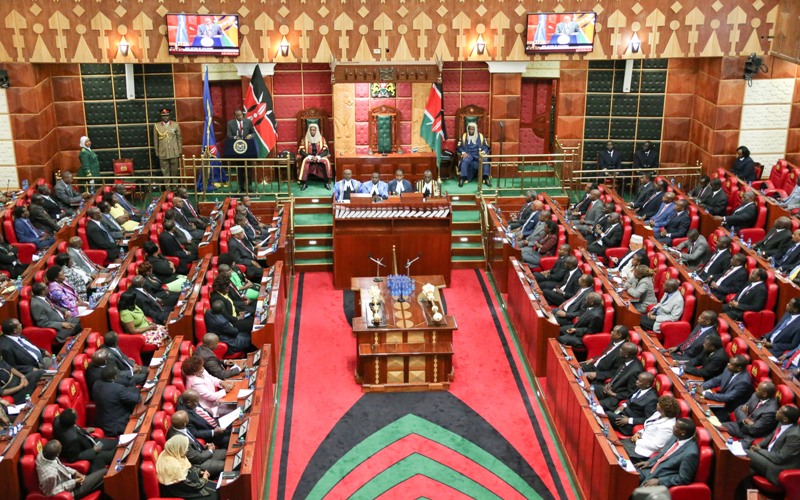
Anxiety is gradually creeping into the yet-to-be-inaugurated 13th Parliament as it becomes clear that President Uhuru Kenyatta’s failure to gazette its first sitting will put it in a difficult position with the election of Speakers in the public eye.
The failure of the Independent Electoral and Boundaries Commission (IEBC) to gazette the 12 nominated MPs in the National Assembly and the 20 senators is exacerbating the situation.
According to Article 126 (2) of the Constitution, the President is required to announce the date and location of the first meeting of a newly elected Parliament via a notice in the Kenya Gazette no later than 30 days after a General Election.
The first sitting of the two Houses following the general election had not yet been gazetted as of yesterday.
The President’s 30-day deadline for gazetting the first sitting of the two Houses expires on Friday this week, which is outside the designated parliamentary sitting days.
While in session, the two Houses traditionally meet on Tuesdays, Wednesdays, and Thursdays to carry out their legislative, oversight, representation, and budget-making duties.
The only business provided for in the Constitution and Standing Orders during the first sitting of Parliament, which begins at 9 a.m., is the swearing-in of MPs-elect and the election of Speakers and their deputies.
Article 106 (1) of the constitution states that each House of Parliament shall have a Speaker, who shall be elected by that House in accordance with the Standing Orders, from among those who are qualified to be elected as MPs but are not such members.
According to the Standing Orders of the two Houses, upon the President’s notification of the place and date for the first sitting, the clerks of the two Houses shall issue a gazette notice inviting interested persons to submit nomination papers for the office of Speaker.
The two Clerks must also designate a nomination day and a location for nomination papers to be received “at least 48 hours before the time appointed at which the House is to meet to elect a Speaker.”
If a gazette notice is published today naming this Thursday as the sitting day, candidates will have until next Tuesday at 9 a.m. to submit their applications. So, when will the two clerks post advertisements inviting applications to fill the vacancies in the two offices? Article 106 (2) also states that the office of Speaker or Deputy Speaker of either House becomes vacant when a new House of Parliament convenes for the first time following an election.
However, other factors, such as death, resignation, or removal by house resolution, may result in a vacancy in these offices. Assuming that the vacancies are advertised, will prospective candidates have enough time to submit their applications as specified in the Standing Orders?
What will disadvantage prospective candidates is that the Standing Orders make no provision for online applications for positions.
This means that prospective candidates must physically pick up the nomination papers from the clerks’ offices, fill them out, and submit them in person 48 hours before the sitting day.