By Gerald Gekara
It’s barely a week since Hon. Cyrus Jirongo left us, and the streets, both real and digital, are already hot with whispers.
Veteran politician, former Lugari MP, YK’92 firebrand who had until his death, hopped in and out of podcasts to spill the tea on political secrets surrounding power during the Moi era, gone in a grisly head-on collision at Karai, Naivasha, in the dead of night on December 13.
Autopsy says blunt force trauma, crushed chest, and a broken heart (literally) took away Jirongo. DCI is investigating, CCTV footage is out, even the last petrol station stop is documented. Looks like a tragic road accident, right?
Wrong. Atleast according to online detectives following with a cup of uji by their side.
“He knew too much.” “They finished him.” “Mystery woman in Karen meeting.” “Why was he, a multi-millionaire driving alone at 2 a.m.?”
When a high-profile Kenyan dies suddenly, especially one recently criticising the government, the country does not merely grieve. It suspects foul play. Questions arise instantly: was the state complicit? Was it a deliberate elimination? Given the nation’s history, such doubts are understandable.
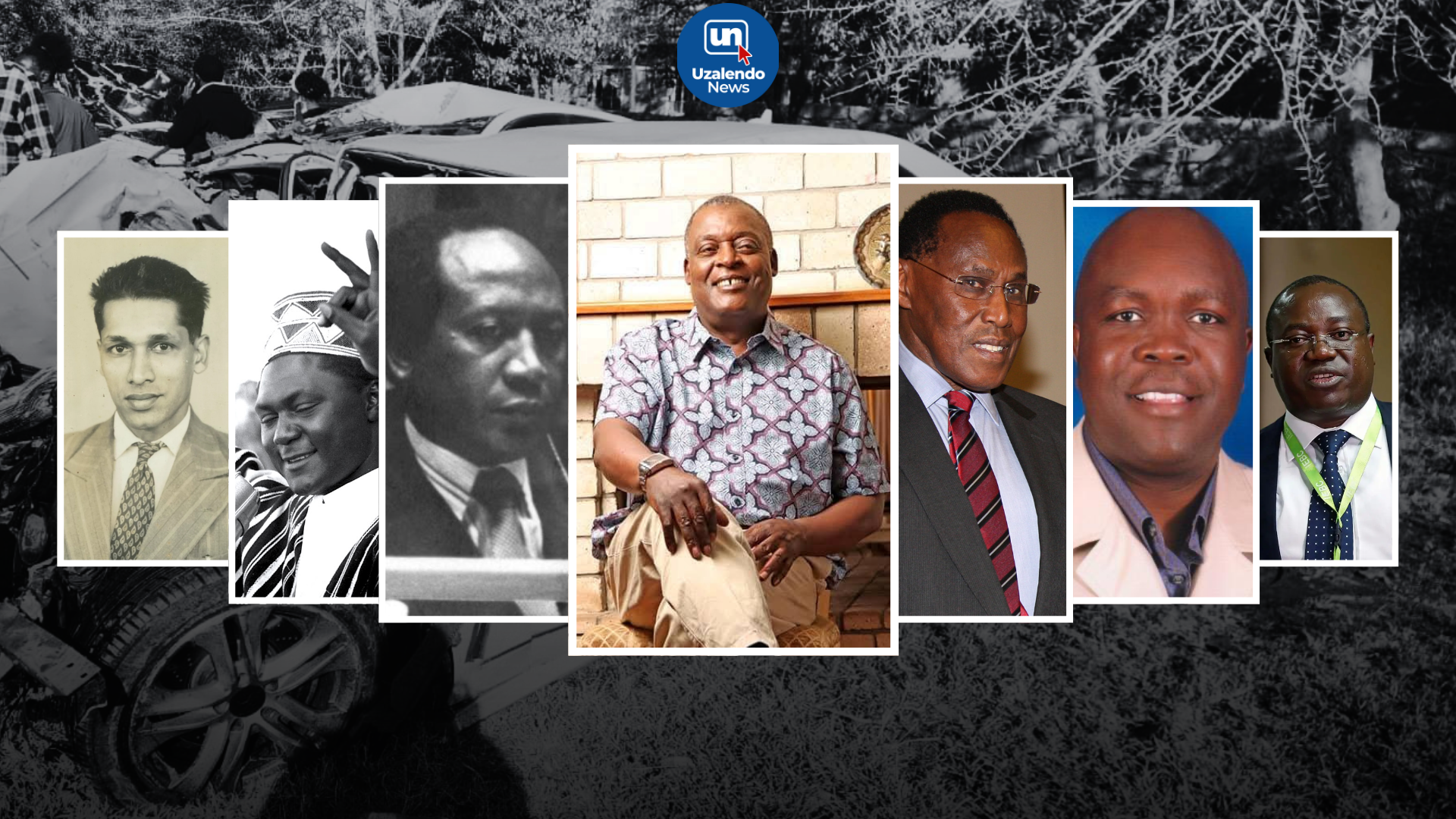
Kenya’s political landscape is scarred by unsolved killings. Pio Gama Pinto, a young journalist, politician and freedom fighter, is widely regarded the first major post-independence hit. He was a socialist leader who was key in Kenya’s struggle for independence. was assassinated in 1965.
Tom Mboya, a top trade unionist and an icon of young leadership from the lake side, was shot dead in 1969 amid lingering mystery. JM Kariuki’s tortured body was found in 1975. Robert Ouko was discovered burnt in 1990, with evidence vanishing.
Years later, Jacob Juma, a tireless crusader against corruption and a close ally of many politicians in the opposition, was gunned down in 2016, and IEBC’s technical official Chris Musando tortured and killed in 2017.
These Kenyans met violent ends; investigations stalled, justice evaded. Trust in official probes has long evaporated.
But Kenyans, not every death, however, follows this pattern.
George Saitoti’s 2012 helicopter crash was ruled accidental. Fidel Odinga died naturally in 2015. Even recently, Chief of Defence Forces Ogolla’s helicopter crash was ruled out as an accident, and more recently, Raila Odinga passed in October 2025 from illness at 80.
But, can you really fault the skeptics? When past killers walk free, when probes feel like PR exercises, trust evaporates. Infact according to a recent study, Kenyans are among the lowest cadre of countries where we dont trust each other.
The government (past and present) has earned this suspicion through decades of opacity. We’re not crazy; we’re cautious survivors.
So, are we to blame for the instant conspiracy theories? Partly yes. Sometimes we overreach, turning tragedy into circus. But mostly no. The real blame sits with leaders who never delivered justice for the old ghosts.
Until cases like Ouko and Musando get proper closure, every sudden death will spark the same question: accident… or arranged?
Rest easy, Jirongo. Kenyans will keep asking until they get answers they can believe.