By Peter John
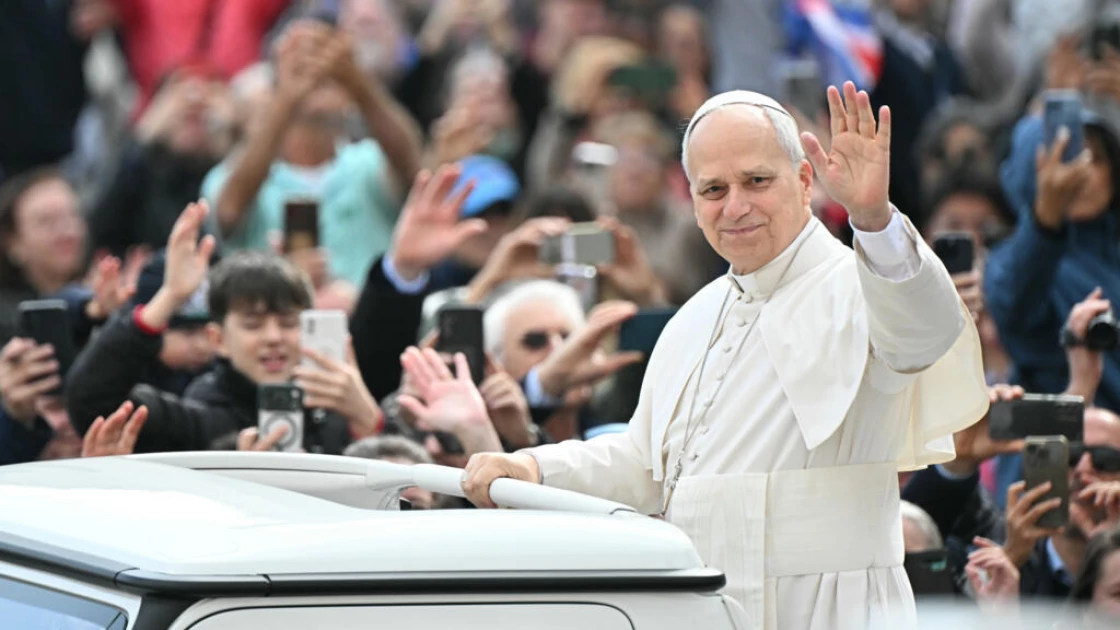
Pope Leo XIV is set to embark on an 11-day tour of Africa starting Monday, marking his first major international journey since ascending to the papacy last year.
The US-born pontiff will visit Algeria, Cameroon, Angola and Equatorial Guinea, covering more than 18,000 kilometres in a trip expected to spotlight interfaith dialogue, peacebuilding, inequality and human rights.
Since becoming head of the world’s 1.4 billion Catholics in May, the 70-year-old has drawn global attention for his messaging, and this visit comes at a time of heightened geopolitical tension linked to the Middle East conflict and its ripple effects on global energy markets.
During the tour, which runs until April 23, Leo is scheduled to deliver 11 speeches, preside over seven masses and visit a dozen locations. It will be his third trip outside Italy, following visits to Turkey, Lebanon and Monaco.
Algeria: A historic first
The pope’s first stop will be Algeria from April 13 to 15, where he will make history as the first pontiff to visit the North African nation, where Islam is the state religion.
He is expected to visit the Great Mosque of Algiers and hold talks with President Abdelmadjid Tebboune. The visit will also include a meeting with members of the Augustinian order in Annaba, once home to Saint Augustine.
Leo will pray privately in a chapel honouring 19 clergy members killed during Algeria’s civil war between 1992 and 2002. Ahead of the visit, international rights groups have urged him to raise concerns about the treatment of religious minorities.
Cameroon: Message of reconciliation
From April 15 to 18, the pope will travel to Cameroon, where a call for peace is expected to dominate his visit.
The country has been grappling with a prolonged conflict in its English-speaking northwest region. The Catholic Church has played a mediating role, and Leo is expected to reinforce calls for reconciliation.
A key highlight will be a mass and address in Bamenda, the epicentre of the unrest, under tight security. The pontiff will also visit hospitals, schools and charitable institutions run by the Church.
Leo is also scheduled to meet President Paul Biya, one of the world’s longest-serving leaders, who has faced criticism from sections of the clergy over governance issues.
Angola: Wealth and inequality
The pope’s visit to Angola from April 18 to 21 is expected to focus on social justice and economic inequality.
Despite its vast oil and mineral wealth, Angola continues to struggle with widespread poverty and the legacy of a civil war that ended in 2002. Leo is expected to call for fairer distribution of resources and stronger efforts to combat corruption.
He will visit the capital, Luanda, where stark contrasts between affluent neighbourhoods and sprawling informal settlements remain evident. The pope will also travel to Muxima, home to one of southern Africa’s most revered religious sites, located along a historic slave trade route.
Equatorial Guinea: A delicate balance
The final leg of the tour will take Leo to Equatorial Guinea from April 21 to 23, where he is expected to navigate a complex political environment.
The country has been under the long rule of President Teodoro Obiang Nguema Mbasogo since 1979. While about 80 percent of the population is Catholic, the visit is likely to test the pope’s ability to support the faithful without appearing to endorse authoritarian governance.
Observers expect Leo to deliver a message centred on human rights and social justice, while maintaining diplomatic sensitivity.
As preparations intensify, Malabo has been adorned with large images of the pontiff, with state media extensively promoting the visit.
A closely watched mission
Pope Leo XIV’s Africa tour is expected to resonate far beyond the continent, as he seeks to address some of the most pressing global and regional challenges.
From interfaith dialogue in Algeria to calls for peace in Cameroon, economic justice in Angola and human rights in Equatorial Guinea, the visit underscores the Vatican’s growing engagement with Africa at a critical moment in global affairs.