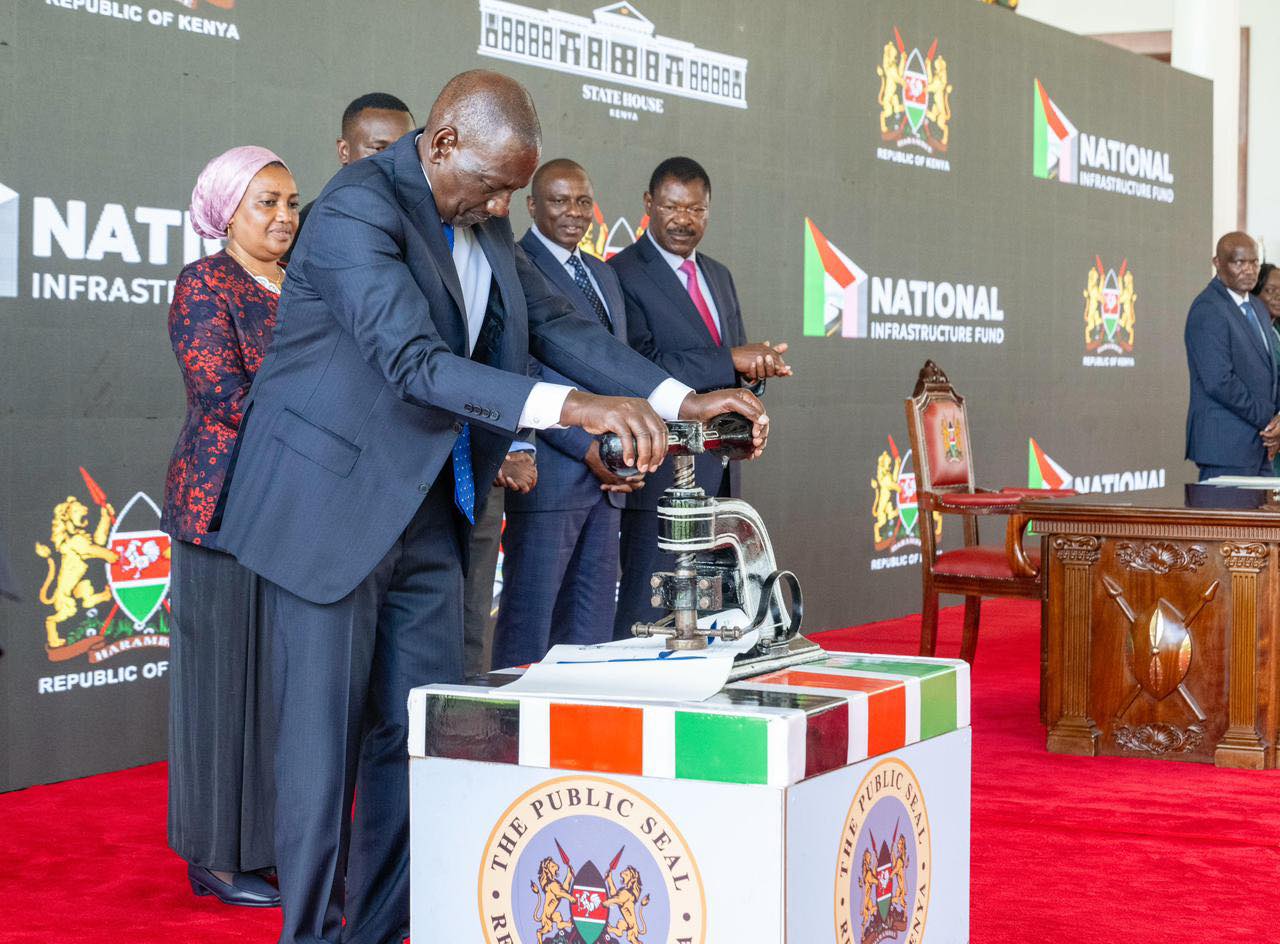
President William Ruto has signed the National Infrastructure Fund (NIF) Bill 2026 into law.
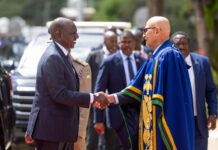
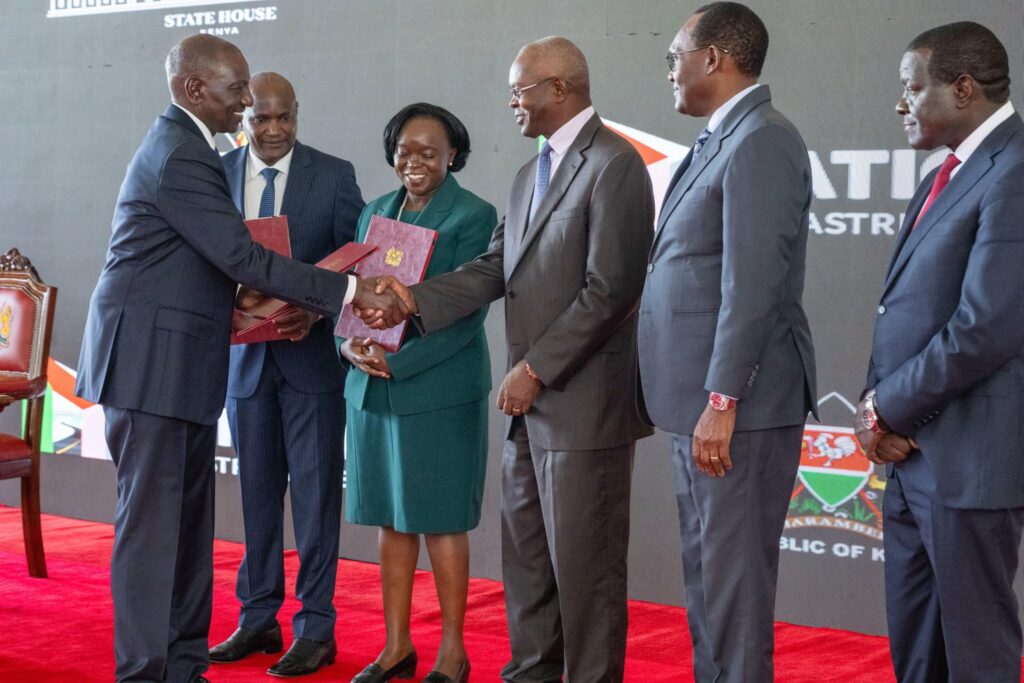
The Head of State assented to the bill on Monday, March 9, during a ceremony at State House, Nairobi.
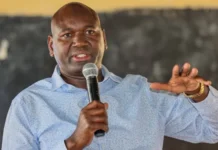
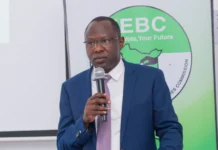
While highlighting the bill, the Clerk of the National Assembly, Samuel Njoroge, said the bill is a product of public participation.
“During the period of consideration of the Government Owned Enterprise Bill, which is now an Act of Parliament, and thereafter during the public participation process of the consideration of Sessional Paper No 3of 2025 in the divestiture of the government shareholding in Safaricom PLC, it became apparent that there is need to provide a comprehensive framework for the purpose of anchoring appropriately the National Infrastructure Fund.
“This bill, therefore, is a product of public participation, expert views, and views from both public and private sector” said Njoroge.
The National Assembly Clerk explained that the new law aims to mobilize capital from non-traditional sources.
Njoroge also noted that the bill is intended to reduce overreliance on public debt and taxation in funding infrastructure projects.
“This bill is intended to mobilize private capital from non-traditional sources of infrastructure finance. It is also intended to reduce the over reliance in public debt and taxation to finance capital and corporate infrastructure projects,” he stated.
He highlighted that the bill clearly defines the projects that NIF will fund; these include national highways, expressways, railways, seaports and airports.
Njoroge further said the NIF Act has created two entities, a governing council and a board, which will ensure the fund works seamlessly.
“It creates two entities, that is; a council and a board, both with distinct functions in order to ensure that this fund works well. The bill also gives powers to the National Assembly to oversight execution of the fund including the approval of the investment policy,” he added.
Further, Njoroge mentioned that while passing the bill, the National Assembly created offences that those who misappropriate funds in NIF will not face consequences.
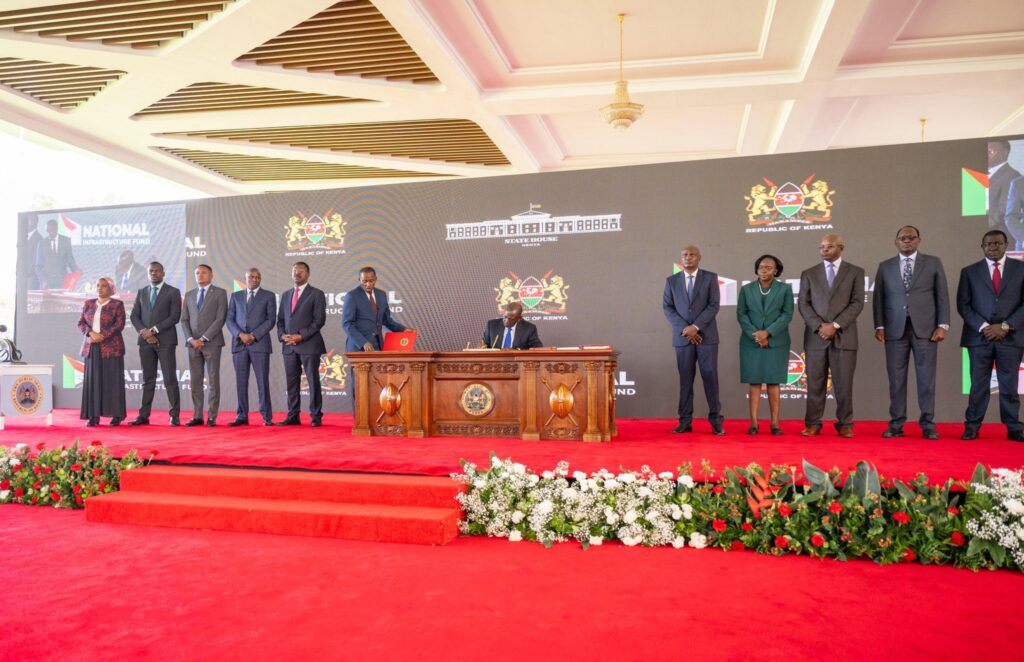
Speaking during the signing ceremony at State House, President Ruto stated, “The people of Kenya, through public participation and Parliament, have supported the passage of the National Infrastructure Bill, with thousands contributing ideas that enhanced governance and transparency in the final Act. Parliament’s approval demonstrates foresight and responsibility, strengthening the long-term foundation for the nation’s growth and prosperity. ”
This comes days after the National Assembly passed the National Infrastructure Fund Bill, 2026, which was sponsored by Kimani Ichung’wah.
The National Assembly approved the creation of a governing council to provide parliamentary oversight and set penalties for misuse of funds to ensure transparent management of the fund.
The council will comprise the National Treasury Cabinet Secretary, CBK Governor, Attorney General, and six other members who are not public officers.
The council will also provide overall direction to the NIF board, oversee the development of investment policy, and be responsible for the recruitment of directors of the board.
NIF aims to mobilize KSh5 trillion to shift infrastructure financing from a debt-driven model to a sustainable, investment-led approach.
NIF will be a corporate body that will be able to enter into contracts, borrow money, purchase, charge, and dispose of movable and immovable property.
The Fund will predominantly source money from infrastructure finance, including domestic pension funds and collective investment schemes, sovereign wealth funds, and climate finance.
The board on NIF will be tasked with mobilizing resources for the Fund through investment in projects and entering into contracts on its behalf.
It can also invest in projects on behalf of the NIF through equity investment or debt, based on the bankability of the projects.
The NIF board will comprise four independent directors who will be recruited by the governing council, three public officers appointed based on their expertise, and the CEO, who will be hired by the board of directors.
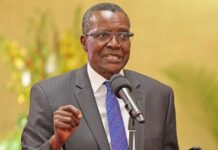
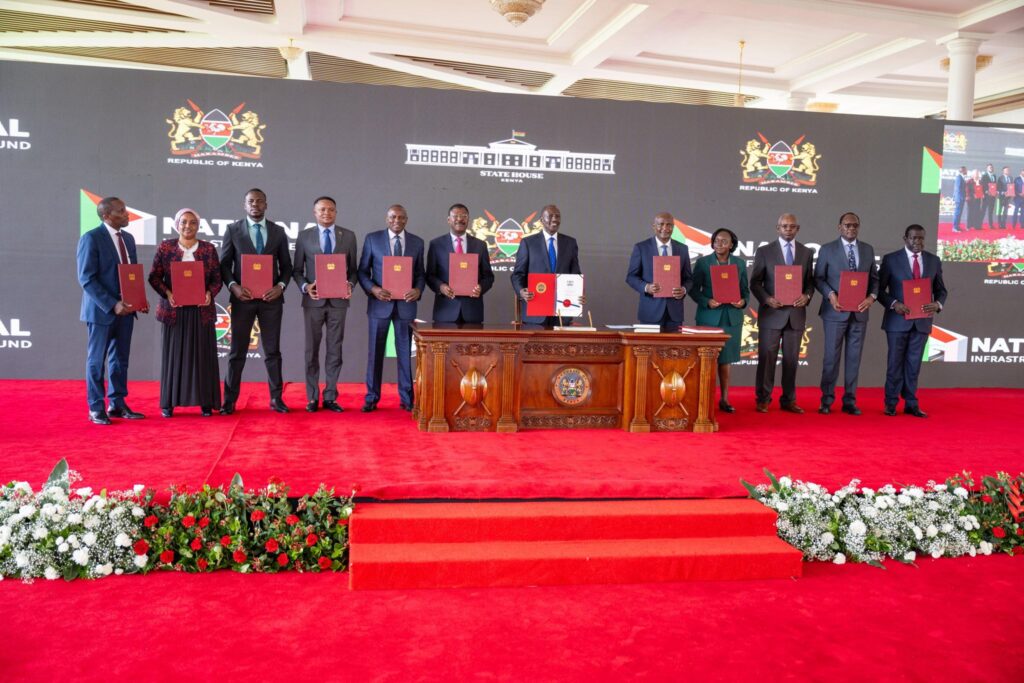
The event was attended by senior government officials from both the executive and the legislatures including National Assembly Speaker Moses Wetang’ula, Treasury CS John Mbadi, Treasury PS Chris Kiptoo, and CBK Governor Kamau Thugge and MP Ichung’wah.