By Peter John
A dramatic and highly contested rescue operation unfolded over the weekend after a US fighter jet was shot down over Iran, triggering a high-stakes race between American forces and Iranian authorities to locate a missing airman.
While US President Donald Trump declared the mission a success, Iran insists the operation was “foiled,” leaving the full picture obscured by conflicting accounts, limited official disclosures, and a flood of misinformation online.
The Missing Airman
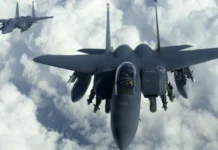
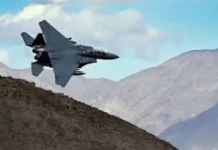
The rescued serviceman was a weapons systems operator aboard an advanced F-15E Strike Eagle, seated behind the pilot when the aircraft went down over southwestern Iran.
Little has been publicly revealed about his identity. However, reports indicate that after ejecting from the jet, the airman—injured but mobile—navigated rugged mountainous terrain in Kohgiluyeh and Boyer-Ahmad province. He is said to have climbed a ridgeline rising over 2,000 metres before concealing himself in a crevice.
US officials say he relied on survival training known as SERE (Survival, Evasion, Resistance, and Escape), along with emergency gear including a GPS beacon, communication devices, and limited supplies.
According to Trump, the airman was “seriously wounded” but successfully extracted and later transported to Kuwait for medical care.
How the Rescue Mission Unfolded
The recovery effort quickly escalated into a covert and complex military operation involving intelligence agencies and elite forces.
The Central Intelligence Agency reportedly played a critical role in locating the downed airman, using surveillance and a deception campaign designed to mislead Iranian forces into believing he had already been found.
The extraction mission—launched overnight between Saturday and Sunday—involved dozens of aircraft and hundreds of personnel. Among them were operatives from United States Navy SEALs, including members of the highly secretive SEAL Team 6, tasked with physically retrieving the airman.
US aircraft provided air cover as Iranian forces reportedly closed in on the location. Some reports indicate that American troops engaged Iranian units to secure the extraction zone, though no US casualties were reported.
Israeli Prime Minister Benjamin Netanyahu later stated that Trump had expressed appreciation for Israel’s assistance in the mission, though details of that involvement remain unclear.
Iran’s Version of Events
Iranian authorities strongly dispute the US narrative, claiming the rescue operation failed.
State media outlets, including ISNA, published images allegedly showing wreckage from the downed aircraft and what they described as remains of an American soldier—claims that have not been independently verified.
Iran’s military spokesperson said US forces attempted to use an abandoned airstrip in Isfahan province as part of what he described as a “deception and escape mission.” Officials also claimed that multiple US aircraft—including C-130 transport planes and Black Hawk helicopters—were destroyed during the operation.
However, US media reports suggest a different explanation: that American forces deliberately destroyed disabled aircraft to prevent sensitive technology from falling into Iranian hands.
Local Iranian officials reported casualties in the mountainous region but denied that US troops had landed there.
Fog of War and Misinformation
As with many modern conflicts, the information battle has played out in parallel with military operations.
Social media platforms were quickly flooded with unverified images and misleading claims, complicating efforts to establish a clear timeline or confirm key details.
Even among official statements, contradictions remain. Trump hinted at a second rescue mission for another pilot, though he said it was not confirmed to avoid jeopardizing operations.
A High-Stakes Military and Political Flashpoint
The incident underscores the volatility of US-Iran tensions and the risks associated with military operations in contested territory.
If the US account is accurate, the mission represents one of the most daring recent rescue operations, involving elite forces and coordinated intelligence efforts under extreme pressure.
If Iran’s claims hold weight, however, it could signal a significant propaganda and strategic victory for Tehran.
For now, much of what happened in the mountains of southwestern Iran remains uncertain—caught between competing narratives, limited transparency, and the enduring fog of war.