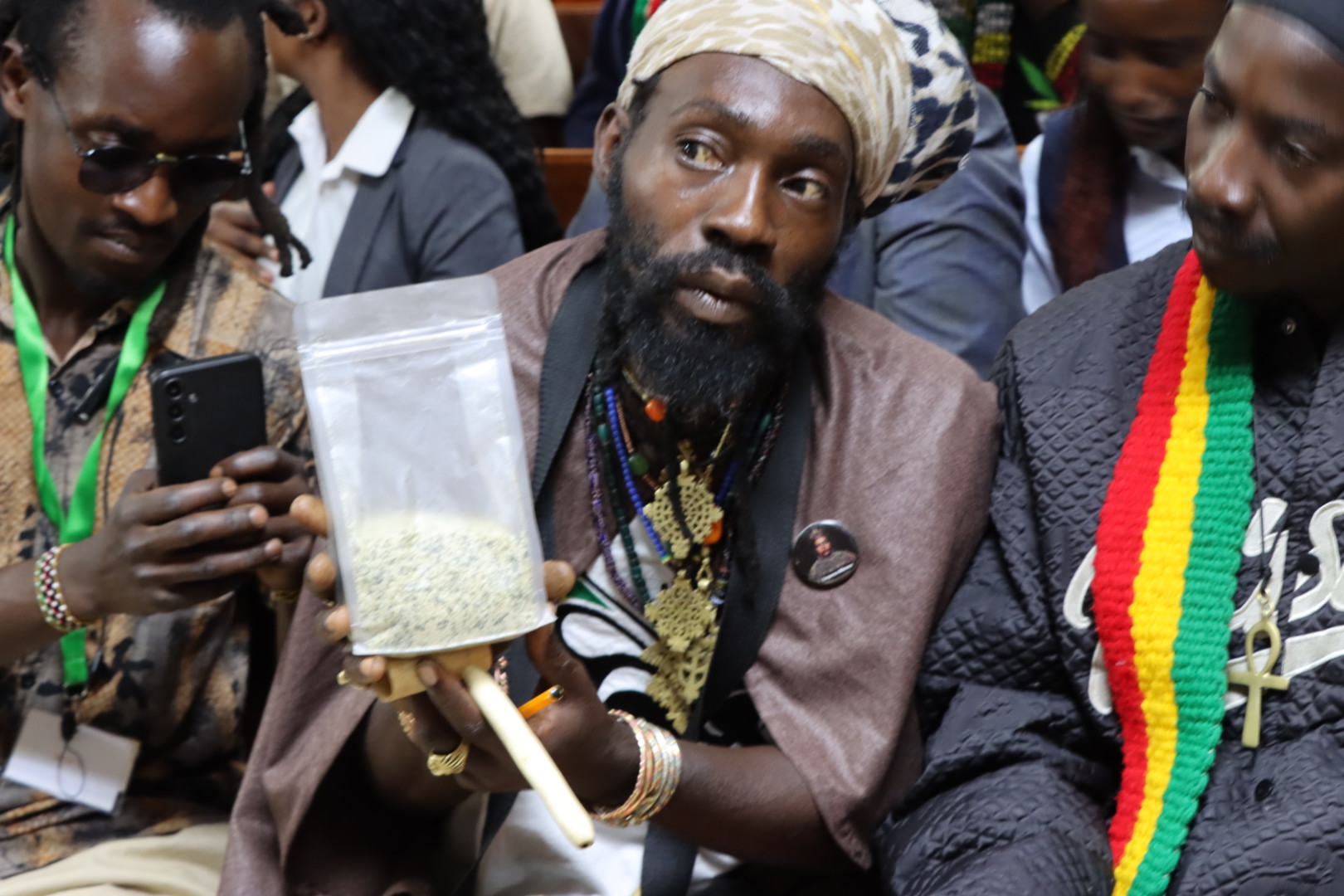
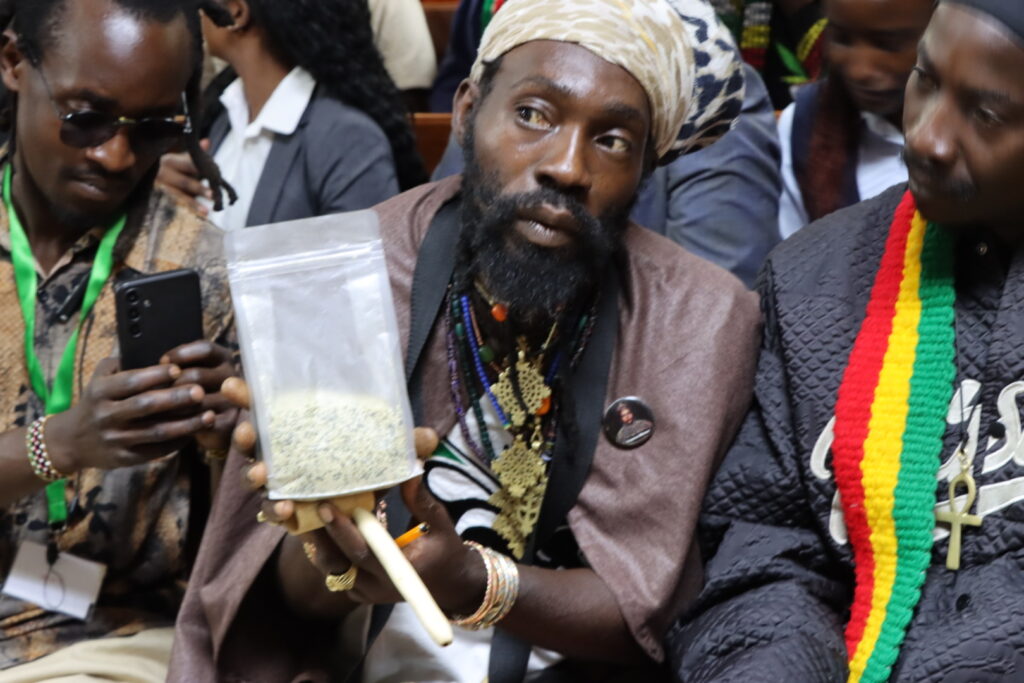
Members of the Rastafarian community were left aggrieved on Wednesday, 4,February, 2026 after The Milimani Law Courts Security officers barred them from entering court premises with cannabis seeds they intended to present as exhibits in a petition alleging police harassment.
The incident occurred at the gates of the Milimani Law Court, where petitioners, accompanied by their advocates, were stopped by security personnel who ruled that the seeds could not be brought into the court precincts.
When the matter came up for hearing, the petitioners informed the court that the seeds were central to their case and were meant to demonstrate the spiritual and religious practices associated with their faith.
Their lawyers argued that the items posed no threat to public safety and should be admitted as evidence.
“These are exhibits in this matter. We urge the court to allow them as evidence,” counsel submitted, insisting that the seeds were not intended for any unlawful purpose.
However, the court raised concerns over legality and public safety.
Presiding Judge Bahati Mwamuye held that cannabis seeds are classified as contraband under Kenyan law and found that court security acted properly by denying entry.
“The seeds are contraband. Security did the right thing in denying entry,” Justice Mwamuye stated.
While declining to allow the physical production of the seeds, the judge granted the petitioners leave to file further affidavits and to produce photographs of the disputed seeds and any other spiritual or religious items they wish to rely on as evidence.
He clarified that the law allows the production of electronic evidence, provided statutory requirements are met and emphasised that physical submission of the seeds was unnecessary.
“The petitioners are reminded of the requirements governing the production of electronic evidence,” the judge said.
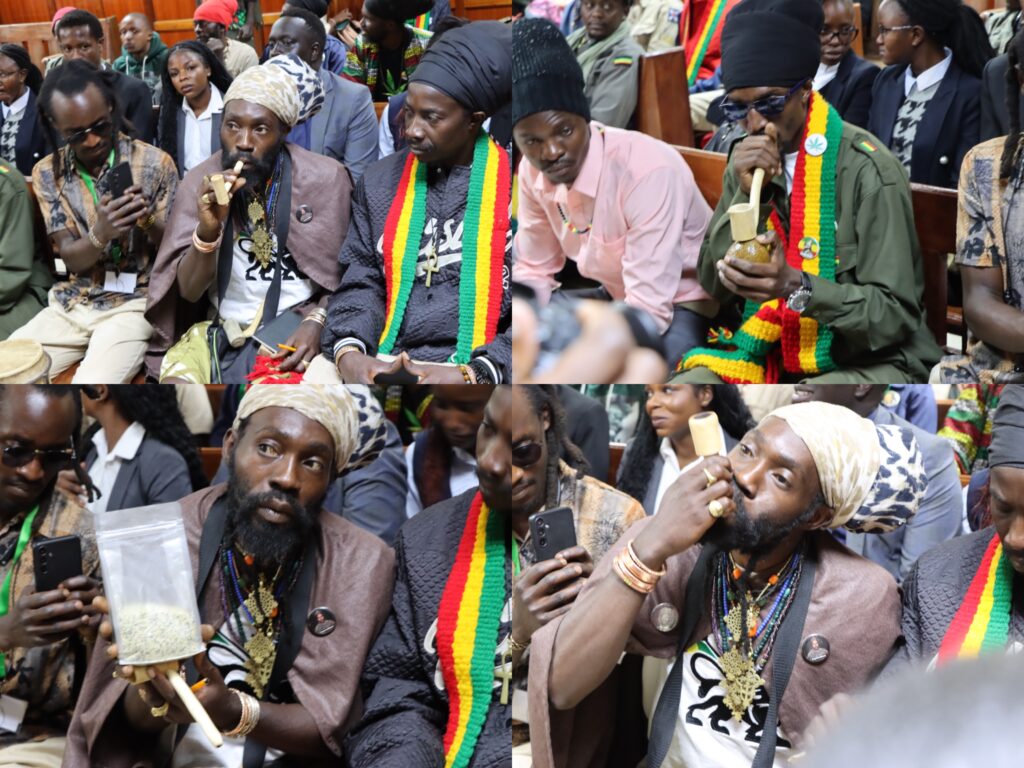
During the proceedings, Justice Mwamuye also cautioned against abuse of police powers, noting that while the court would not condone unlawful arrests or harassment, it could not grant blanket immunity to individuals under the guise of religious practice.
The petitioners allege that members of their community have been subjected to repeated police harassment.
One advocate cited a recent incident in Kibera where a Rastafarian was publicly escorted by officers from the Directorate of Criminal Investigations to Lang’ata Police Station for a search, an action they say violated constitutional rights.
The State opposed the application, arguing that the petitioners had not demonstrated that possession of cannabis seeds was legally sanctioned.
State counsel maintained that any claims of harassment must be supported by proper evidence before the court could issue orders.
The Rastafarian community argues that cannabis is central to its religious practice and that its criminalisation violates constitutional rights, including freedom of religion, dignity, privacy and equality.
The court adjourned the matter to March 23, 2026, for further directions.
By Andrew Kariuki