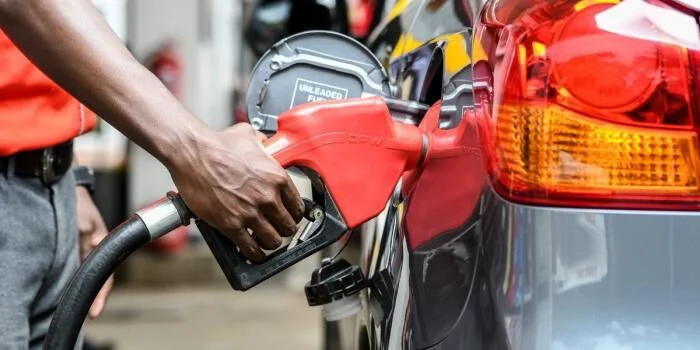
Relief for Motorists and households after the Energy and Petroleum Regulatory Authority (EPRA) lowered the maximum retail prices of petroleum products across the country.
The new prices, effective February 15 to March 14, 2026, will see Super Petrol drop by Sh4.24 per litre, Diesel by Sh3.93 and Kerosene by Sh1.00.
“In the period under review, the maximum allowed petroleum pump prices for Super Petrol, Diesel and Kerosene decrease by Sh4.24 per litre, Sh3.93 per litre and Sh1.00 per litre respectively,” EPRA said.
Under the new review, the maximum pump prices in key towns will be:
Nairobi: Petrol Sh178.28, Diesel Sh166.54, Kerosene Sh152.78
Mombasa: Petrol Sh175.00, Diesel Sh163.26, Kerosene Sh149.49
Nakuru: Petrol Sh177.34, Diesel Sh165.95, Kerosene Sh152.21
Eldoret: Petrol Sh178.16, Diesel Sh166.77, Kerosene Sh153.03
In northern and remote areas, prices remain significantly higher due to transport costs.
For instance:
Mandera: Petrol Sh200.41, Diesel Sh188.72, Kerosene Sh174.80
Elwak: Petrol Sh196.43, Diesel Sh184.70, Kerosene Sh170.93
Moyale: Petrol Sh194.22, Diesel Sh182.48, Kerosene Sh168.72
Wajir: Petrol Sh193.93, Diesel Sh182.19, Kerosene Sh168.43
EPRA attributed the reduction to declining international petroleum costs.
“The average landed cost of imported Super Petrol decreased by 2.69 per cent from US$592.24 per cubic metre in December 2025 to US$576.34 per cubic metre in January 2026,” the authority said.
Diesel recorded a sharper drop of 6.37 per cent, while kerosene declined by 1.44 per cent over the same period.
Kenya imports all its petroleum requirements in refined form, meaning local pump prices are directly influenced by global market movements and the prevailing exchange rate.
“Currently, Kenya imports all its petroleum product requirements in refined form, and the products are traded in international markets based on a pricing benchmark,” EPRA noted.
EPRA Director General Daniel Kiptoo Bargoria said the monthly price controls are meant to protect consumers while allowing investors to recover legitimate costs.
“The purpose of the Petroleum Pricing Regulations is to cap the retail prices of petroleum products which are already in the country so that importation and other prudently incurred costs are recovered while ensuring reasonable prices to consumers,” said Bargoria.
He added that the regulator remains committed to fairness in the sector.
“EPRA wishes to assure the public of its continued commitment to the observance of fair competition and protection of the interests of both consumers and investors in the energy and petroleum sectors.”
The prices include 16 per cent VAT in line with the Finance Act 2023 and other applicable taxes and will remain in force until March 14, 2026, when the next monthly review is expected.