President William Ruto has directed Inspector General of Police Douglas Kanja to launch a nationwide crackdown on political gangs accused of infiltrating rallies and by-elections, warning that the government will no longer tolerate the use of hired groups to fuel violence.
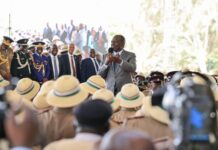
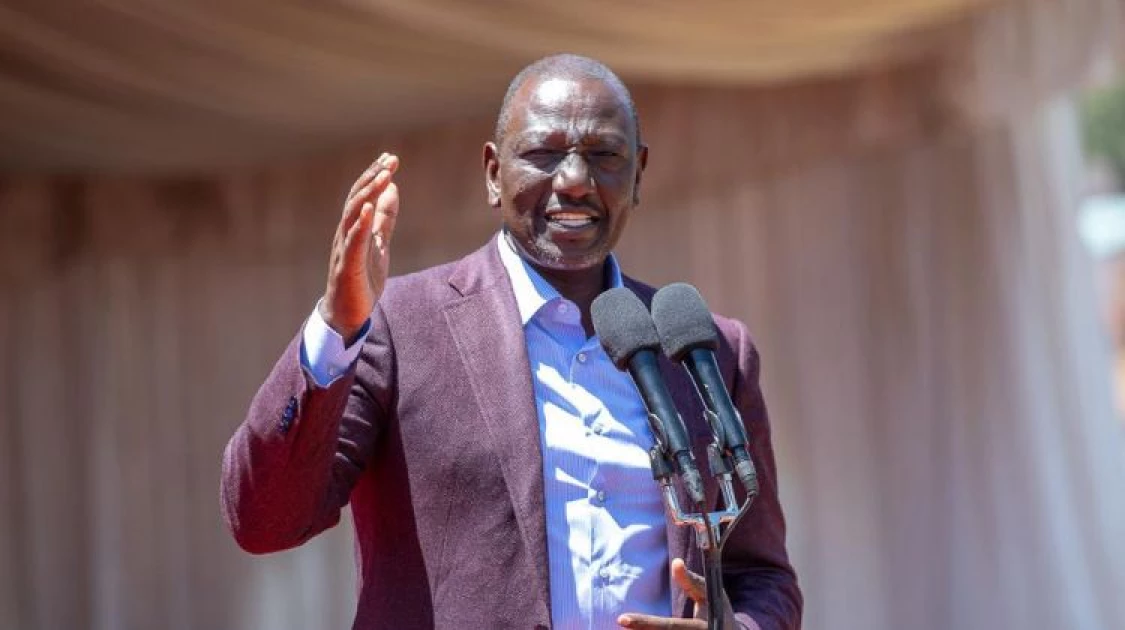
Speaking on Friday at the Administration Police Training College in Embakasi during the graduation of 5,892 chiefs and assistant chiefs trained in security management and paralegal studies, President Ruto condemned the growing trend of politically instigated attacks.
He said individuals deploying youths to disrupt public events or intimidate opponents would face decisive legal action.
“Those who are using young people to cause chaos, disrupt citizens and jeopardize national security will be dealt with. I have instructed the Inspector General to take decisive legal action to bring this to an end,” he stated.
Ruto’s directive follows a string of chaotic incidents during recent by-elections and political activities, sparking renewed debate over the resurgence of criminal gangs within Kenya’s political landscape.
The opposition has accused the government of either allowing or failing to prevent acts of violence linked to pro-government groups, allegations the state has repeatedly denied.
Tensions peaked on Sunday after violent clashes erupted in Kariobangi North during a church event attended by DCP Party Leader Rigathi Gachagua. Rival groups confronted each other in full view of the public, drawing widespread outrage and prompting Interior Cabinet Secretary Kipchumba Murkomen to denounce the incident.
“What we saw yesterday in Nairobi is unacceptable. We will not tolerate individuals using hired goons to undermine security institutions and create disorder,” Murkomen said.
However, Murkomen did not address earlier confrontations in Mbeere North, Malava and Kasipul by-elections, where armed gangs allegedly disrupted campaigns.
In Malava, vehicles associated with DAP-K candidate Seth Panyako were torched, causing losses valued in the millions. In Mbeere North, groups reportedly roamed with crude weapons as police were accused of responding only to opposition supporters.
The renewed unrest has revived longstanding concerns about Kenya’s history of politically linked militias. From the violence of the 1990s to the re-emergence of gangs during recent protests, analysts warn that the unchecked use of criminal networks for political gain risks becoming a persistent threat.
The outlawed Mungiki sect, once deeply entrenched in political and economic spheres before its crackdown under the NARC administration, remains a stark reminder of how such groups can evolve into national security challenges.
President Ruto’s directive is expected to shape upcoming security operations as the country moves into a busy political season, with stakeholders watching closely to see whether enforcement will be even-handed across the political divide.
Source: Citizen Digital
Written By Rodney Mbua