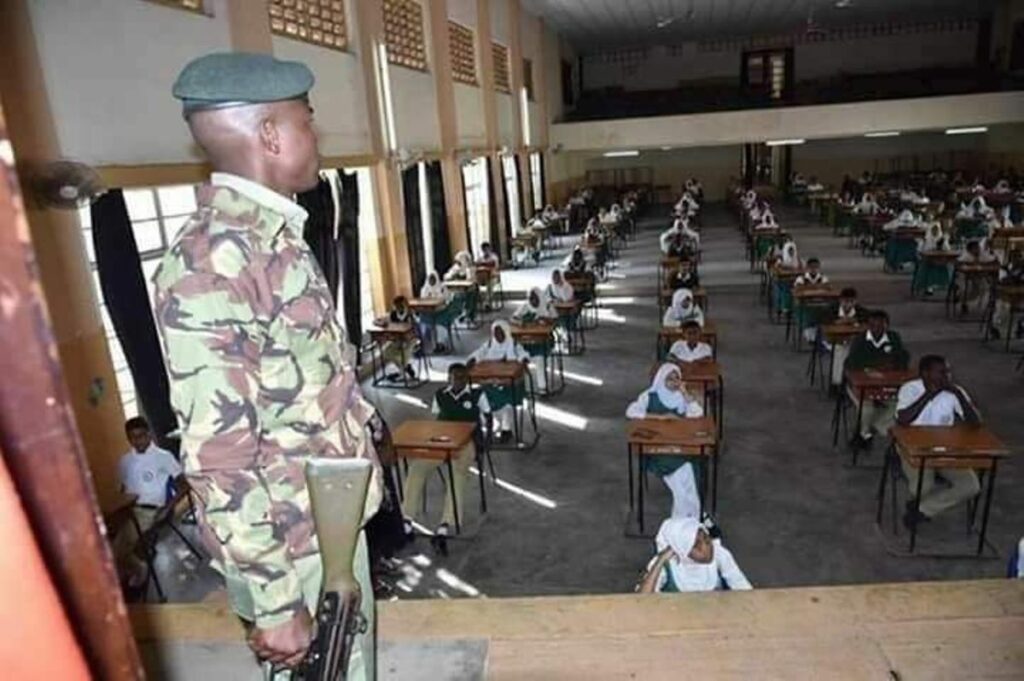
President William Ruto has announced that police officers will no longer be involved in managing national examinations, declaring that exams should be treated as part of the learning process rather than a ‘life and death issue.’
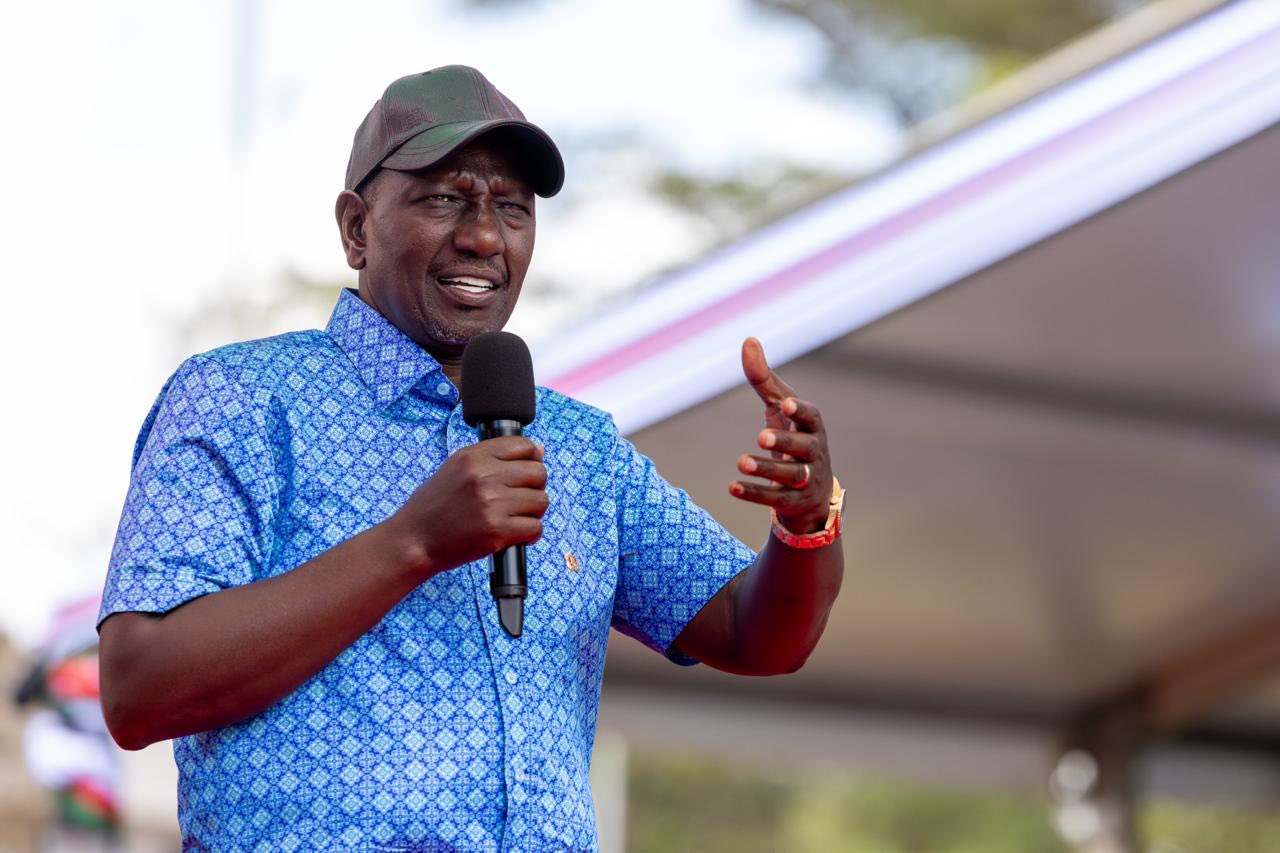
Speaking on Friday, January 23, the President emphasised his administration’s commitment to ensuring seamless educational transitions and removing unnecessary barriers to learning.
President Ruto explained that the decision to remove police from exam management reflects a shift in the government’s approach to education, moving away from treating examinations as security events.
“Exam is part of learning. It must not be a life and death issue,” Ruto stated.
The President noted that his administration has successfully overseen two major educational transitions: from primary school to junior school, and this month, from junior school to secondary school.
Ruto emphasised that no child should be kept out of class, citing the government’s significant investment in education infrastructure and resources.
“I did say yesterday that no child should be denied an opportunity to be in class. Why? Because we have provided the resources for them to be taught,” the President said.
He revealed that for the first time, capitation funds were made available in schools before students reported for classes, breaking from the traditional pattern where such funds arrived a month or two after schools opened.
“We provided the highest amount, 44 billion,” Ruto disclosed, adding that with adequate funding for teaching, paid teachers, and available classrooms, there is no justification for keeping children out of school.
President Ruto announced plans to tackle what he described as corruption in the school uniform sector, where some institutions charge exorbitant fees that create barriers to education access.
“Uniforms are beginning to be another source of corruption. Some schools charge as high as 38,000 for uniforms,” the President revealed.
In response, Ruto issued a directive prohibiting schools from denying students access to classes due to lack of uniforms.
“I have directed that there is no child who will be kept out of class because of uniform. Even if they have the uniform for the junior school, they can transition to secondary school without uniform, as they wait for the parents to organise themselves,” he said.