President William Ruto has signed into law the Judges’ Retirement Benefits Bill, establishing a new retirement benefits framework for members of the Judiciary.
In a statement on Monday, March 9, Ruto said the new framework would enhance the independence of the courts while protecting judges after they leave office.
“The enactment of the Judges’ Retirement Benefits Act strengthens the Judiciary and reinforces its independence by guaranteeing retirement benefits and safeguarding security of tenure,” he said.
Ruto noted that the law introduces a contributory retirement system in which both judges and the government will make regular contributions to a dedicated fund.
“The new law establishes a Judges’ Retirement Benefits Fund for judges appointed after the commencement of the Act, with judges contributing 7.5 per cent of their basic salary and the Government contributing 15 per cent,” he added.
In addition to pension provisions, the law outlines several other benefits intended to recognise the demanding responsibilities associated with judicial service.
“It also provides additional benefits, including medical cover, diplomatic passports and access to government airport lounges, recognising the demanding nature of judicial service,” he further said.


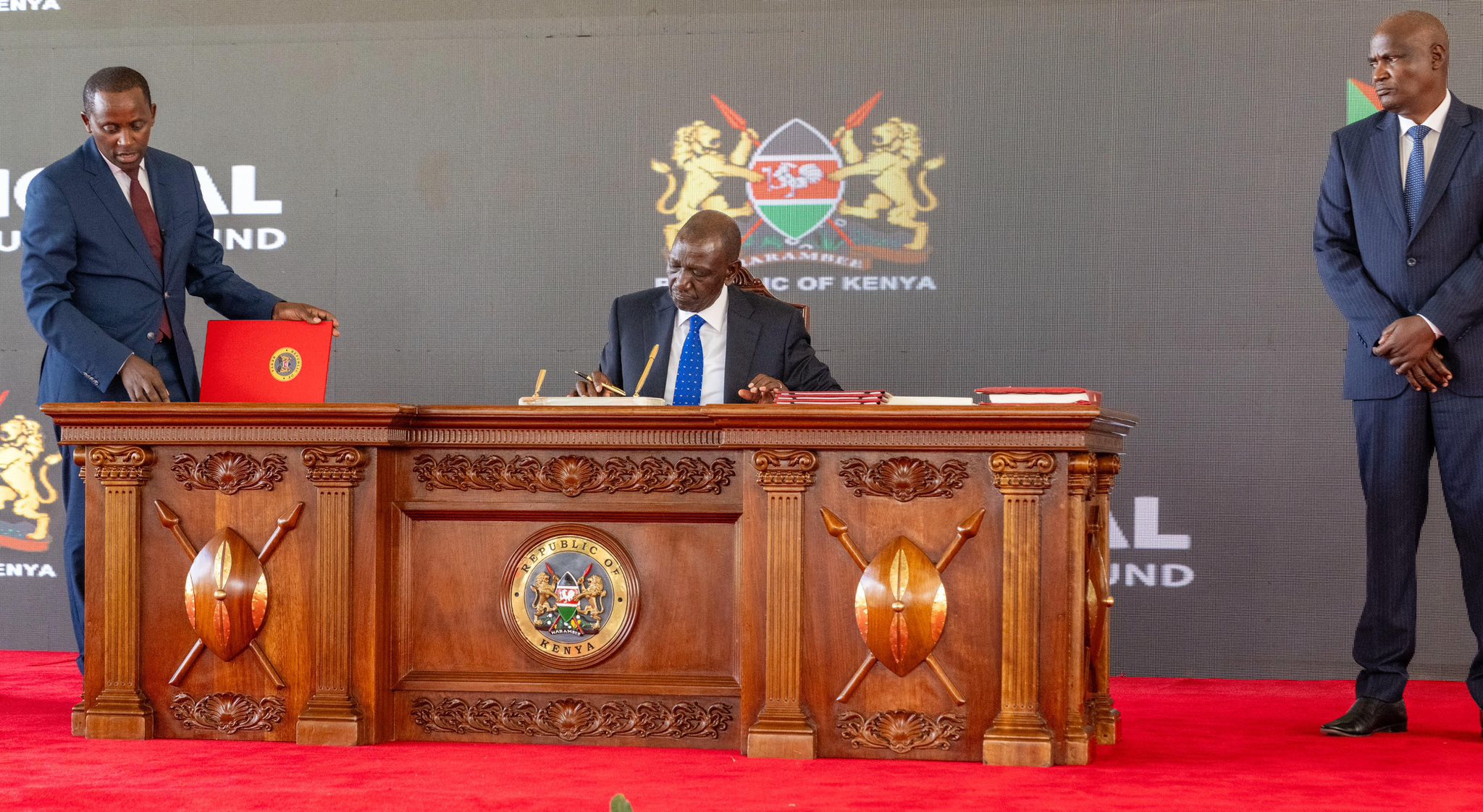
At the same time, Ruto has signed the National Infrastructure Fund Bill 2026 into law.
The event was attended by senior government officials from both the executive and the legislatures including National Assembly Speaker Moses Wetang’ula, leader of the Majority in the National Assembly Kimani Ichung’wah, Treasury CS John Mbadi, Treasury PS Chris Kiptoo, and CBK Governor Kamau Thugge.
The event comes days after the National Assembly passed the National Infrastructure Fund Bill, 2026, which was sponsored by Ichung’wah.
The National Infrastructure Fund Act 2026 aims to mobilize Ksh5 trillion to shift infrastructure financing from a debt-driven model to a sustainable, investment-led approach.
The new law will establish a National Infrastructure Fund (NIF), which is expected to mobilize resources for key projects across sectors, including transport, energy, water, irrigation, and digital connectivity.
The Fund will also support development of highways, railways, ports, agribusiness infrastructure and other strategic national projects.
NIF will be a corporate body that will be able to enter into contracts, borrow money, purchase, charge, and dispose of movable and immovable property.
The Fund will predominantly source money from infrastructure finance, including domestic pension funds and collective investment schemes, sovereign wealth funds, and climate finance.
NIF will be managed by a Board of Directors and a Chief Executive Officer (CEO). The board will be tasked with mobilizing resources for the Fund through investment in projects and entering into contracts on its behalf.
It can also invest in projects on behalf of the NIF through equity investment or debt, based on the bankability of the projects.