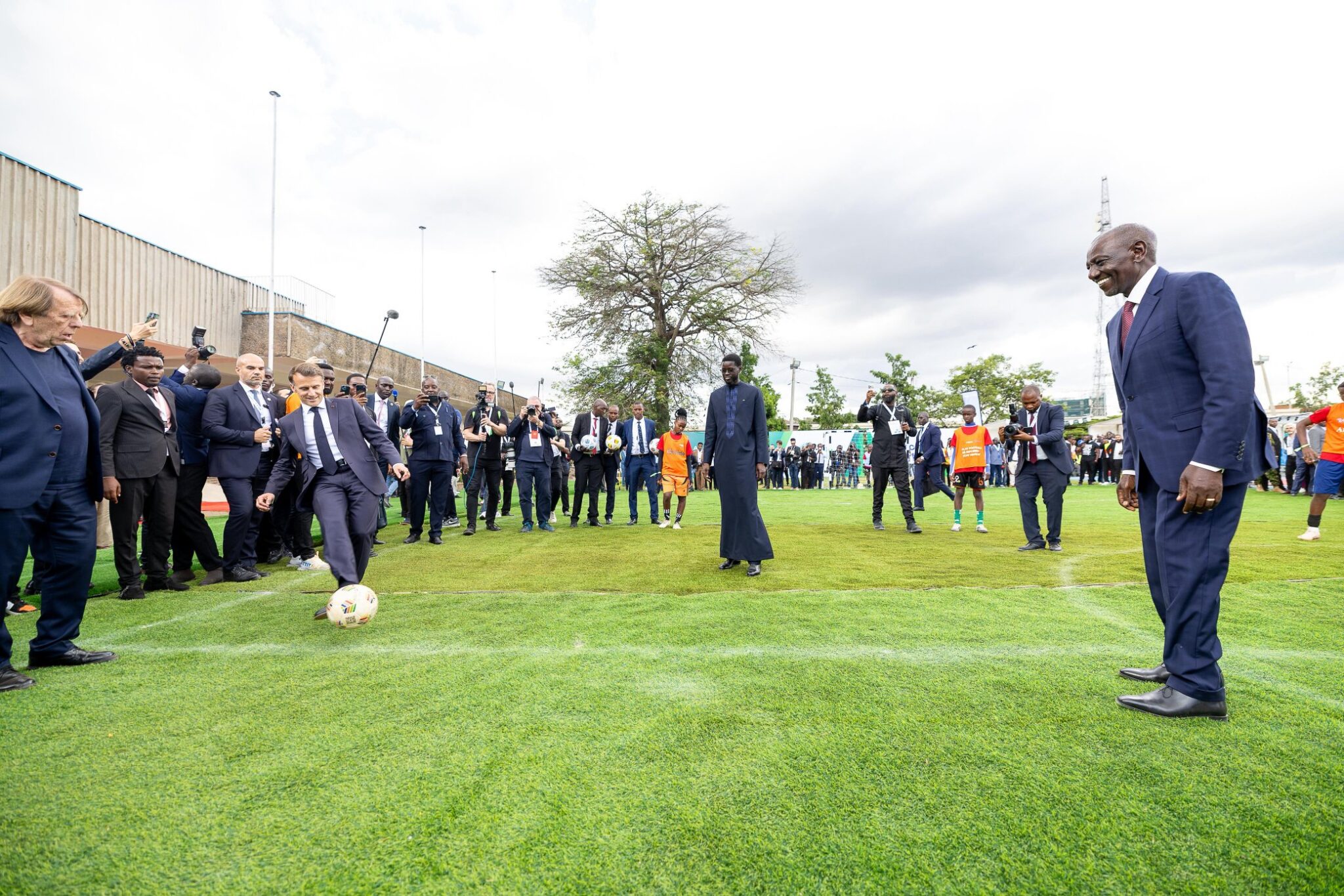
President William Ruto has called on Africa to position sports at the centre of its economic transformation.
The President said the continent must invest in building African-owned sports industries that create wealth and jobs for its young population.
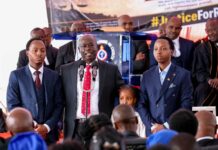
Speaking at a high-level dialogue on the commercialisation of sports at the University of Nairobi on Monday, Ruto said Africa’s demographic advantage offers a historic opportunity to build one of the world’s most dynamic sports economies.
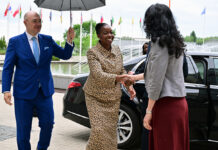
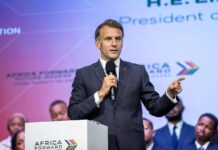
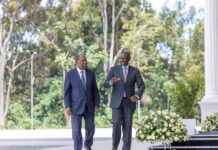
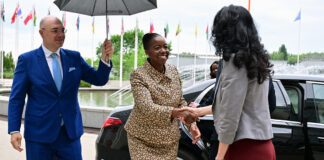
The dialogue brought together French President Emmanuel Macron, Botswana’s President Duma Boko, and Senegal’s President Bassirou Diomaye Faye. The leaders noted that Africa’s sporting talent remained largely untapped despite its global reputation.
“Africa today is the youngest continent on Earth. More than one billion Africans are below the age of 35,” President Ruto said.
“That is not simply a statistic. It is a historic opportunity to turn talent into enterprise, passion into prosperity, and potential into power.”
President Ruto noted that sports can no longer be viewed as mere recreation or competition. “Today, sports is infrastructure. Sports are an investment. Sports is culture, diplomacy, technology, tourism, and jobs,” he said.
The global sports industry, he said, generates billions annually through broadcasting, manufacturing, tourism, technology and talent development, and warned that Africa risked being left behind if it remained on the margins.
“Africa must not stand at the margins of this global industry. Africa must stand at its centre,” he said.
Kenya, he stated, has deliberately placed sports as a pillar of its Bottom-Up Economic Transformation Agenda to unlock enterprise, livelihoods, and national competitiveness.
The President outlined Kenya’s investments ahead of co-hosting the Africa Cup of Nations 2027 with Uganda and Tanzania under the PAMOJA partnership.
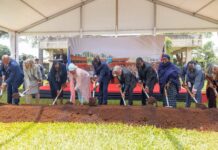
The country is developing Talanta Sports City, anchored by the 60,000-seat Raila Odinga International Stadium, alongside training facilities, hospitality infrastructure, commercial spaces, media production centres and smart mobility systems. Kasarani and Nyayo stadiums are being upgraded, while county stadiums, regional academies and high-performance centres are being built across the country.
“Nairobi is also being positioned as one of Africa’s leading creative and entertainment capitals,” Ruto said, citing investments in audio-visual infrastructure, film incentives and digital monetisation systems.
He said Kenya and Zaria Group have entered into a deal to develop a modern arena and entertainment district within Nairobi Railway City. Additionally, he noted that Kenya is engaging partners to establish another facility at the Bomas Convention Centre, with an initial $130 million (Ksh16bn) investment planned for multi-purpose indoor arenas across 10 African cities.
“These initiatives will strengthen Nairobi’s position as a regional MICE, creative and investment hub while creating thousands of jobs and opening new opportunities for African youth and enterprise,” he said.
President Ruto said the co-hosting model for AFCON 2027 reflected a “progressive Pan-African framework” built on shared infrastructure and collective investment.
He pointed to AFCON’s growing economic weight, noting that the 2025 edition in Morocco generated an estimated $1.9 billion(Ksh245bn) impact, while the 2023 tournament in Côte d’Ivoire brought in about $1 billion (Ksh130bn) through tourism, broadcasting, hospitality and job creation.
“The most recent edition attracted more than 3 billion television viewers globally and generated over 6.1 billion digital views,” he said. “That is not only influence. That is market power.”
President Ruto said Africa’s authentic sporting culture, landscapes and experiences gives it an edge in sports tourism.
“Partnerships between Africa and France present enormous opportunities to accelerate sports commercialisation, infrastructure modernisation, innovation, sports science, athlete development, and the creative economy,” he said, calling for African talent and market potential to be paired with French expertise and investment.
President Macron said sports infrastructure is critical for talent development and youth employment.
“Sports enable many people to use their talents to earn an income,” Macron said. “They also inculcate discipline among young people.”
Africa, he added, has a huge potential that needs to be tapped.
“The sports industry is massive, and Africa is yet to get its rightful share,” said the France leader.
Botswana’s President Duma Boko highlighted his country’s dominance in relay races, saying “no one can beat us in that segment of athletics.” Beyond competition, he said, sports serve as a “powerful unifying force” across the continent.
Senegal’s President Faye, whose country is known for its football prowess, joined the call for greater investment in grassroots talent and infrastructure.
The leaders concluded that sports act as a bridge between culture, diplomacy, tourism and economic growth, with Africa well placed to lead if it moves with speed in making the necessary investments.