By Peter John
Djibouti has launched its largest-ever privately led housing project, a $480 million development that underscores the country’s accelerating urban and economic transformation.
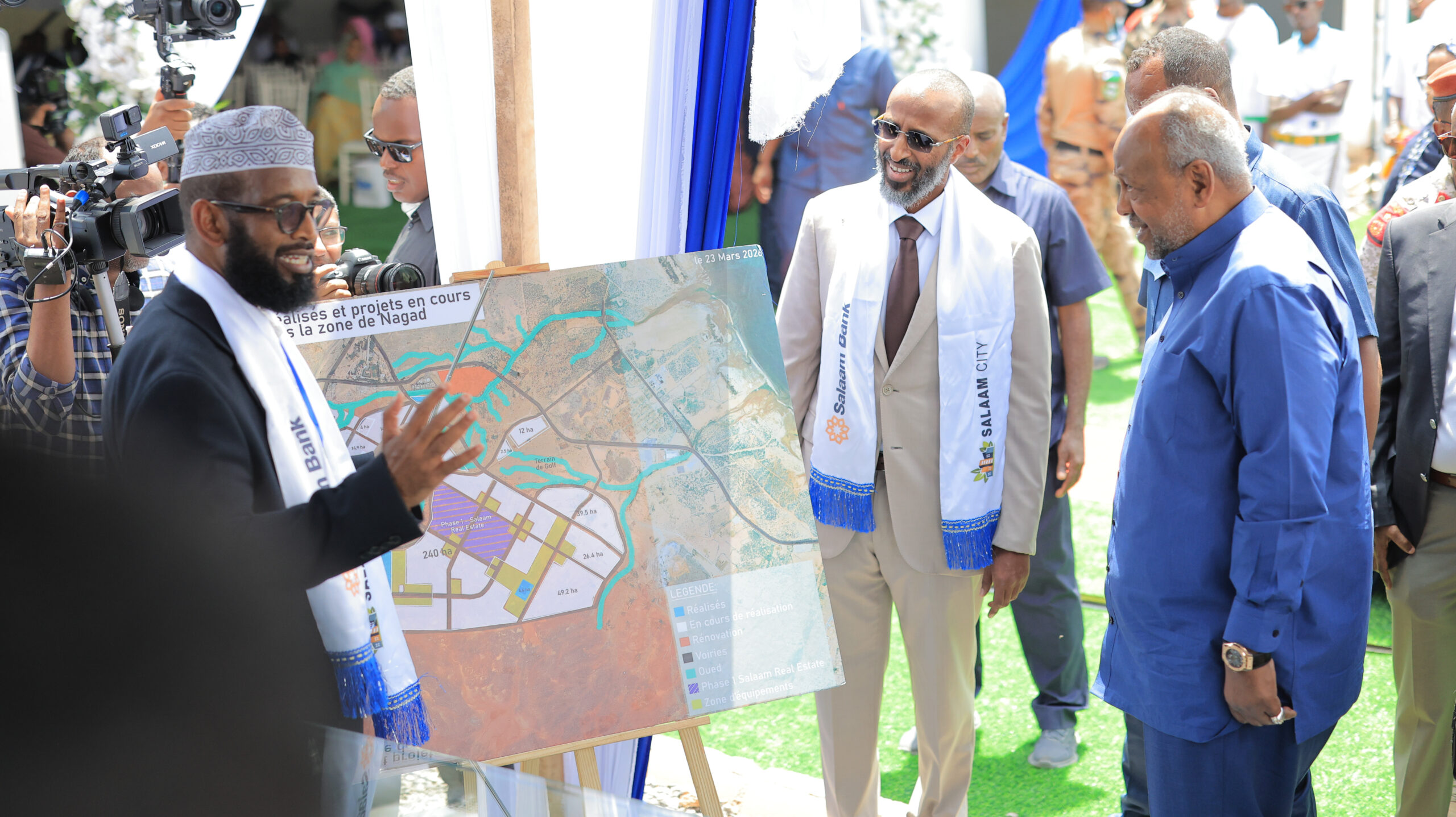
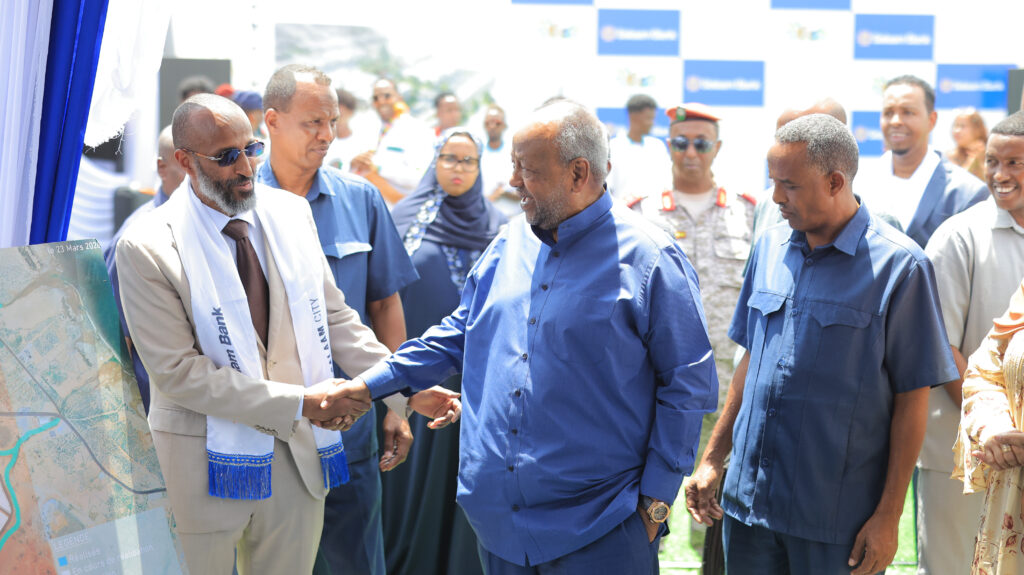
The project, known as Salaam City, was officially unveiled on March 23 in Nagad during a ceremony presided over by President Ismaïl Omar Guelleh.
The head of state toured newly completed model homes and took part in a symbolic groundbreaking to mark the start of full-scale construction.
Developed by Salaam Real Estate, Salaam City is planned as a large mixed-use development spanning 2.4 million square metres and will deliver more than 7,000 homes.
The project is designed as a “city within a city,” integrating residential units with essential social and commercial infrastructure, including schools, healthcare facilities, a mosque, retail outlets, offices, and public recreational spaces.
The initiative comes at a time when demand for quality housing in Djibouti is rising, driven by the country’s growing role as a regional logistics and trade hub.
Located near the Bab el-Mandeb Strait, one of the world’s busiest shipping routes, Djibouti has in recent years invested heavily in ports, railways, and transport infrastructure under its long-term Vision 2035 strategy.
Speaking during the launch, Salaam Real Estate General Manager Mustafe Liibaan said the development reflects the country’s changing economic landscape and the need for inclusive urban growth.
He noted that Salaam City aims to provide not just housing, but a well-planned community where families can access modern amenities and a secure living environment.
The project targets a wide range of buyers, offering affordable, mid-range, and premium housing options to cater to Djibouti’s expanding middle class and professional workforce.
Financing for the development will be supported by Salaam African Bank, which is expected to provide Islamic financing solutions to make home ownership more accessible.
Bank officials say the goal is to ensure that the project is not only built but also within reach for prospective homeowners.
Construction will be carried out in phases over a five-year period, with the first residents expected to move in from 2028.
At peak construction, the project is projected to employ up to 2,000 people across various sectors, including engineering, construction, and technical services.
Beyond housing, Salaam City is expected to contribute to broader economic activity while promoting sustainable urban development.
Plans for the project incorporate energy-efficient building techniques, environmentally friendly materials, and landscaped green spaces aimed at improving quality of life.
President Ismaïl Omar Guelleh said the development aligns with the country’s broader vision of improving living standards while supporting economic growth.
He emphasized the importance of expanding access to quality housing, creating jobs, and building inclusive communities.
As Djibouti continues to position itself as a strategic gateway between Africa, the Middle East, and global markets, projects like Salaam City highlight a shift toward more structured and integrated urban planning, reflecting the evolving needs of a rapidly modernising