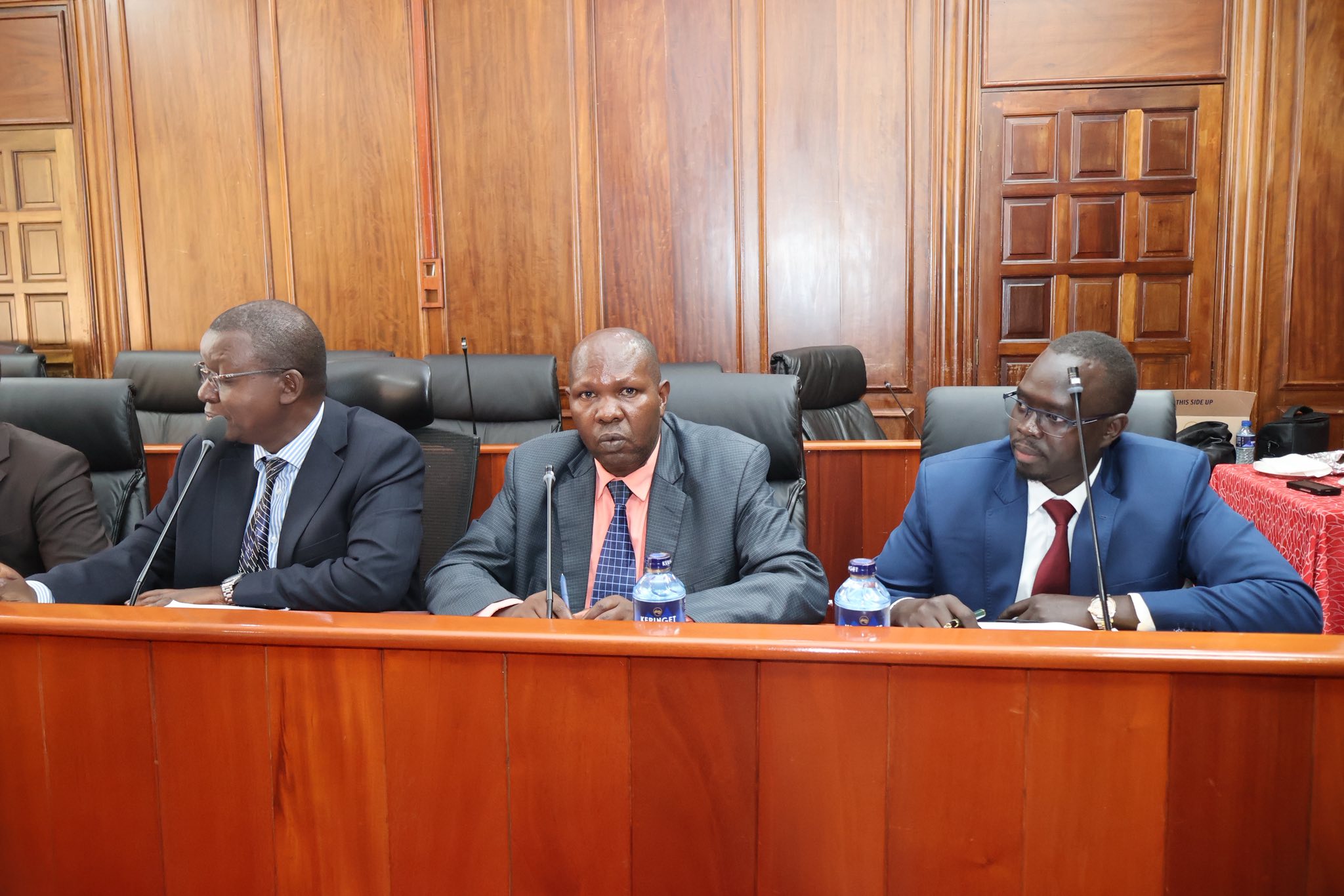
The Senate Standing Committee on Agriculture, Livestock and Fisheries chaired by Sen. Wafula Wakoli (Bungoma) today held a meeting with representatives from the Kenya Sugar Board to deliberate on key regulatory and farmer-related issues affecting the sugar sub-sector.
The engagement focused on the implementation of reforms under the Sugar Act 2024, including the current sugarcane pricing framework, regulation and licensing of millers, the impact of sugar imports on the domestic industry and the status of farmer registration and cane development programmes.
During the meeting, the Board briefed the Committee on the formula-based cane pricing mechanism administered through a statutory Sugarcane Pricing Committee comprising representatives of farmers, millers, county governments from sugarcane-growing regions and the national government. The framework links the price payable to farmers to the average ex-factory sugar price, ensuring that farmers receive a share of the industry’s market performance.
Members were informed that several safeguards have been introduced to enhance transparency and fairness in farmer payments, including statutory timelines for miller payments, mandatory cane supply agreements, detailed payment statements for delivered cane and the gradual transition to a quality-based cane payment system that will reward farmers based on sucrose content.

The Committee also reviewed the licensing and regulation of sugar millers under the law. The Board reported that 17 sugar factories have been registered and licensed to operate across designated cane catchment areas in the country. However, the Board noted that Kwale International Sugar Company Ltd has not been issued with a mill operating licence due to non-compliance with regulatory requirements.
Members further examined the impact of sugar imports on the domestic sugar industry. The Board explained that increased imports in 2023 were necessitated by a shortage of mature sugarcane and temporary closure of several mills to allow the crop to reach maturity. The situation improved in 2024 following increased cane supply and higher domestic sugar production.
The Committee was informed that uncontrolled or illegal sugar imports can suppress local sugar prices, reduce off-take of locally produced sugar and disrupt mill operations, ultimately affecting farmer incomes. To address this, the government has strengthened regulatory oversight through coordinated monitoring by agencies including the Kenya Revenue Authority and the Kenya Bureau of Standards.
On farmer registration and cane development, the Kenya Sugar Board indicated that over 401,000 sugarcane farmers are currently registered across various counties, with the highest numbers recorded in Kakamega County, Bungoma County and Busia County.
The Board further highlighted ongoing initiatives aimed at improving farmer productivity and sustainability in the sector, including promotion of good agricultural practices, access to subsidised fertiliser, financing through the Sugar Development Fund and support from the Kenya Sugar Research and Training Institute.
Senators present included Sen. Alexander Munyi Mundigi (Vice Chairperson), Sen. Catherine Mumma (Nominated), Sen. Prof. Tom Ojienda (Kisumu) and Sen. Abass Mohammed (Wajir).
By Anthony Solly