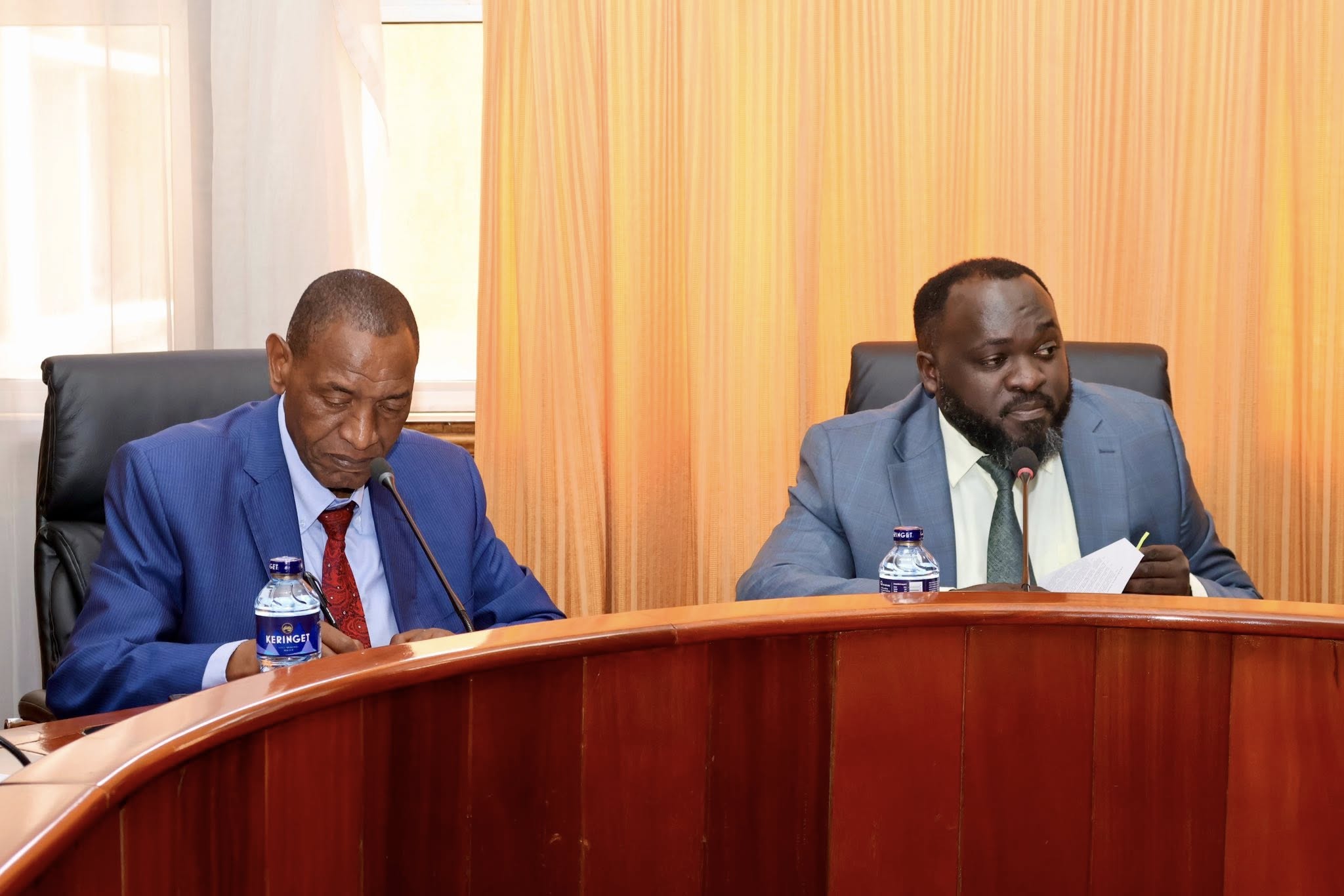
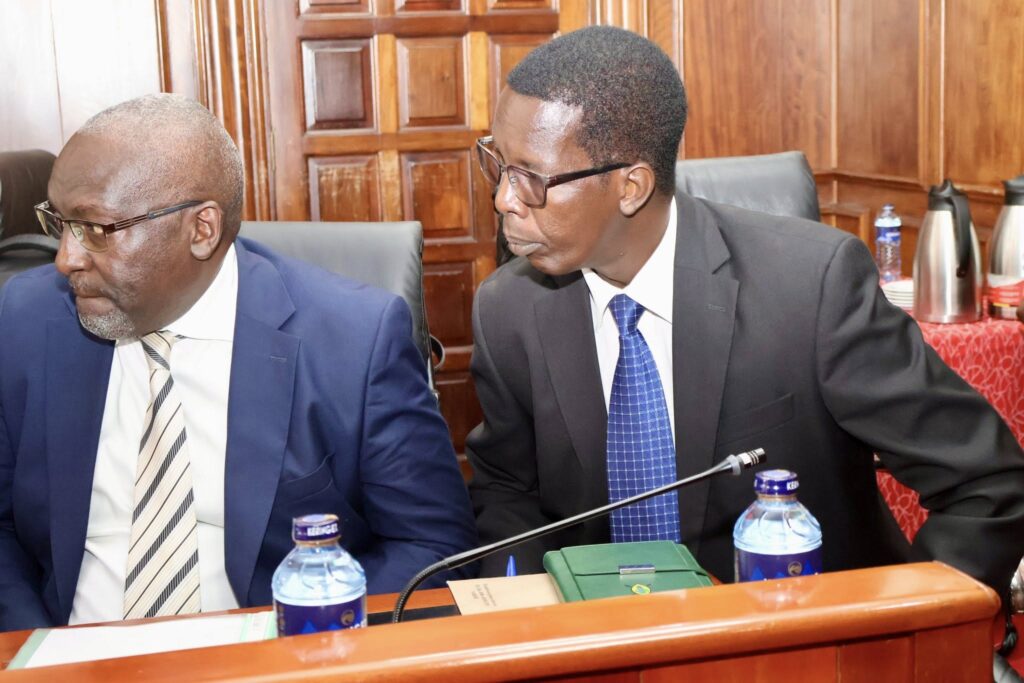
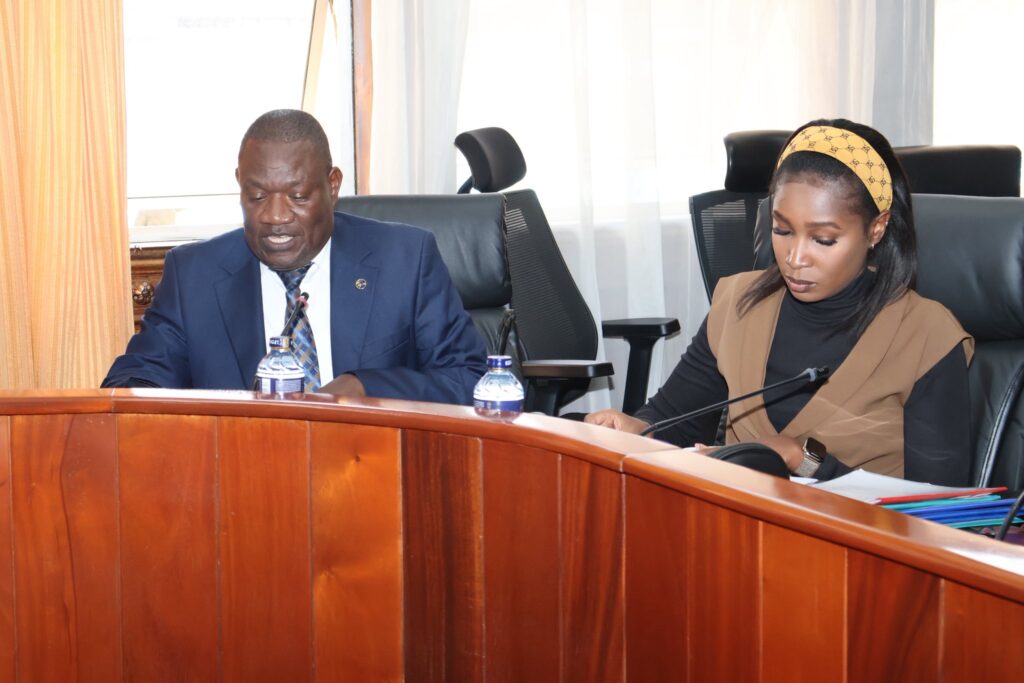
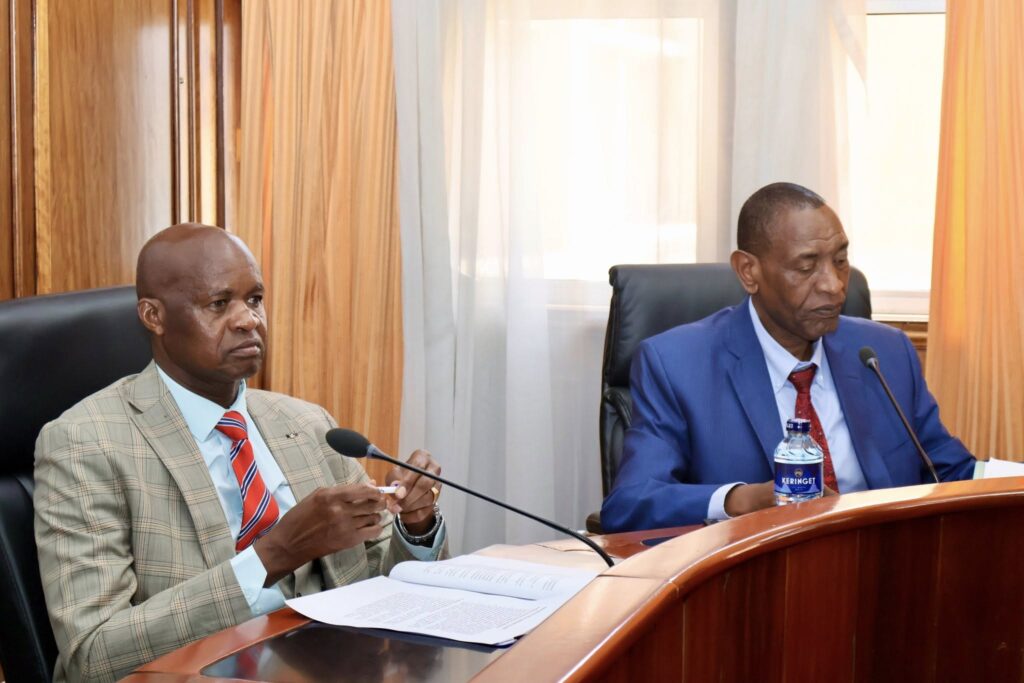
The Senate Standing Committee on Agriculture, Livestock and Fisheries chaired by Sen. David Wakoli( Bungoma) today engaged the National Cereals and Produce Board (NCPB) in a detailed review of the country’s food security situation, with a focus on grain reserves, storage capacity and post-harvest management systems.
During the session, Members were informed that the National Grain Reserve is currently without maize stocks, with only 1,942 of 50 kg bags of beans held in reserve. The Board indicated that it has been allocated Kshs.1.22 billion to support the purchase of maize and other staple crops during the upcoming harvest period.
It was further noted that projections on expected inflows remain dependent on the ongoing planting season and prevailing weather conditions, with NCPB planning to procure at least 4.5 million bags of maize once harvesting begins.
The Board outlined its preparedness measures, noting that it has set aside storage capacity of up to 6.7 million bags across major producing regions. It also highlighted the establishment of aflatoxin testing laboratories in key depots including Bungoma, Eldoret, Nakuru, Nairobi and Meru to ensure that grain received meets safety and quality standards.
The Committee also reviewed the Board’s drying infrastructure, where it was noted that NCPB operates both fixed and mobile grain dryers across the country. Ten fixed dryers are installed in major silos, with nine currently operational, while sixty-five mobile dryers have been deployed across thirty-one counties and multiple depots.
However, operational gaps were observed within the system, including a non-functional dryer in Webuye, a vandalized unit in Maua, and the redeployment of several units to support irrigation activities at the Galana Kulalu project.
It was further observed that while the dryers are largely accessible to farmers, utilization levels vary across regions, particularly in areas where traditional sun drying remains prevalent.
On post-harvest management, the Board outlined measures aimed at minimizing losses, including mandatory moisture testing before grain intake and the use of dryers to ensure safe storage levels. Trained personnel have also been deployed to manage drying operations, while pest control teams continue to oversee fumigation and storage conditions across depots.
The Committee was also informed that infrastructure gaps remain, particularly the lack of drying floors and weather shelters at some mobile dryer sites, which exposes grain to contamination and moisture reabsorption during handling.
Despite this capacity, the need for improvements in access roads, drainage and yard surfaces was noted in several depots, including Lessos, Tala, Kitui, Butere, Nanyuki and Yala, especially during peak harvest periods and rainy seasons.
The Board also reported that while most depots are not prone to flooding, drainage challenges have been identified at Kipkabus Depot in Uasin Gishu County, with mitigation measures currently under consideration.
On farmer support during peak harvest periods, Members were informed that the Government has set and reviewed the minimum maize price from Kshs.3,500 to Kshs.4,000 per 90kg bag to cushion farmers from market fluctuations.
The Board further indicated that payments to farmers are processed within 48 hours, while calibrated weighing systems have been installed across depots to ensure accuracy and transparency in transactions.
Additionally, the Committee was briefed on broader efforts to stabilize the cereal market, including the use of the Warehouse Receipt System, strategic release of grain stocks and continued support to farmers through subsidized farm inputs.
The engagement highlighted the importance of strengthening storage, drying and handling infrastructure, with Members emphasizing the need for sustained investment to enhance efficiency, reduce post-harvest losses and reinforce the country’s food security systems.
By Anthony Solly