Stacy Boit,
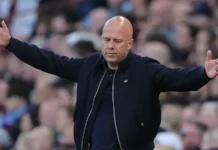
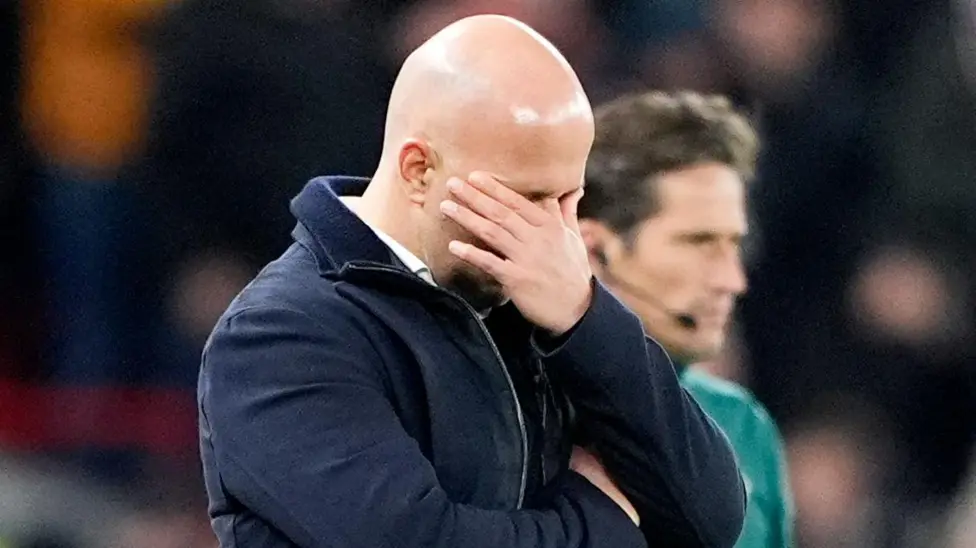
Arne Slot’s sacking at Liverpool completes one of the most remarkable falls from grace of any Premier League title-winning manager.
Chelsea sacked three managers swiftly after the same success as Slot – but then owner Roman Abramovich’s unique demands made them a special case.
This is Liverpool, the supposed bastion of stability.
Carlo Ancelotti was sacked by Chelsea at the end of his second season in 2011 after winning the league and FA Cup double in his first. Jose Mourinho’s second spell at Stamford Bridge ended when he was axed in December 2015, seven months after winning the title, as they lay one point above the relegation zone.
Antonio Conte went the same way in July 2018 after winning the title in his first season then FA Cup in his second, while Leicester City dismissed Claudio Ranieri in February 2017 as they were only one point off the relegation places nine months after their remarkable Premier League triumph.
But none, arguably, have been shown the door from an earlier position of such strength as Slot – sacked a year after winning the title with ease in his first season in succession to Jurgen Klopp, then having his squad bolstered by a staggering £450m spending spree.
So why did it unravel for the Dutch head coach who many Liverpool fans initially regarded as the calm, transitional Bob Paisley figure to predecessor Klopp’s firebrand, charismatic Bill Shankly?
Slot’s seamless transition from the iconic Klopp saw the German’s squad – with only the addition of £10m Juventus forward Federico Chiesa – win the title by 10 points with four games to spare, losing only twice until the job was done with victory over Tottenham Hotspur.
So was Slot purely the beneficiary of taking over ready-made title winners then simply steering them to glory?
This would be incredibly harsh on Slot and his achievements.
Slot calmed understandable post-Klopp anxiety with his measured approach, but made key alterations that took away some of the thrilling chaos that preceded him to turn the title race into a procession.
Liverpool‘s main transfer target on Slot’s appointment was Real Sociedad’s Spain midfielder Martin Zubimendi, now at Arsenal.
With the deal almost done, Zubimendi decided to stay in La Liga, to the widespread angst of those Liverpool fans demanding big signings.
Slot blocked out the noise, turning to his countryman Ryan Gravenberch, something of an under-achiever under Klopp, to take the “number 6” role designated for Zubimendi.
It was a masterstroke, with Gravenberch outstanding as he provided the platform for a more organised Liverpool, not as exciting as under Klopp but cohesive, organised winners.
Slot also produced another key tactical move by using Luis Diaz, a gifted but occasionally erratic winger, as a striker. It was not the Colombian’s natural position but it suited him perfectly as he made many match-winning contributions.
He also won over Liverpool‘s biggest names who had under-pinned the Klopp glories of winning the Premier League, Champions League, FA Cup and two League Cups.
Mohamed Salah had arguably his finest season as Liverpool‘s squad bought into Slot’s methods as one – although this relationship turned to open hostility, at least on the Egyptian’s side, surfacing in two public outbursts, one in an interview and another on social media, that undermined the head coach.
Salah’s form fell off a cliff in previously unimaginable fashion before he announced this would be his final season at Liverpool after a magnificent career.
Yes, Slot inherited what Klopp described as Liverpool 2.0, but it was also a squad that had finished nine points off the title when the German left. The Dutchman changed that.
Slot was bequeathed quality, but he put his own stamp on it to make Liverpool title winners. To suggest otherwise is to downgrade his work unfairly.