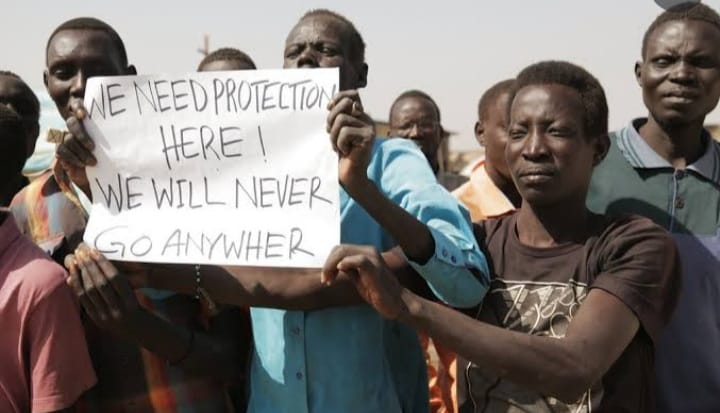
The youngest Nation in Africa has known no peace 11 years after Independence despite UN efforts to neutralize the high political temperature in the Country.
The last four and a half years in South Sudan have been marked by repression, violence against civilians, and attacks that have undermined UN efforts to keep the country at peace.
South Sudan descended into a violent conflict in 2013, with all sides committing atrocities against civilians. A 2015 peace agreement for a unity government fell apart in 2016, escalating conflict. That agreement was “revitalized” in 2018 by warring parties and was set to expire in February 2023. However, sporadic violence has persisted.
While large-scale conflict between peace deal signatories and rebel forces outside the deal has decreased since 2018, civilians in Central Equatoria, Unity, and Upper Nile states have continued to face conflict-related abuses. According to the UN, cases of sexual violence have increased by 218 percent since 2021.
The UN peacekeeping mission in South Sudan and the ceasefire monitoring unit documented attacks, killings, and sexual violence following clashes in April between government forces and their allied militias and the Sudan People’s Liberation Army (SPLA/IO) in Leer, Unity state. A government committee formed to investigate human rights concerns related to the attacks has yet to begin its work, and no one has been held accountable.
The UN peacekeeping mission documented the killings of 440 civilians and rapes of 64 women and girls in Tombura, Western Equatoria, in 2021, but no one has been held accountable. Senior government officials and rebels have routinely walked free after instigating and financing violence between and within communities.
Senior government officials have openly rejected calls for accountability for serious crimes committed by various groups, including government and rebel forces, across South Sudan during the conflict and after the signing of the 2018 peace deal.
Since the start of the current conflict in 2013, South Sudanese leaders have failed to provide clear timelines for the establishment and operation of a hybrid court to prosecute the most serious violations. The court’s construction has stalled since a plan to build it was first proposed in the previous peace treaty.
The authorities have focused on prosecuting lower-level officials through military courts, misrepresenting the scope of the atrocities.