By Stacy Boit,
Stock markets have fallen and the price of oil has risen after Washington and Tehran threatened to escalate hostilities, as the US-Israel war with Iran enters its fourth week.
Japan’s Nikkei share index closed 3.5% lower, London’s FTSE 100 fell 1.9% while the price of Brent crude rose 1%.US President Donald Trump warned on Saturday he would “obliterate” Iranian power plants if the key Strait of Hormuz shipping route was not reopened. Iran said it would respond to any such strikes by targeting key infrastructure in the region.
The head of the International Energy Agency (IEA) has warned that the war could see the world facing its worst energy crisis in decades.
Japan and South Korea have been particularly affected by the conflict, as they are heavily dependent on oil and gas that would normally pass through the strait. Korea’s Kospi share index closed down 6.5% on Monday.
The falls in European stock markets were not as sharp, but Germany’s Dax index and France’s Cac 40 were both down about 2%.
Iran has effectively blocked the Strait of Hormuz, one of the world’s busiest oil shipping channels, since the US and Israel attacked the country on 28 February.
About 20% of the world’s oil and liquefied natural gas usually passes through the waterway – and the war has sent global fuel prices soaring. IEA chief Fatih Birol compared the current energy crisis to those of the 1970s and the impact of Russia’s 2022 invasion of Ukraine.
“This crisis as things stand is now two oil crises and one gas crash put all together,” he said, speaking in Australia.
That threat came after Iranian missiles hit the Israeli city of Dimona, and shortly before a second attack on the town of Arad nearby.
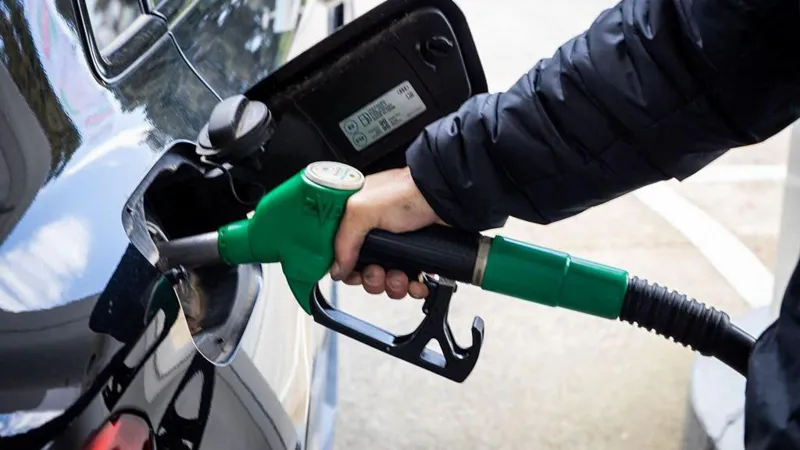
Such action would significantly escalate the conflict, which has already disrupted global energy supplies, pushing up prices and causing fuel shortages.
Simon Flowers, chairman and chief analyst at energy consultancy Wood Mackenzie, said the markets were waiting to see if the threats were “carried through”.
“If the US does strike Iranian infrastructure, it escalates the whole intensity of the war a step further and then we’d have to see if Iran strikes back at infrastructure tit-for-tat as they’ve done over the last week or so,” he told the BBC’s Today programme.
Global oil prices rose on Monday, with Brent crude climbing more than 1% to above $113.40 (£85.30) a barrel and US-traded oil was up more than 2% at $100.50.
The jump in oil and gas prices since the start of the conflict has raised fears of a sharp increase in domestic energy bills in the UK later this year.
UK Prime Minister Sir Keir Starmer spoke to Trump on Sunday and they discussed the need to reopen the Strait of Hormuz.
Later on Monday, Sir Keir is set to chair a meeting of the government’s emergency Cobra committee, which will be attended by Bank of England governor Andrew Bailey.
The meeting is expected to focus on energy security and the resilience of supply chains, and discuss the impact of the war on the cost of living.
The price of gold fell again to touch its lowest level for four months.The spot price was down 4.4% to $4,295 an ounce, but earlier it had fallen more than 8% to about $4,099. It is well below the peak of $5,594.82 an ounce it reached in January.
“Gold is usually seen as a safe haven in times of severe conflict, but a collision of factors is pushing down demand,” says Susannah Streeter, chief investment strategist at Wealth Club.
One is that the surge in energy prices seen since the conflict began is expected to push up inflation. This expectation is already increasing interest rates on government bonds. This makes gold a less attractive asset to hold as it earns no interest.
Streeter also says investors who have made losses elsewhere in volatile markets are selling gold to raise money, and another factor is that the strengthening in the value of the dollar also “makes gold more expensive for buyers in other currencies”.