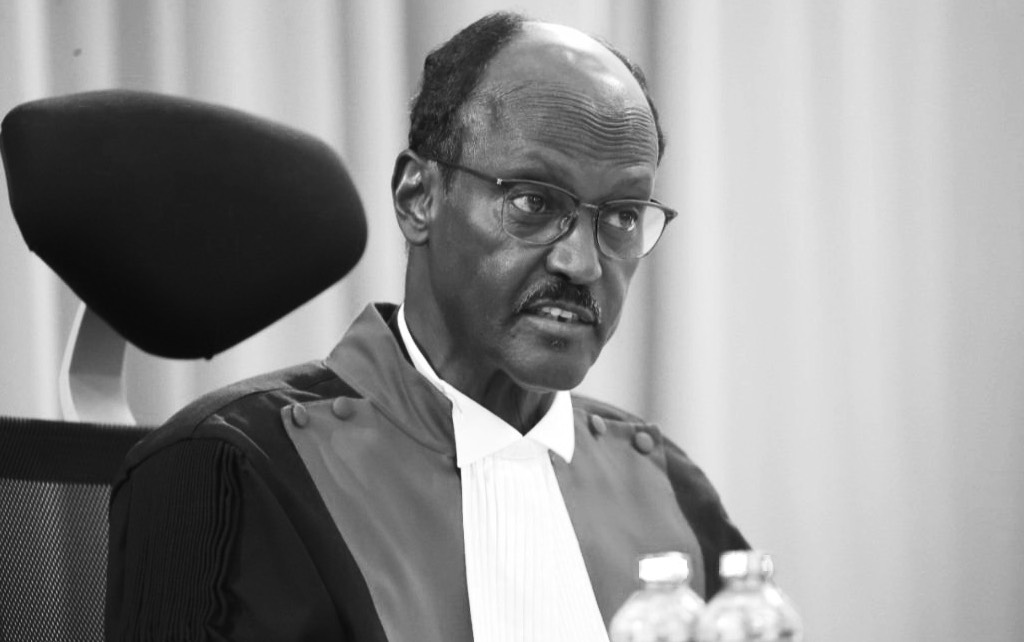
Justice Mohammed Khadhar Ibrahim, a pioneering Supreme Court judge and the first Kenyan Somali to be admitted as an advocate, has died after a prolonged illness, the Judiciary confirmed on Tuesday.
A senior official told local media that the judge passed away on 17 December, prompting tributes from across the legal community. Chief Justice Martha Koome described him as serving “with unparalleled grace and distinguished intellect”, adding that his calmness reflected a deep understanding of judicial authority as a tool for social order.
The Law Society of Kenya hailed him as a towering inspiration for those from marginalised communities.
Appointed to the inaugural Supreme Court in June 2011, Justice Ibrahim played a key role in landmark rulings, including the unanimous dismissal of Raila Odinga’s 2013 presidential election petition.
He briefly served as acting president of the court in 2016 following Chief Justice Willy Mutunga’s early retirement. More recently, he chaired the Judiciary Committee on Elections and represented the Supreme Court on the Judicial Service Commission.
Born into Kenya’s Somali community, Justice Ibrahim broke barriers when admitted to the bar in 1983 after graduating from the University of Nairobi and the Kenya School of Law. His early career involved human rights advocacy; he worked with Kituo Cha Sheria, co-founded Mwangaza Trust, and faced detention without trial in 1990 under the Moi regime for supporting pro-democracy activists.
Rising through the High Court from 2003, serving in Nairobi, Eldoret and Mombasa, he earned respect for tackling minority rights issues, including challenges to discriminatory identity policies affecting Kenyan Somalis.
His death comes weeks before his planned retirement on 1 January 2026 upon reaching 70, following terminal leave. Colleagues and advocates mourn the loss of a figure who embodied resilience and commitment to justice in a nation still grappling with inclusivity.
The Judiciary has yet to announce funeral arrangements, but his legacy as a trailblazer for underrepresented groups endures.