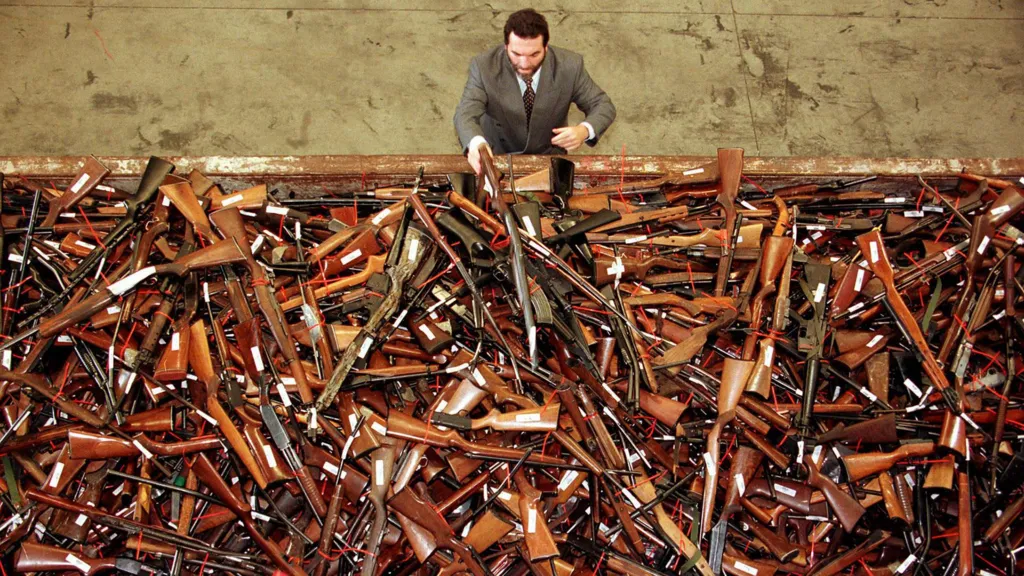
For decades, Australia has stood as a global beacon for stringent gun control, a legacy forged in the aftermath of the 1996 Port Arthur massacre that claimed 35 lives. Yet the Bondi Beach attack, which killed 15 people on Sunday, has exposed a more complicated national reality, challenging the country’s self-image and rekindling painful memories for veteran advocates.
Roland Browne, a leading gun control campaigner who worked in the wake of Port Arthur, was ironically meeting with fellow advocates on Sunday to lobby for a ban on the very type of rifle used in that 1996 tragedy when news of the Bondi shooting broke.
“There’s just a lot of similarities,” Browne told the BBC, noting both were public, tourist-filled spaces.
“It’s sickening and I’m bitterly disappointed in our political system whereby the voices for tighter gun laws and public health aren’t listened to until there’s a major event like this.”
Browne’s work helped establish Australia’s world-renowned laws, a path mirrored by the UK after the Dunblane school shooting a month before Port Arthur—an event whose victims’ families he still knows.
However, the Bondi attack has starkly revealed that Australia’s reality is not as clear-cut as its international reputation suggests. The incident has ignited a fierce national debate, forcing a re-examination of whether the landmark reforms of the 1990s have been sufficiently maintained and enforced to prevent such tragedies in the modern era.
By James Kisoo