By Stacy Boit,
China’s economy was just starting to open up in the late 1980s when a determined high school dropout made his way to Beijing with 600 pairs of shoes.
Ding Shizhong had them made in a relative’s factory and now he was going to sell them. The money he earned paid for his first workshop where he began making footwear for other companies.
The 17-year-old was one of China’s many newly minted entrepreneurs as capitalism took off under the watchful eye of its Communist Party rulers.
But, as it turns out, Ding had much bigger plans.
His business has since grown into a sportswear powerhouse called Anta, which has been building a stable of international brands, including Arc’teryx and Salomon. Most recently it bought a stake in Puma.
Now it is trying to take on the likes of Nike and Adidas, a goal that Ding spelled out in 2005: “We don’t want to be the Nike of China, but the Anta of the world.”
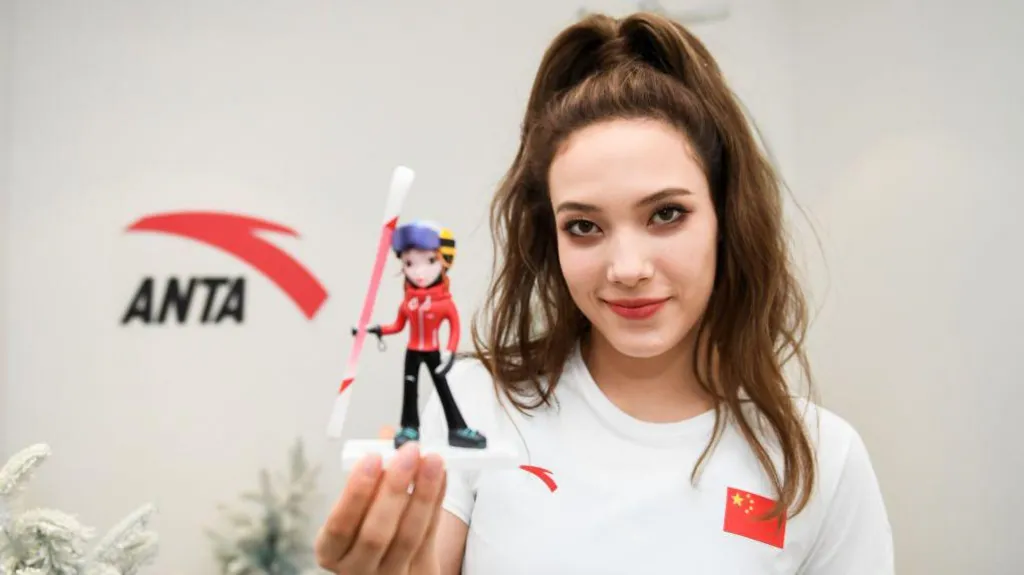
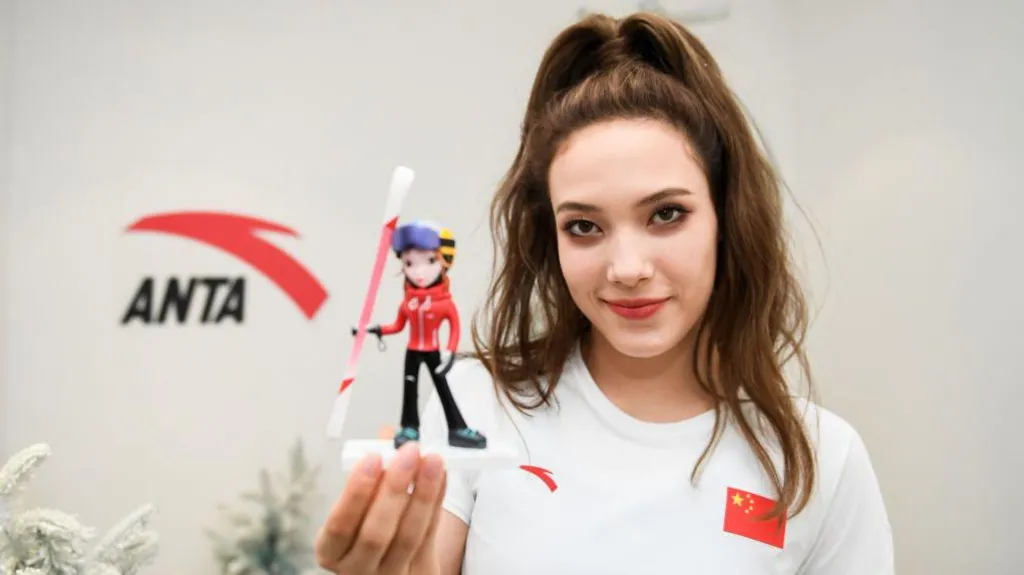
Anta may not be a household name in the West yet, but it has more than 10,000 shops in China and sponsors top athletes like freestyle skier Eileen Gu.
In February, it opened its first US outlet – a flagship store in Los Angeles’ upscale Beverly Hills area.
The company’s global push, which comes as Donald Trump aims to bring factory jobs back to the US with tariffs, highlights just how essential and competitive Chinese supply chains have become for manufacturing.
The rise of Anta – which means “safe steps” – is not exactly unique. Decades of being the world’s factory have given several ambitious Chinese companies the opportunity to take on the very firms they once counted as customers.
Founded in 1991, Anta began far from the glitz and the glamour of Beverly Hills as a small manufacturer in Jinjiang city in the south-eastern province of Fujian.
Jinjiang grew rapidly from a quiet agricultural county into the “shoe capital” of the world as part of the government’s plan to create specific industries in different provinces.
Soon, there was an influx of investment from sneaker giants who were in search of overseas factories that could help bring down their production costs.
Several clusters focusing on different sorts of footwear emerged in Jinjiang and neighbouring cities along the eastern coast, each with its own specialised supply chain.

At the Jinjiang hub’s core lies Chendai town, an area of around 40 sq km (15.4 sq miles) that is home to thousands of factories and suppliers. The district helped cement the city’s reputation making shoes for global brands such as Nike and Adidas.
Each hub brought together suppliers of laces, soles and fabric, as well as logistics firms that help to quickly turn designs into store-ready products and ship them out.
By 2005, Fujian alone accounted for nearly a fifth of the world’s shoes, according to estimates by the UN.
As much as a third of Jinjiang’s workers are still employed by one of thousands of shoe-makers in the city, which is among the highest-earning economic districts in China.
Something similar has played out in various parts of China – Jinjiang was just one of many manufacturing clusters on the eastern coast alone. The others made clothes or electronics.
This level of specialisation in manufacturing was unseen elsewhere in the world at the time, says University of Bath associate professor Fei Qin, who studied factories across eastern China in the 2000s.
As foreign customers flocked to strike deals with these factories, the country reaped more than income.
“They learned not only how to make more, but how to produce better, faster and more consistently,” Fei adds.
It was along these streets that Anta grew, making shoes in bulk and cheaply for global brands.
It established a vast distribution network to retailers across China, which is crucial for manufacturers seeking to expand.
At the same time, Anta was slowly getting its name out domestically, opening new shops and partnering with major sporting events, including national basketball and table tennis competitions.
Firms like Anta know thatthere is more value in being a known brand rather than a subcontractor, Fei says.
In 2007, Anta listed on the Hong Kong Stock Exchange, raising around HKD3.5bn (£330m; $450m) – a record then for a Chinese sports company.
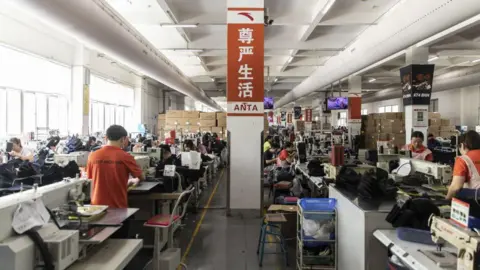
Branding consultant Wei Kan, who worked with Converse and Nike in China, says Anta had stood out to him because of its fully-fledged production hub that allowed it to design and sell shoes faster than its rivals.
It was also among the few Chinese firms that targeted the same buyers as big Western brands, Kan says.
Companies like Anta, which start off making goods for global brands, gradually learn the fundamentals of managing the business, do well in China and “naturally go on to bigger things”, Kan adds.
There are many others such as technology firm Xiaomi, which began as a software developer customising Android-based systems, before making its own phones, electronics and now, electric vehicles (EVs).
Likewise, DJI made gear for cameras and drone components before it became an international drone maker in its own right.
The best-known example is perhaps BYD, once a battery-maker for EV pioneers like Tesla and now the world’s top manufacturer for the sector.
“Each of these firms are now giants in their fields,” Kan says.