If you drive through Ruaraka today, past the factories, hardware yards, and narrow roads that pulse with matatus and traders, you’ll find yourself in an area called Baba Dogo. To most Nairobians, it’s just another busy industrial-residential neighbourhood. But behind that familiar name lies a story of generosity, faith, and how a single man’s kindness became immortalized on the city’s map.
A Man Known Simply as “Baba Dogo”
According to long-time residents, Baba Dogo wasn’t just a place — it was a person.
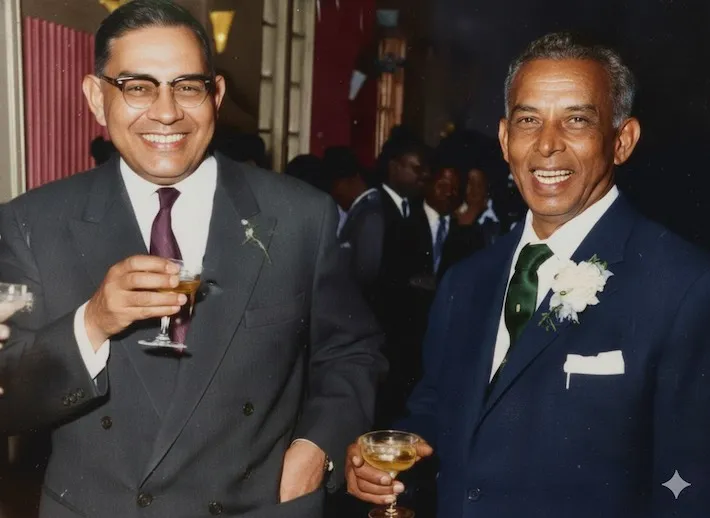
The Baba Dogo area in Nairobi, Kenya, is named after Francis Xavier D’Silva (sometimes spelled Da Silva), a generous Goan businessman who lived in the area during the 1960s and 1970s.
He was an Indian Muslim businessman, a landowner, and by all accounts, a deeply generous man who owned large tracts of land stretching from Ruaraka to the borders of Kenya Breweries.
During the late 1960s and early 1970s, Nairobi was still a patchwork of open fields, emerging industries, and expanding suburbs. In those days, this man — whose real name is sadly lost in the folds of memory — was known for his acts of charity that left an indelible mark on local families.
The Friday Ritual That Became Legend
Every Friday, after attending prayers at the Islamia Mosque in Kamukunji, he would get into his Land Rover and drive along Juja Road, turning toward Outering and Ruaraka. Along the route, families and children would line up by the roadside waiting for him.
He was known to stop, smile warmly, and distribute gifts — 2 cents per person, sometimes small packets of flour, sugar, or sweets for the children. It wasn’t just about the money; it was about the consistency of his generosity. People waited for him like clockwork, knowing that after prayers, Baba Dogo would come.
At the time, 2 cents (peni mbili) was not a small amount. For many struggling households, it could buy essentials or a meal. His acts brought relief and joy — and a sense that someone in power cared about the common folk.
From “Baba Mdogo” to “Baba Dogo”
In Swahili, grateful residents began referring to him as “Baba Mdogo” — meaning uncle or little daddy. But his heavy Indian accent made him pronounce it as “Baba Dogo! Baba Dogo!”
The affectionate nickname stuck, and soon everyone began calling both him and the area after it. Over time, the name spread across maps, government documents, and postal addresses — Baba Dogo Estate was born.
A Philanthropist and Builder
Beyond his Friday routines, he was known to have invested heavily in community development. Oral accounts say that on his land stood a police station, a church, and a school, all built for the benefit of the surrounding community and his workers.
He also built a dispensary, ensuring that locals — many of whom worked in the nearby factories or informal industries — could access basic healthcare. It was a practical kind of generosity, the kind that made everyday life better for ordinary Nairobians.
Older residents recall children singing songs of praise to him in the evenings, celebrating his goodness. Whether Goan or Indian Muslim by origin, he was remembered not for his background, but for his humanity.
A City in Transition
During the period when Baba Dogo lived, Ruaraka was one of Nairobi’s emerging industrial corridors. Kenya Breweries had already established its massive operations there, attracting workers and spurring the growth of estates such as Kariobangi, Lucky Summer, and Dandora.
Private landowners — many of them of Asian descent — played a crucial role in opening up these areas by selling, subdividing, or leasing their land for housing and commercial use. Baba Dogo was among the most prominent, remembered not for profiteering but for helping others build lives around his property.
As the city expanded, plots around Ruaraka were subdivided, sold, and built upon, yet the name Baba Dogo endured. What was once one man’s estate became a thriving community.
An Overlooked Legacy
Today, few Nairobians stop to wonder who Baba Dogo was. The estate’s name has outlived the memory of its founder — a man whose real name remains uncertain but whose acts of goodwill shaped an entire neighbourhood’s identity.
His story sits among many unsung tales of Nairobi’s formation: individuals who built schools, donated land for churches and mosques, or offered food to the hungry. They weren’t politicians or colonial officers; they were people whose humanity quietly helped the city grow.
In a way, the name Baba Dogo is more than just an address. It’s a tribute — a living monument to kindness, faith, and the kind of selfless giving that outlasts wealth and fame.
Echoes of the Past
Drive through Baba Dogo today and you’ll see the signs of change — warehouses, tech start-ups, new residential blocks, and constant construction. But if you ask an old resident where the name came from, chances are you’ll still hear the same story.
A man in a Land Rover, fresh from Friday prayers.
Children waiting by the road.
A handful of coins, a few packets of sugar, a smile.
Story by Makao Bora