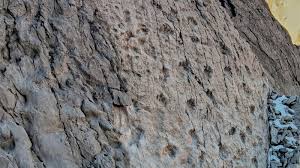
A vast site containing thousands of dinosaur footprints, dating back approximately 210 million years, has been discovered on the vertical face of a mountain in northern Italy’s Stelvio National Park.
The footprints, some measuring up to 40 centimeters (15 inches) in diameter and displaying clear impressions of toes and claws, are arranged in parallel rows across a rock wall stretching for hundreds of meters.
Paleontologists believe the tracks were made by prosauropods—long-necked, herbivorous dinosaurs that could grow up to 10 meters (33 feet) long.
The discovery was made last September by photographer Elio Della Ferrera. The site, now part of the Alpine chain, was a coastal tidal flat during the Triassic period. “I never would have imagined I’d come across such a spectacular discovery in the region where I live,” said Milan-based paleontologist Cristiano Dal Sasso, who is studying the site.
“This place was full of dinosaurs; it’s an immense scientific treasure.”
Analysis of the tracks suggests complex herd behavior. “The herds moved in harmony,” noted Dal Sasso, “and there are also traces of more complex behaviours, like groups of animals gathering in a circle, perhaps for the purposes of defence.” Some tracks show handprints in front of footprints, indicating the bipedal animals occasionally stopped to rest on their forelimbs.
Due to the site’s remote and inaccessible location, researchers plan to use drones and remote sensing technology for further documentation.
The Italian Ministry of Culture, which announced the find, drew a symbolic link to the upcoming Winter Olympics in the region, stating it was “as if history itself wanted to pay homage to the greatest global sporting event.”
Photographer Elio Della Ferrera expressed hope that the discovery would “spark reflection in all of us, highlighting how little we know about the places we live in: our home, our planet.”
By James Kisoo