Stacy Boit,

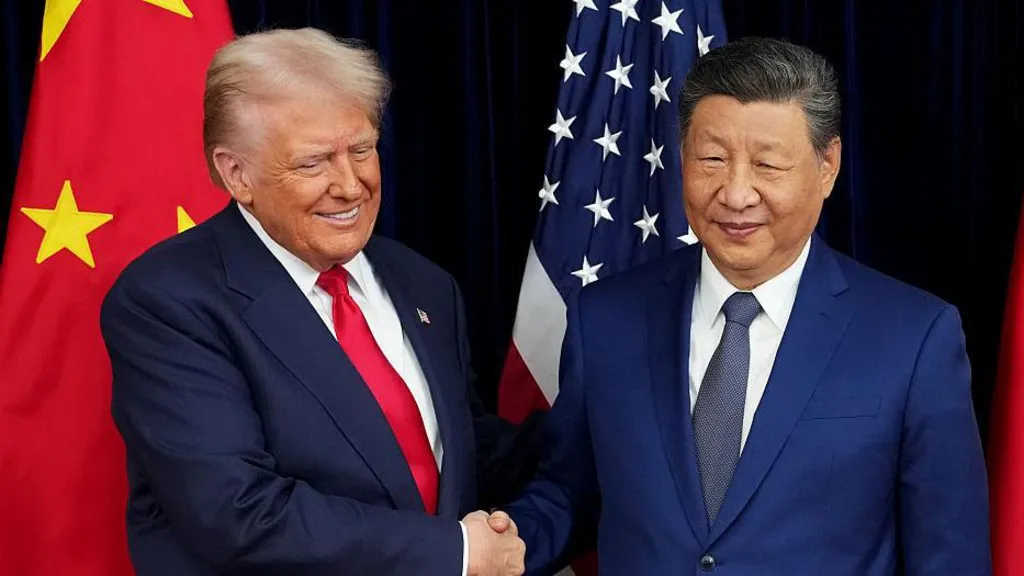
Beijing has confirmed that US President Donald Trump will travel to China this week to meet Xi Jinping.
The visit, from the 13 – 15 May, will be the first to China by a US president in nearly a decade – and comes at a pivotal moment for ties between the world’s two largest economies.
Executives from some of America’s biggest companiess – including Boeing, Citigroup and Qualcomm – are expected to travel with Trump, potentially to make deals with Chinese firms. It will also mark a key test in the fragile trade truce between Washington and Beijing.
In April 2025, Trump unveiled sweeping import taxes on countries across the world, friend or foe.
A major effect of that policy was a tit-for-tat trade war between the US and China that saw them hit each other with tariffs that topped 100%. The tariffs were paused after Trump and Xi’s last face-to-face meeting in South Korea in October. But threats from both sides have continued.
With so much at stake, here’s how we got here.Trump won the 2016 election vowing to make trade fairer for the US and to bring manufacturing jobs back to the country.
In 2018, he had announced tariffs on $250bn (£185bn) of Chinese imports – the moment that many analysts say the trade war started.
The same year, Trump imposed levies on other trading partners – including Mexico, Canada and Europe – which he said were also taking advantage of the US.
The sweeping measures were a shock, especially for China, said policy researcher Ning Leng from Georgetown University.
“It was the first time they dealt with Trump seriously, and they probably did not expect him to go ahead with it,” Ning said.
At the time, China was much more reliant on trade with America.
The US was a key importer of Chinese manufactured goods, putting its workers at risk if American buyers turned away due to Trump’s tariffs.
The tensions added to existing issues that have weighed on China’s economy for years, including sluggish domestic consumption, high unemployment and a prolonged property crisis.
Exports to the US offered a lifeline for Chinese jobs, but with Trump, that was now put at risk.
“It’s harder for one country to withstand a trade war with another that it has trade surplus with,” Ning said.
When Joe Biden succeeded Trump in 2021 he kept up the pressure on Beijing.
His administration chose to not lift Trump’s tariffs on China, sharing a belief that the US needed to keep a lid on its rival’s growth in sectors like technology, Ning said.
Biden also introduced restrictions on Chinese firms, including tech giant Huawei, which was essentially ousted from the US over national security concerns. He also put TikTok under scrutiny, with its US operation eventually being separated from its Chinese parent company.
Chinese electric vehicles (EVs) were also effectively blocked from the US market after heavy tariffs were imposed by Biden.
“We often think that Trump is tough on China, but there is an argument to say that Biden was even more protectionist than Trump was,” said economist Tang Heiwai from the University of Hong Kong.