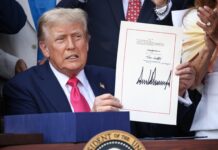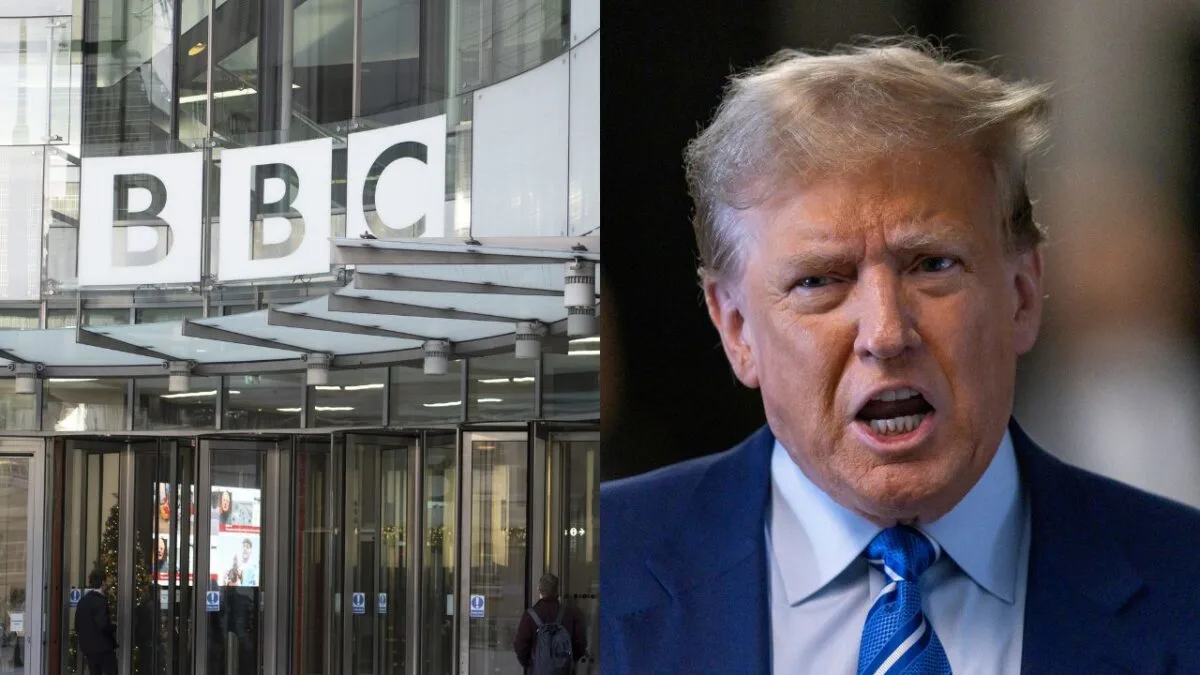
President Donald Trump has filed a lawsuit seeking up to $10 billion from the BBC, accusing the British broadcaster of defaming him through deceptive editing of his January 6, 2021, speech in a 2024 documentary.
The complaint, lodged in a US federal court in Florida on 15 December 2025, marks an escalation in Trump’s legal battles against media organisations he deems hostile.The case centres on a Panorama episode aired before the 2024 US presidential election.
Trump alleges the BBC spliced together separate parts of his speech – one urging supporters to march to the Capitol and another saying “fight like hell” – while omitting his calls for peaceful protest.
This, the lawsuit claims, created a false impression that he explicitly incited violence during the Capitol riot.Filed in Miami, the suit demands $5 billion for defamation and another $5 billion under Florida’s Deceptive and Unfair Trade Practices Act.
Trump’s lawyers argue the editing was intentional and malicious, describing it as a “brazen attempt to interfere in and influence” the election. They insist such distortion could not have been accidental, given the sections were nearly an hour apart in the original speech.
The BBC has previously acknowledged the edit as an “error of judgment” and issued an apology to Trump last month. However, it rejected any legal basis for defamation, with a spokesperson stating: “While the BBC sincerely regrets the manner in which the video clip was edited, we strongly disagree there is a basis for a defamation claim.”
The broadcaster has vowed to defend the lawsuit vigorously.Trump himself addressed the matter during an Oval Office appearance, saying: “They actually put terrible words in my mouth having to do with Jan. 6 that I didn’t say.”
Earlier, BBC chairman Samir Shah described the incident as an “error of judgment,” which contributed to the resignations of senior executives.This action follows a pattern of successful media challenges by Trump since his re-election.
Recent settlements include $15 million from ABC over comments by anchor George Stephanopoulos. Legal experts note that US defamation cases against public figures require proof of actual malice; that the defendant knew the statement was false or acted with reckless disregard for the truth.
The lawsuit’s international dimension raises questions about jurisdiction, as the BBC is a UK public entity. Trump may have chosen Florida due to its trade practices law and potentially favourable courts. In Britain, defamation claims face a one-year limitation, which has expired for this episode.
Observers see broader implications for press freedom and cross-border journalism. Critics argue such high-stakes suits could deter robust reporting on powerful figures, while supporters view them as necessary corrections to perceived bias.
The case remains in early stages, with the BBC preparing its defence. Future proceedings will test whether the editing meets the threshold for malice under US law, potentially setting precedents for foreign media operating in America.
Sources: The Guardian, Reuters, NPR, CNN, The Washington Post.
Written By Were Kelly