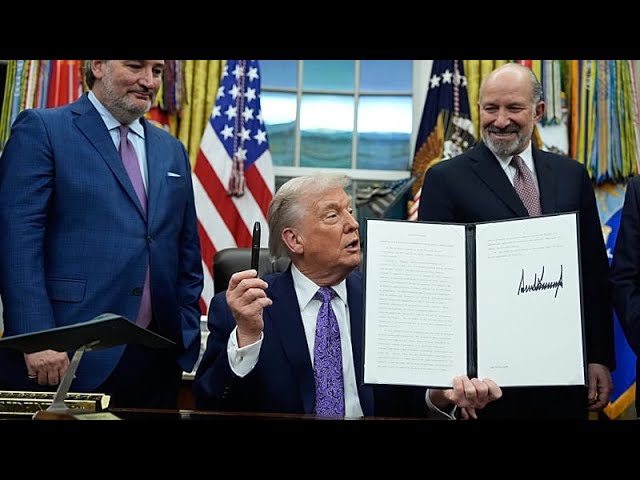
US President Donald Trump signed an executive order on Thursday aimed at preventing states from enforcing their own artificial intelligence (AI) regulations, centralizing oversight under federal authority. “We want to have one central source of approval,” Trump told reporters in the Oval Office.
The order, framed by White House AI adviser David Sacks as a tool to push back against “onerous” state-level rules, marks a major victory for the tech industry. Companies such as OpenAI, Google, and Meta have long advocated for nationwide AI legislation, arguing that a patchwork of state laws would stifle innovation and hurt the United States in its global AI competition with China.
While the US currently lacks comprehensive federal AI regulation, states have taken the lead. This year alone, 38 states—including tech-heavy California—have enacted roughly 100 AI-related laws. These range from requiring AI chatbots to disclose their non-human status to users, to mandating that major developers outline plans to mitigate catastrophic AI risks.
Critics argue the federal preemption will leave Americans vulnerable. “Stripping states from enacting their own AI safeguards undermines states’ basic rights to establish sufficient guardrails to protect their residents,” said Julie Scelfo of the advocacy group Mothers Against Media Addiction.
California Governor Gavin Newsom, a frequent Trump critic, accused the president of using the order to “enrich himself and his associates” at the expense of public safety.
Supporters, including tech lobby group NetChoice, praised the move as a step toward clarity. “We look forward to working with the White House and Congress to set nationwide standards and a clear rulebook for innovators,” said policy director Patrick Hedger.
Legal experts note the industry’s concerns over conflicting regulations are valid, but caution that success depends on the quality of future federal law. “It would be better to have one federal law than a bunch of conflicting state laws,” said Michael Goodyear of New York Law School. “But that assumes that we will have a good federal law in place.”
By James Kisoo