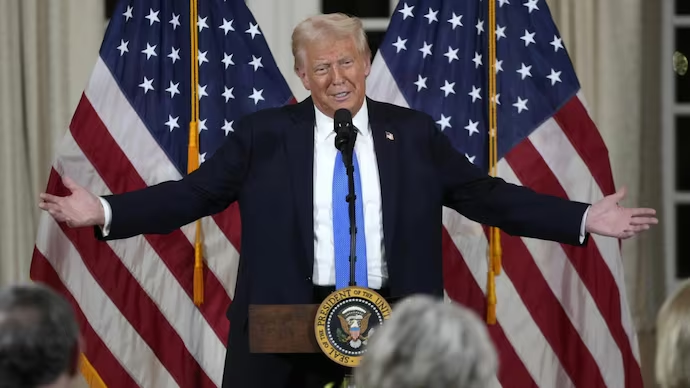
The United States has set off global shockwaves with a sweeping decision to withdraw from dozens of international organizations, treaties, and bodies that have long formed the backbone of multilateral cooperation, including its formal exit from the Paris climate agreement and an announced departure from the North Atlantic Treaty Organization, raising urgent questions about the future of Western alliances and global governance. Under President Donald Trump’s second term, the administration has argued that many of these international frameworks no longer serve American interests, with U.S. officials framing the moves as efforts to reclaim sovereignty and prioritise national security and economic objectives over what they describe as outdated global commitments.
In recent weeks Washington notified the United Nations of its formal withdrawal from the Paris Agreement on climate change, a pact signed by nearly every nation and central to global efforts to limit temperature rise, and also initiated exits from 66 international bodies, including 31 agencies affiliated with the United Nations, covering areas from climate cooperation to migration and peacebuilding. Experts warn that these retreats leave the United States increasingly isolated at a time when climate scientists say global warming is accelerating, and they risk ceding influence to rival powers while undermining longstanding cooperative structures that anchor global diplomacy and collective action.
Against this backdrop of shifting U.S. engagement, President Trump has also launched a controversial initiative known as the “Board of Peace”, unveiled at the World Economic Forum in Davos as a new international mechanism aimed at managing conflicts such as the war in Gaza and, according to U.S. officials, potentially addressing broader global security challenges. The board is designed to operate outside traditional United Nations frameworks and is chaired by the U.S. president, with invitations extended to around 60 countries to participate in what Washington casts as a more effective model for peace negotiation and reconstruction. While some governments, including Israel, Argentina, and a handful of other nations, have accepted invitations, many of the United States’ traditional Western allies have balked at joining, citing concerns that the initiative could undermine the role of the United Nations and upset established rules-based international order.
German Chancellor Friedrich Merz made clear his government’s reservations at a news conference in Rome, ruling out Germany’s participation in the Board of Peace in its current form. Merz said Berlin could not accept the governance structures embedded in the initiative due to constitutional constraints, emphasising that the way the board is structured does not align with Germany’s legal framework for joining international bodies. He stressed that, despite this refusal, Germany remains committed to dialogue with the United States and is open to exploring alternative cooperation formats that could support peace efforts not only in the Middle East but in other conflict zones such as Ukraine. Merz’s stance places Germany alongside other major allies — including France, the United Kingdom, Norway and Sweden — that have publicly declined to participate in Trump’s peace board, arguing that their constitutional obligations and commitments to the United Nations and NATO take precedence over joining a new U.S.-led initiative.
The developments have sparked intense debate among diplomats and policymakers about the future of multilateralism and the stability of alliances that have underpinned global security since the Second World War. Critics of the United States’ withdrawals argue that abandoning accords like the Paris Agreement and distancing from institutions such as NATO weakens collective response to shared challenges, from climate change to regional conflicts, and emboldens authoritarian competitors who may fill the leadership vacuum left by Washington. Supporters of the administration’s approach counter that it restores strategic autonomy and enables the United States to pursue bespoke partnerships that better reflect national priorities. As world leaders assess the implications of these shifts, many are calling for renewed commitment to cooperative frameworks even as the United States charts an assertively unilateral path.