By Bonface Mulyungi
Uganda has confirmed two new Ebola cases, bringing the total number of infections linked to the latest outbreak to seven.
In a statement, Uganda’s Director General of Health Services, Charles Olaro, said the latest patients are health workers employed at a private health facility in Kampala.
“Both patients have been admitted to the designated treatment unit and are now receiving care. All contacts linked to the confirmed cases are being listed for follow-up by response teams,” he said.
He urged members of the public to immediately report anyone exhibiting symptoms consistent with Ebola virus disease to the nearest health facility, noting that early detection and treatment significantly improve survival chances and help prevent further transmission.
The new infections come as authorities in the neighbouring Democratic Republic of the Congo, the epicentre of the outbreak, reported a sharp rise in suspected Ebola cases.
According to the Congolese Ministry of Communication, suspected infections had reached 904 by Sunday, alongside 119 suspected deaths.
The figures represent a significant increase from earlier reports of more than 700 suspected cases.
The World Health Organization (WHO) has declared the outbreak of the Bundibugyo strain of Ebola a Public Health Emergency of International Concern following reports from the Mongbwalu Health Zone in Ituri Province on May 5.
On May 14, the Institut National de Recherche Biomédicale (INRB) in Kinshasa analysed 13 blood samples collected from Rwampara Health Zone in Ituri Province.
Laboratory tests confirmed Bundibugyo virus disease (BVD) in eight samples on May 15.
Unlike other forms of Ebola virus disease, there is currently no licensed vaccine or specific treatment approved for Bundibugyo virus infection, although early supportive care significantly improves patient outcomes.
WHO has assessed the outbreak, concentrated mainly in Ituri Province, as posing a “very high” risk to the Democratic Republic of Congo, while maintaining that the risk of wider international spread remains low.
Despite those assurances, Kenya has heightened Ebola preparedness measures and intensified screening at points of entry, including the Busia border crossing with Uganda, the only neighbouring country that has so far confirmed cases linked to the current outbreak.
Uganda first confirmed a case of Bundibugyo Ebola virus on May 15 after a Congolese man died in Kampala shortly after arriving from the Democratic Republic of Congo.
The initial cluster was detected after a Congolese woman sought treatment in Uganda.
A local driver who transported her later developed symptoms and was subsequently confirmed to have contracted the disease.
According to WHO, Bundibugyo virus disease is a severe and often fatal form of Ebola caused by the Bundibugyo virus, one of the Orthoebolavirus species.
Fruit bats are believed to be the virus’s natural carriers.
Human infections occur through close contact with infected wildlife, including bats and non-human primates, before spreading between people through direct contact with blood, bodily fluids, organs or contaminated surfaces.
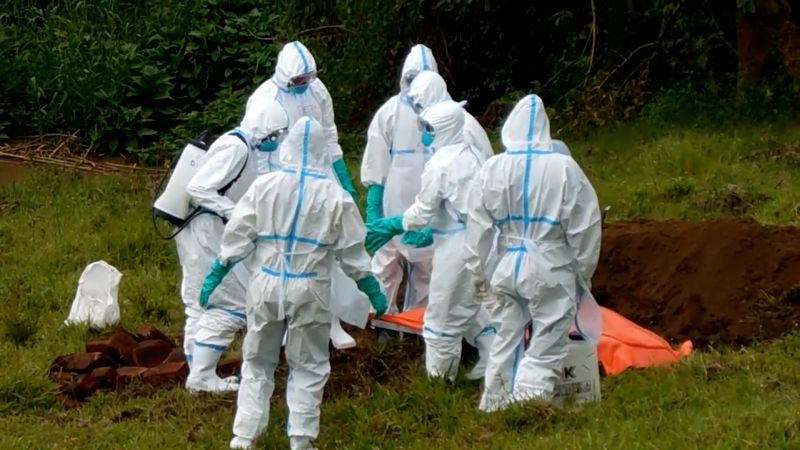
Transmission is often amplified in healthcare settings where infection prevention and control measures are inadequate, as well as during unsafe burial practices involving direct contact with deceased victims.
The incubation period ranges from two to 21 days, and infected individuals are generally not contagious until symptoms begin to appear.
Early symptoms include fever, fatigue, muscle pain, headache and sore throat, which can make diagnosis difficult because they resemble several other infectious diseases.
As the illness progresses, patients may develop gastrointestinal complications, organ dysfunction and, in some cases, haemorrhagic symptoms.
Previous outbreaks of the Bundibugyo strain have recorded case fatality rates ranging between 30 and 50 per cent.