Ukraine hit Russian-linked tanker Qendil with drones in the Mediterranean on Friday, marking the first shadow fleet strike outside Black Sea.
Ukraine struck a Russian-linked oil tanker in the Mediterranean Sea on Friday, marking the first time it has targeted vessels from Russia’s shadow fleet outside the Black Sea, an official from Ukraine’s security service SBU said.
The Oman-flagged tanker Qendil was hit by aerial drones more than 2,000 kilometres from Ukrainian territory in what an SBU source described as “an unprecedented special operation”. The vessel sustained critical damage and can no longer be used, the source said.
The attack occurred in international waters in the eastern Mediterranean. Ship tracking data showed the Qendil’s last position on Friday morning was off the coast of Crete, sailing parallel to Libya’s coast.
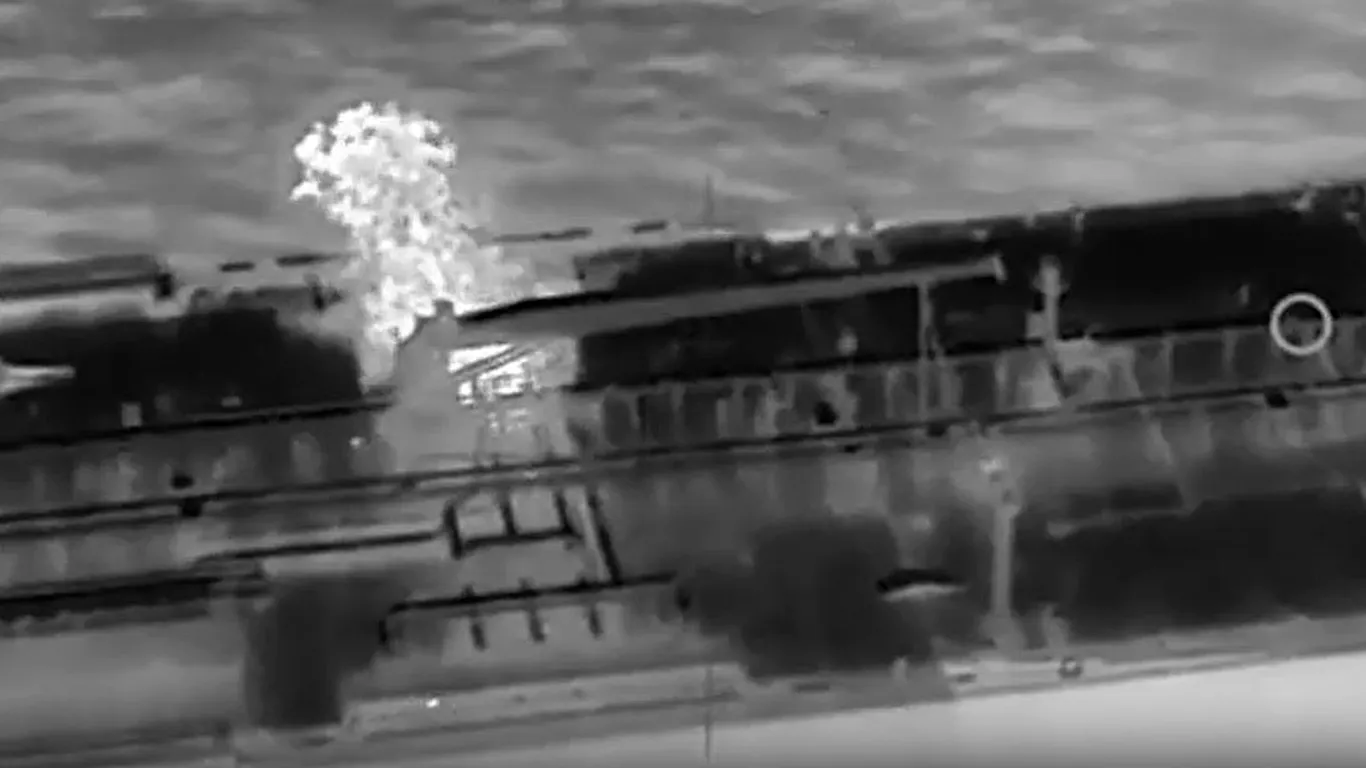
The vessel was empty at the time of the strike and posed no environmental threat, according to the SBU source, who spoke on condition of anonymity. Video provided by the SBU showed several explosions on the tanker’s deck.
What is known so far?

The Qendil departed from Sikka in India and was bound for the Russian Baltic port of Ust-Luga, according to ship tracking data from MarineTraffic.
Satellite images analysed by AFP showed the vessel made a U-turn overnight on Friday, when it was more than 250 kilometres from the coasts of Greece and Libya.
The tanker is not currently on the United States Treasury’s sanctions list for Russian shadow fleet vessels, though maritime intelligence firms have identified it as carrying high sanctions risk.
“Russia used this tanker to circumvent sanctions and earn money that went to the war against Ukraine,” the SBU source said. “From the point of view of international law and the laws and customs of war, this is an absolutely legitimate target.”
The strike represents a major expansion of Ukraine’s campaign against Russian energy infrastructure, which previously focused on land-based targets such as refineries and oil rigs. In recent weeks, Ukraine has widened its operations to maritime targets across multiple seas.
In late November, Ukraine struck two tankers from Russia’s shadow fleet — the Kairos and Virat — with Sea Baby naval drones in the Black Sea near Turkey’s coast.
Both vessels were empty and heading to Russia’s Novorossiysk oil terminal to load crude oil. The Kairos caught fire and was later stranded off Bulgaria’s coast, whilst the Virat sustained damage in two separate strikes.
Ukraine also struck oil platforms in the Caspian Sea in December, marking another geographic expansion of its deep-strike operations.
Putin pledges ‘response’
Russian President Vladimir Putin said during his annual press conference on Friday that attacks on oil tankers would not disrupt supplies or achieve their intended results.
“Right now news is coming in: another of our tankers in the Mediterranean Sea has been attacked,” Putin said. “There will always be a response from our side.”
Turkey has not yet commented on the Mediterranean attack, after Turkish President Recep Tayyip Erdoğan warned in early December that the war was threatening navigational safety in the Black Sea.
The shadow fleet consists of tankers that use opaque ownership structures, flags of convenience and irregular shipping practices to transport Russian oil despite Western sanctions.
The fleet of hundreds of often ageing vessels has been crucial to Russia’s ability to continue exporting oil and funding its war effort.