By Bonface Mulyungi
The United States has announced an additional $20 million (about Sh2.59 billion) to strengthen Ebola preparedness efforts in Kenya and three other countries neighbouring the current outbreak zone.
The U.S. Department of State said the funding will support preparedness activities in Kenya, Burundi, Rwanda and South Sudan as part of efforts to prevent the spread of Ebola beyond affected areas in the region.
The new allocation brings the Department of State’s direct funding for Ebola response and preparedness activities to more than $220 million.
“Today, the Department is announcing $20 million in additional funding toward the Department’s ongoing Ebola response and preparedness efforts,” the statement said.
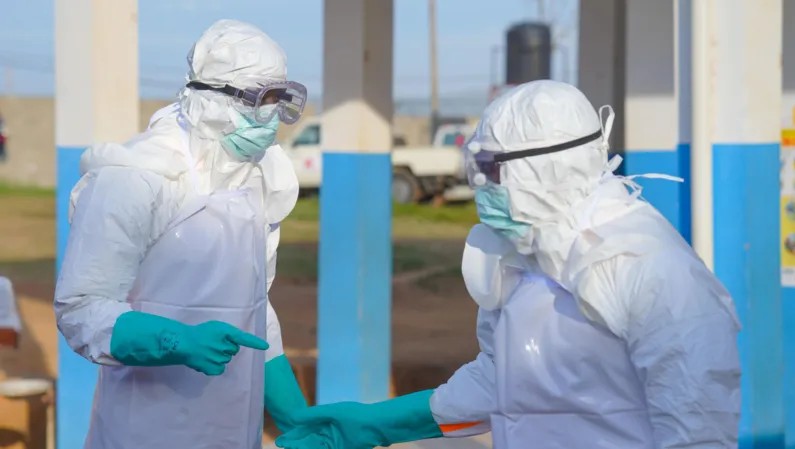
According to the U.S. government, the funding will help countries strengthen national emergency operations centres, enhance disease surveillance and testing, improve border screening systems and infection prevention measures, and procure critical medical supplies needed to respond to potential Ebola cases.
The announcement comes as the U.S., working alongside the governments of the Democratic Republic of the Congo, Uganda and other regional partners, continues efforts to contain the outbreak.
The Department of State noted that the additional funding is separate from the $350 million already committed for Ebola response and humanitarian assistance in the DRC, South Sudan and Uganda as part of a broader $1.8 billion package announced in May.
For Kenya and other neighbouring countries, preparedness measures supported by the funding will include strengthening surveillance systems, laboratory testing capacity, border screening and emergency response mechanisms to enable rapid detection and containment of any imported cases.
The statement also highlighted ongoing response efforts in the DRC, where U.S.-funded partners are supporting contact tracing, safe and dignified burials, public awareness campaigns, treatment centres and laboratory services.
Among recent interventions, the United Nations Children’s Fund delivered 150 metric tonnes of water, sanitation and infection prevention supplies to health facilities in Bunia, while the International Organization for Migration deployed a mobile laboratory to Beni to expand diagnostic capacity.
The U.S. government said preparedness remains critical for countries bordering outbreak areas, warning that strong surveillance, rapid testing and effective public health responses are essential to preventing cross-border transmission of the deadly disease.
The funding is expected to enhance Kenya’s readiness to detect, isolate and manage any potential Ebola cases while strengthening regional efforts to contain the outbreak.
Ebola is a rare but potentially fatal virus that mainly spreads through direct contact with the bodily fluids – such as blood, faeces and vomit – of an infected person.
Early symptoms of Ebola include sore throat, headaches, fever, fatigue and body pain. Severe Ebola cases can cause skin rashes, shortness of breath, vomiting, diarrhoea, abdominal pain and seizures.
Ebola was first identified in humans in 1976. Since then, there have been more than 40 outbreaks around the world, with the majority occurring in African countries.
The current outbreak is the third ever to be caused by the rare Bundibugyo strain. The majority of past outbreaks were driven by the more deadly Zaire strain, which kills up to 90% of people compared to up to 34% for Bundibugyo.
The factors driving this latest outbreak also contributed to the devastating West African outbreak of 2014-16, where more than 11,000 people died. In both outbreaks, the virus had been circulating for months before an outbreak was declared, and initial cases had non-specific symptoms.
Both outbreaks also rapidly spread in urban areas. Transmission in healthcare settings is another common factor.
Political instability and social unrest also contributed to both outbreaks. Most recently in the DRC, crowds have set fire to hospital tents, prompting some patients to flee isolation wards.
And certain cultural practices – including traditional burial rituals that often involve handling dead bodies – may have accelerated the spread of both outbreaks.