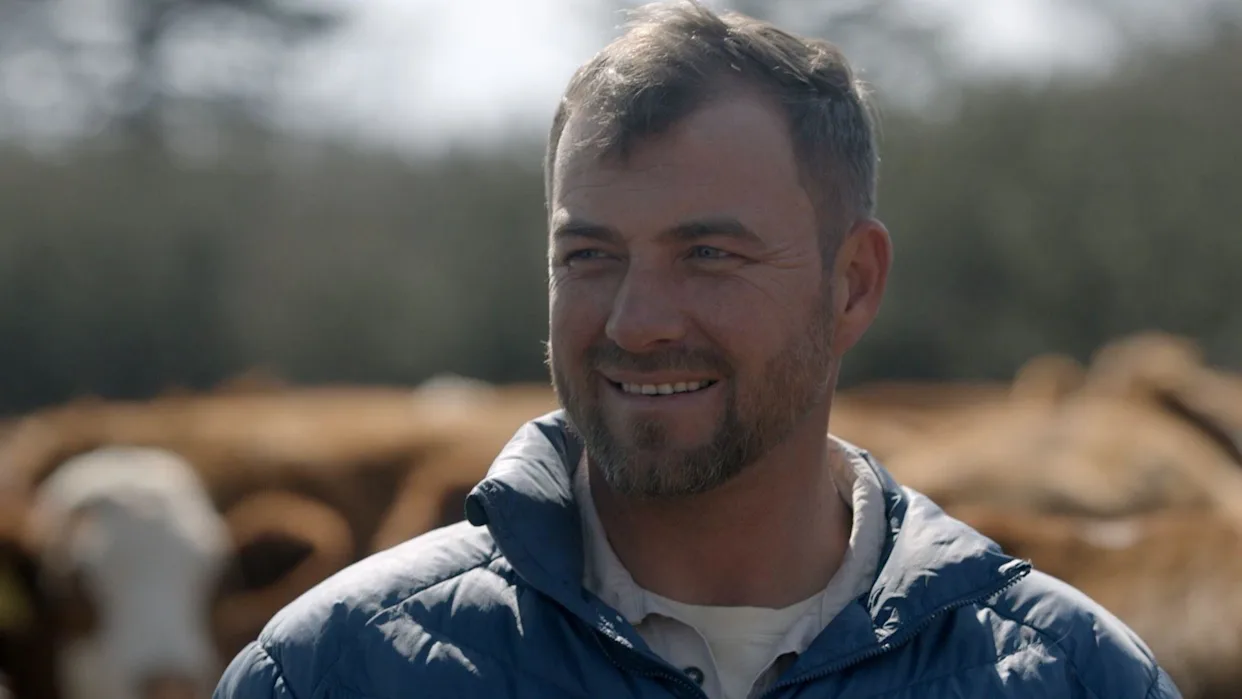
Marthinus, a white Afrikaner farmer in South Africa’s rural Free State, lives behind 4-meter-high electric gates, barbed wire fences, and surveillance cameras. “It feels like a prison,” he says as the steel gates clank shut behind his pickup truck.
The fear of attack is visceral. His grandfather and his wife’s grandfather were both murdered in farm attacks, and he lives two hours from where farm manager Brendan Horner, 21, was found tied to a pole with a rope around his neck five years ago.
Now, Marthinus is seeking a way out. In February, he applied for refugee status in the United States. “I’m prepared to do that to get a better life for my wife and children,” he explains. “Because I don’t want to be slaughtered and be hanged on a pole… Our Afrikaner people are an endangered species.”
His sentiment reflects a deepening anxiety among some white South Africans, who believe they are being systematically targeted. This perception has fueled interest in a controversial U.S. asylum proposal aimed at the group.
But the narrative is fiercely contested. Not all white South Africans share this view, and critics point out that black farmers are equally vulnerable to the country’s soaring violent crime rate.
The debate has exposed painful rifts within the community, pitting those who see emigration as survival against those who view it as an abandonment of their homeland—or a misreading of South Africa’s complex realities.
By James Kisoo