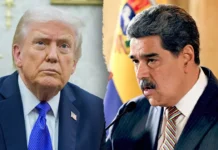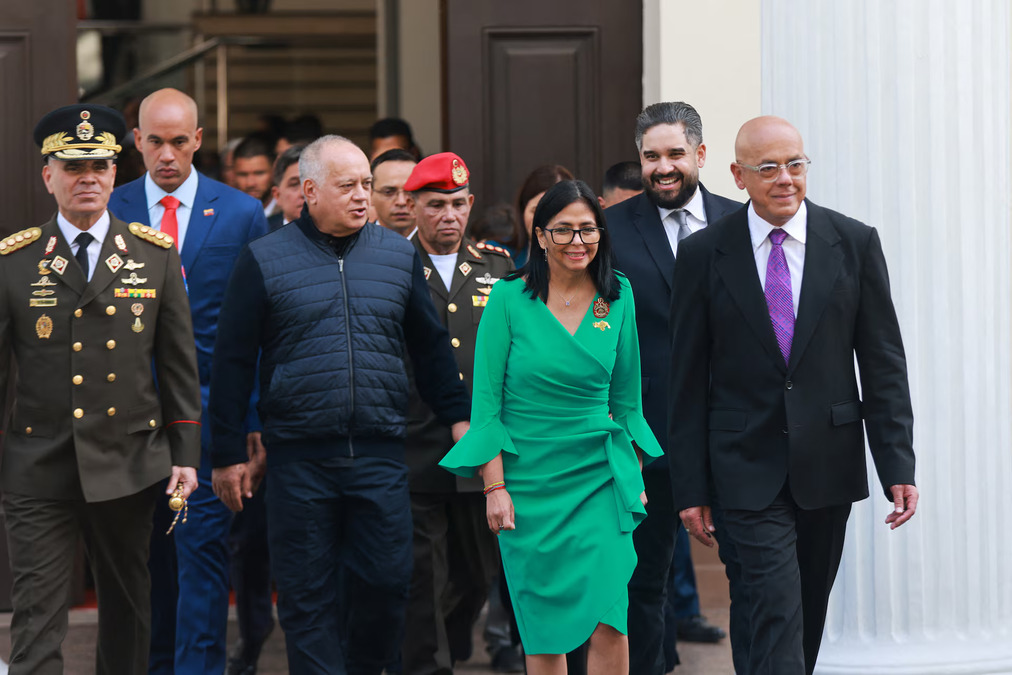
As Venezuela faces an unprecedented political transition following the U.S. capture of President Nicolás Maduro, a coalition of Venezuelan and U.S. officials are now shaping the country’s leadership and future direction.
Maduro was detained by U.S. forces earlier this month on narcoterrorism and drug trafficking charges and transported to New York, where he has appeared in federal court. In his absence, Venezuela’s governance has been taken up by a mix of domestic elites and influential U.S. policymakers.
Key Venezuelan Figures
Delcy Rodríguez — Interim President
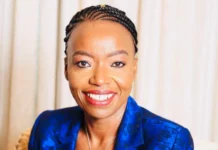
Delcy Rodríguez, formerly vice-president of Venezuela, was sworn in as interim president on January 5, 2026, following Maduro’s removal from power. She now officially heads the government and is seen as a central figure in managing Venezuela’s transition.
A seasoned lawyer and long-time official within the ruling party, Rodríguez has held multiple cabinet roles, including oil and finance portfolios. Known as a key economic manager with ties across the state apparatus, she now occupies the highest authority while navigating U.S. oversight and internal political pressures.
Jorge Rodríguez — National Assembly President
Jorge Rodríguez, brother of Delcy Rodríguez and head of the National Assembly, leads the legislature where the socialist party maintains a strong majority. His role positions him as a crucial interlocutor between government factions and foreign partners.
Diosdado Cabello — Interior Minister
Cabello is widely regarded as a powerful enforcer within the Venezuelan political system owing to his influence over security agencies and allied paramilitary groups. He remains a top power broker and has been indicted by the U.S., with a reward posted for his capture.
Vladimir Padrino — Defence Minister
As head of the military, Padrino commands Venezuela’s armed forces and is viewed by foreign officials as essential in preventing a power vacuum. Despite his long tenure and U.S. indictment, his cooperation is seen as a stabilising factor in the transition.
Marina Corina Machado — Opposition Leader
Machado, a leading opposition figure and Nobel laureate, remains politically significant but has been sidelined from national leadership roles amid the upheaval. U.S. officials have downplayed her prospects of governing despite her broad support among opposition ranks.
Influential U.S. Officials
The United States has played a highly visible role in the post-Maduro landscape, with several top officials shaping policy towards Venezuela.
Marco Rubio — Secretary of State
Rubio, a key architect of U.S. policy on Venezuela, is at the forefront of diplomatic and strategic engagement with Venezuelan authorities, aiming to steer Caracas towards policies aligned with U.S. interests.
John Ratcliffe — CIA Director
Ratcliffe heads U.S. intelligence operations and has been deeply involved in the operation that led to Maduro’s capture, as well as ongoing oversight of Venezuela’s security situation.
Pete Hegseth — Defence Secretary
Hegseth, responsible for U.S. military operations, played a central role in the campaign that removed Maduro. His influence extends to ongoing security and operational planning regarding Venezuela.
Chris Wright — Energy Secretary
Wright is charged with shaping U.S. engagement with Venezuela’s vital oil sector, seeking to rehabilitate production and integrate it with global energy markets under U.S. oversight.
What It Means
The leadership mix reflects a complex balance between domestic power structures and U.S. strategic interests in Venezuela’s transition. While Rodríguez holds formal authority, military figures and political heavyweights remain influential domestically, and U.S. policymakers continue to shape international engagement with Caracas.
The evolving situation carries significant implications for Venezuela’s political stability, economic recovery and foreign relations, particularly in energy and security.