Stacy Boit,
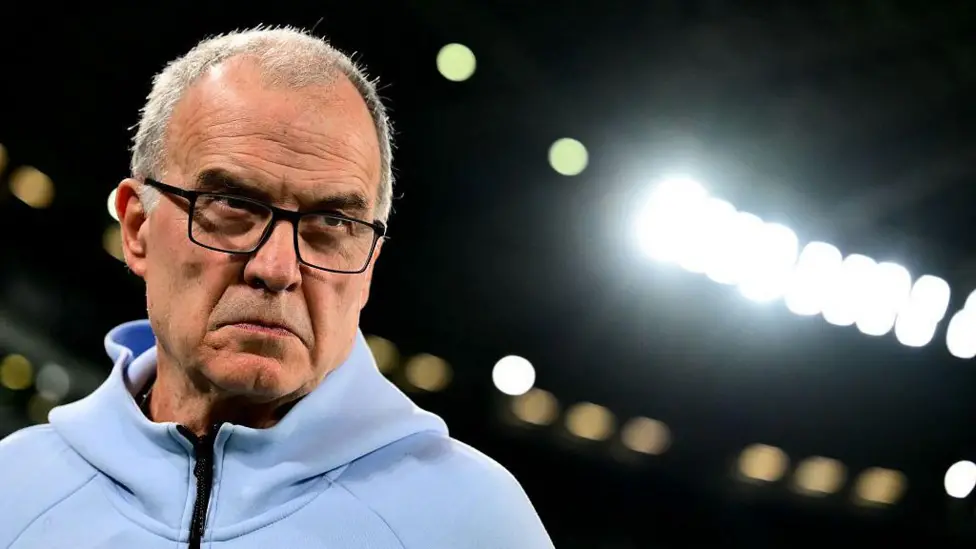
It is quite possible that nobody alive today has watched more football than Marcelo Bielsa.
The 70-year-old is one of the most respected and influential coaches in the game, and that reputation has been earned from his borderline obsessive dedication to preparation for every single match he oversees.
More than two decades ago he took 2,000 video tapes to Japan for the 2002 World Cup – when he was manager of Argentina – with those covering everything from clips of his players at their respective clubs to the opposition teams his side would come up against at the tournament.
Thankfully, modern technology means suitcases packed with VHS tapes will no longer be necessary.
But Bielsa will no doubt have a similar volume of clips with him in North America for the 2026 World Cup – where his Uruguay side will face Saudi Arabia, Cape Verde and Spain in the group stage.
Born in Rosario, Argentina, Bielsa hails from a family of educated minds, with his brother having worked in politics and his sister a renowned architect.
Both of those professions require analytical thinking – a gift Bielsa also possessed from childhood. However, he was drawn to football, not necessarily playing it but absorbing the tactics.
Every day he would send his mother to the local newsagent to buy football magazines and newspapers, spending hours reading up as much as he could about how teams played and how different managers worked.
Bielsa was still a capable but limited footballer. A defender but lacking in pace, he came through the youth system at his boyhood club Newell’s Old Boys before frustrating spells in the lower leagues of Argentinian football meant he decided to call time on his playing career at the age of 25 to focus on coaching.
His post-playing career started with the Buenos Aires university football team and, after two years there, he secured a position back at Newell’s as a coach of the reserve team.
Bielsa’s frustration with his limitations as a player played a significant part in his coaching philosophy, as he focused on ensuring that any player he coached was able to get the maximum out of their ability.
His training sessions were intense, with lots of focus on repetition – if a player did not have the talent to make something happen naturally then he would be sure to drill the processes into their minds.
Bielsa was appointed Newell’s manager in 1990 and his methods brought instant success as they won the Argentinian championship.
A spell in Mexico followed before Bielsa returned to Argentina in 1997 to manage Velez Sarsfield. There he would be labelled ‘loco’ (crazy) as he insisted on fielding two teenage centre-backs. He would have the last laugh, however, as he immediately helped them to win the league title.
Bielsa, who has said his nickname of ‘El Loco’ actually predates his time at Velez Sarsfield, very briefly became manager of Spanish side Espanyol but left them when he was offered his first international post in 1998 – as Argentina boss.