When Nairobi began to confront a mounting housing shortage in the early 1960s, an unusual international partnership emerged that would leave a lasting imprint on the city’s urban form.
In the final years of colonial rule and the early days of independence, Kenya turned to Israel for technical assistance in building low-cost housing for its growing African population.
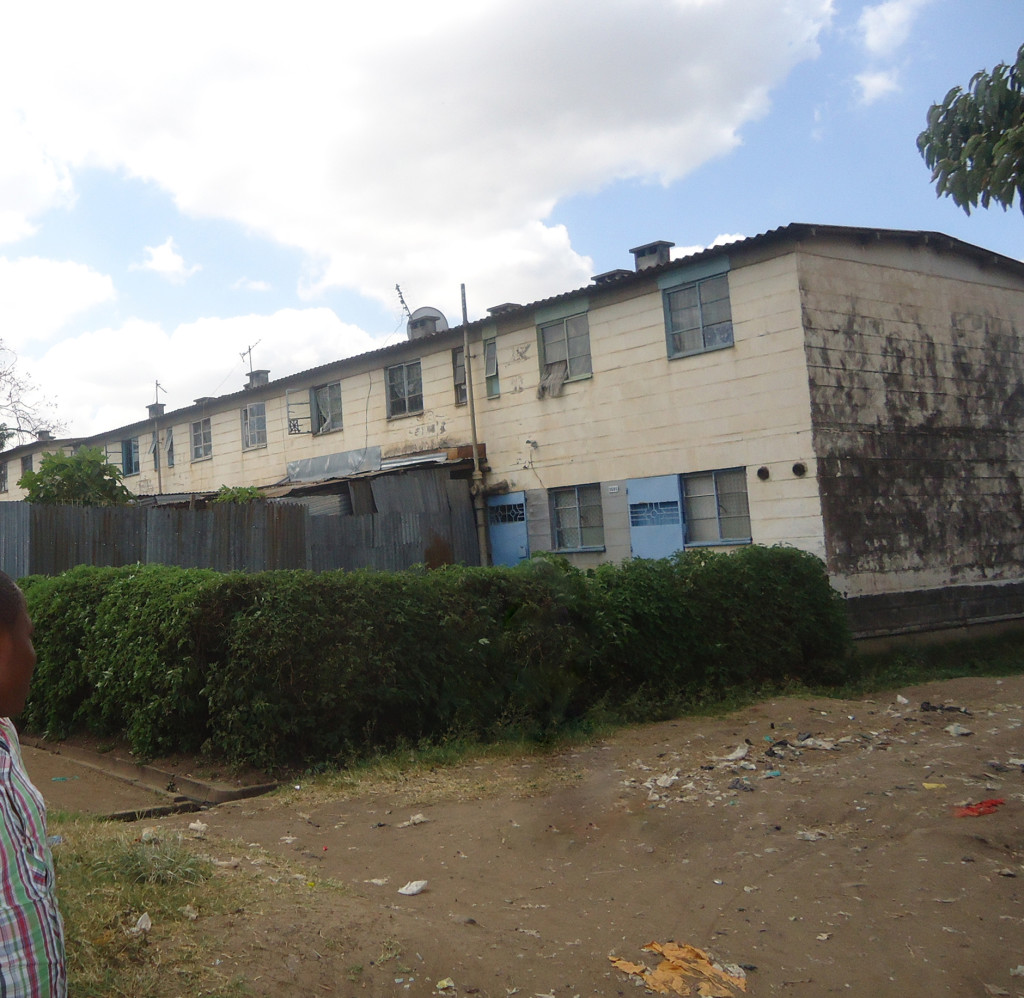
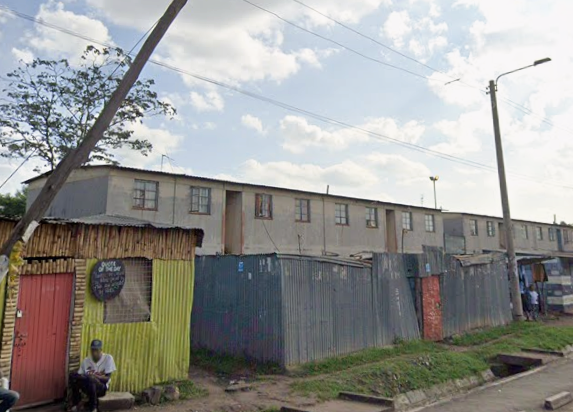
The result was the construction of several estates that remain among Nairobi’s most recognisable residential neighbourhoods today, including Jericho and parts of Ofafa.
These developments were born at a moment of political transition, when pressure was mounting to replace informal settlements with planned, affordable housing for African workers who were increasingly central to the city’s economy.
By the late colonial period, the British administration had acknowledged that existing housing stock could no longer meet demand. As independence approached, the urgency intensified.
Israel, then actively cultivating development partnerships across newly independent African states, offered architectural expertise, construction capacity and technical support.
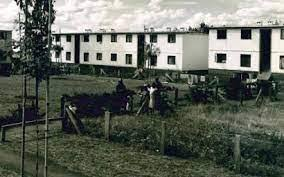
A key player was Solel Boneh, a major Israeli construction firm linked to the Histadrut labour federation, which operated extensively across Africa during the 1960s. The company provided engineering services, construction teams and project implementation.
Israel’s international development agency, MASHAV, established in 1958, complemented this work by supplying planners, technicians and training for Kenyan personnel. Additional engineers were deployed through bilateral agreements between Nairobi and Tel Aviv.
On the Kenyan side, responsibility for the projects initially lay with the colonial Public Works Department. After independence in 1963, oversight passed to the Ministry of Works, Housing and Communications, then under Joseph Murumbi in the first post-independence cabinet of President Jomo Kenyatta.
The new government inherited housing schemes already underway and accelerated their completion as part of a broader effort to demonstrate tangible progress in the early years of self-rule.
The estates were designed with efficiency in mind. Housing units were compact, uniform and constructed using durable masonry. They were arranged around shared courtyards that encouraged communal interaction, reflecting both economic constraints and social considerations. Speed and affordability took precedence over architectural flourish.

For many residents, these estates offered their first experience of formal urban living, with piped water, electricity and regulated tenancy.
Over time, each neighbourhood developed its own social identity and internal networks, becoming an integral part of Nairobi’s urban fabric.
Although Israel’s involvement was limited to technical and construction support, the association has endured in public memory.
This has occasionally led to claims that the estates were owned or managed by Israel.
However, archival records and county documentation show that ownership and administration have always remained with Kenyan authorities, first under national government and later the Nairobi City Council.
Few Kenyans are aware that this unassuming neighbourhood, widely known as Kwa Odinga, played a formative role in shaping the early life and outlook of a man who would later loom large in Kenya’s political history.
The Odinga family lived in Jerusalem Estate during the 1950s, in the final decade of colonial rule. Raila Odinga’s father, Jaramogi Oginga Odinga, had settled there as a teacher and entrepreneur.
Today, more than six decades on, these estates are once again at the centre of Nairobi’s housing debate. Under the Nairobi Urban Renewal Project, neighbourhoods including Jericho, Woodley, Bahati, Maringo, Ziwani, Bondeni, Kariobangi and Embakasi have been earmarked for redevelopment.
County officials argue that the low-density housing model, much of it over 50 years old, can no longer sustain a city whose daytime population now exceeds seven million and is projected to reach 10 million by 2050. The plan involves replacing ageing estates with high-rise apartment blocks capable of housing significantly larger populations.
Governor Johnson Sakaja has defended the approach, lifting height restrictions across parts of the city and arguing that Nairobi, constrained by limited land, has no choice but to build upwards. For estates born out of an earlier housing crisis, redevelopment now marks another turning point in the city’s long struggle to keep pace with its own growth.