The World Bank has recommended that Kenya raise its top income tax rate from 35% to 38% for individuals earning over KSh 800,000 per month, while reducing the tax burden on low- and middle-income earners in a bid to promote fairness and boost formal employment.
In its latest Kenya Economic Update released on Tuesday, the World Bank proposes expanding the current personal income tax structure from five to six bands. The suggested reforms aim to enhance equity in taxation and improve revenue efficiency by shifting the burden away from the lower income brackets.
Under the new structure, the current 30% tax rate would be scrapped. Those earning between KSh 32,334 and KSh 166,667 would see their tax rate reduced from 30% to 25%, while those in the KSh 24,000 to KSh 32,333 bracket would see their rate drop from 25% to 15%.
The move comes amid rising concerns over the declining purchasing power of Kenyan workers. For the fifth year running, wage growth has lagged behind inflation, with additional deductions such as the Social Health Insurance Fund (SHIF) and the housing levy further shrinking disposable incomes.
“The Public Finance Review recommends revenue policies focused on enhancing the efficiency and equity of the tax system,” the World Bank report stated. It emphasized the need to broaden the tax base by rationalizing exemptions and strengthening both personal and corporate income tax systems.
Impact on Workers
According to the World Bank, if its proposals are adopted by the National Treasury, Kenyan workers would see noticeable increases in their take-home pay. A worker earning KSh 50,000 per month would gain an extra KSh 179, while someone earning KSh 100,000 could take home KSh 3,788 more monthly.
The reforms are designed to correct what the World Bank describes as a “disproportionate” tax burden on lower-income earners, which has discouraged formal employment and reduced economic productivity.
President’s Salary and High-Income Bracket
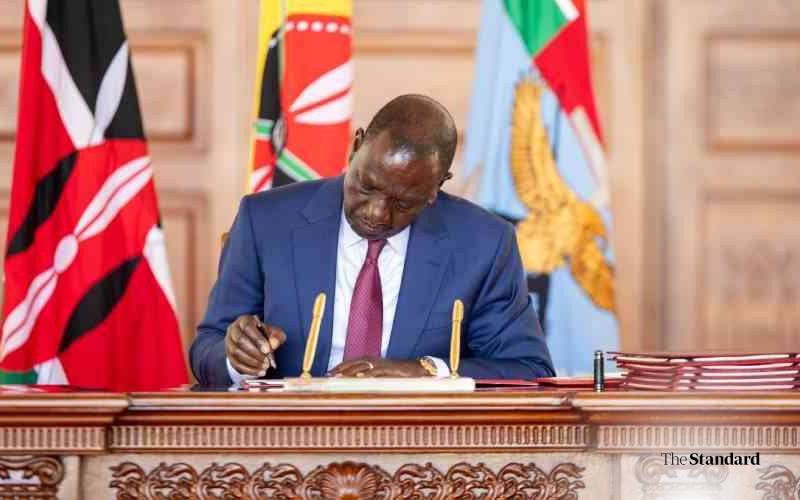
The proposed tax hike would affect top earners, including state officials. President William Ruto, whose monthly gross salary stands at KSh 1.44 million according to the Salaries and Remuneration Commission, would fall within the new 38% tax bracket.
The World Bank’s recommendations now await consideration by the Kenyan government. If implemented, they would mark a significant shift in the country’s fiscal policy aimed at enhancing equity, stimulating job creation, and encouraging broader participation in the formal economy.
Written By Rodney Mbua