By Andrew Kariuki
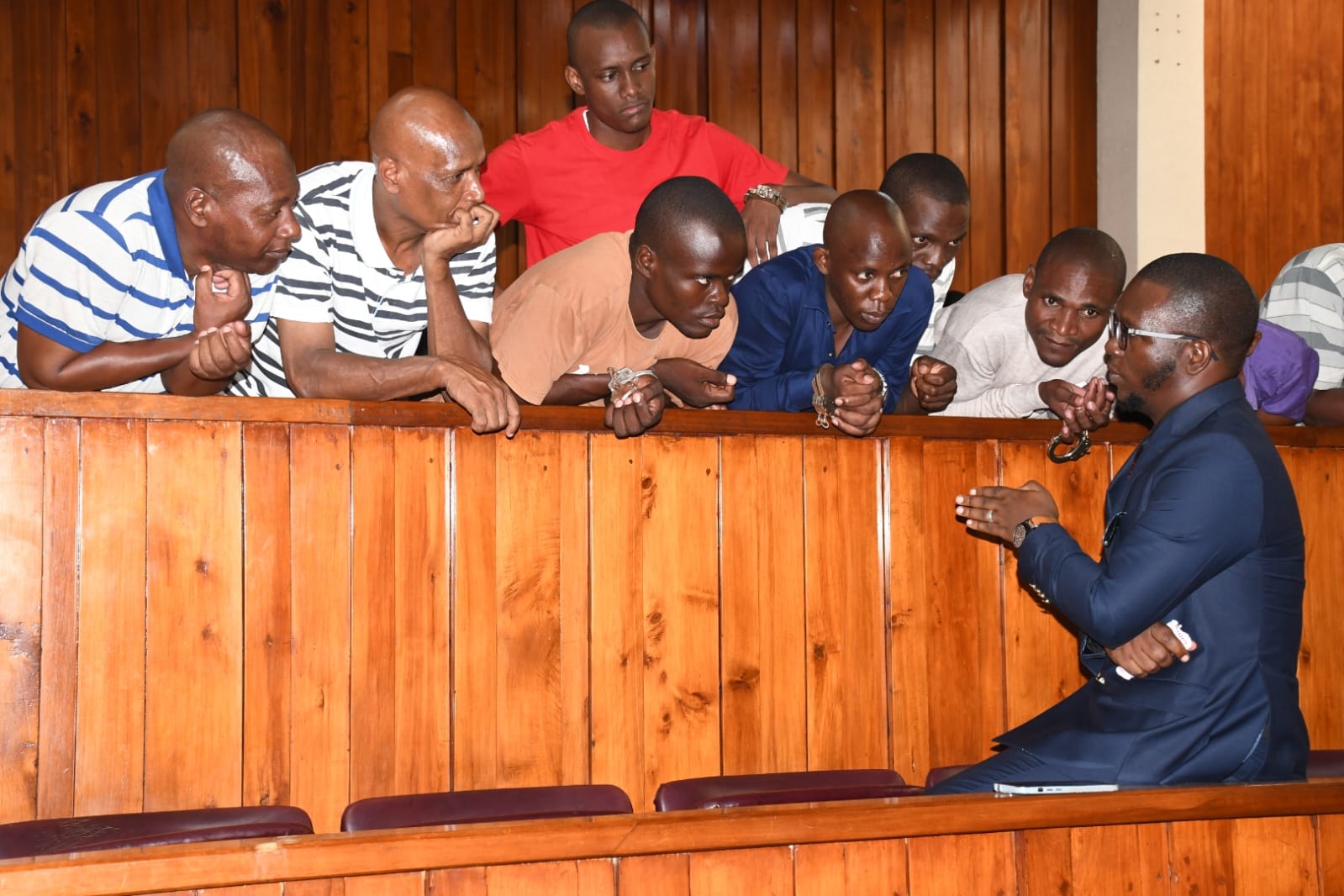
The Director of Public Prosecutions (DPP) has urged the High Court in Mombasa to rule that Paul Nthenge Mackenzie and 30 co-accused persons should be placed on their defence in the ongoing Shakahola mass murder case involving 191 counts of murder.
Appearing before the court presided over by Justice Diana Kavedza, the prosecution argued that it has established sufficient grounds to proceed to the next stage of the trial after presenting its case.
According to the prosecution, a total of 121 witnesses testified during the trial, providing both direct and circumstantial evidence linking the accused persons to the deaths under investigation. The witnesses also produced documentary and material exhibits intended to support the charges against each individual.
The DPP submitted that the evidence, when considered as a whole, demonstrates a clear connection between the accused persons and the circumstances surrounding the deaths of the victims, many of whom were children.
Central to the prosecution’s case is the alleged role of Paul Mackenzie’s Good News International Church, whose teachings and practices are said to have influenced the events at Shakahola. Prosecutors told the court that the accused persons were not only associated with the area but were also connected to the church’s doctrines, including extreme fasting practices that allegedly led to the deaths.
The court was further informed that most of the accused were apprehended within or around the Shakahola area, which investigators have identified as the primary scene of the alleged crimes.
Deputy Director of Public Prosecutions Jami Yamina told the court that many of the witnesses either lived in the area or had direct knowledge of what transpired. Several witnesses gave accounts of their own experiences, as well as what happened to their relatives, including children, siblings, and neighbours.
In relation to the deaths of minors, the prosecution argued that they could not legally consent to any form of agreement leading to their deaths. As such, it maintained that these deaths constitute murder, regardless of any alleged participation in a so-called “fasting pact.”
The prosecution also pointed to evidence suggesting malice aforethought, stating that the deaths were not accidental but arose from a structured practice in which followers were allegedly encouraged or compelled to abstain from food and water with the expectation of dying.
Further, the State outlined what it described as an organized system involving different roles among the accused persons. These roles allegedly included security coordination, transportation, and burial arrangements, all of which, according to prosecutors, contributed to the execution of the plan.
Investigators also relied on identification methods, including DNA analysis and alternative identification techniques, to link some of the deceased individuals to the accused persons, including family members.
Paul Mackenzie, also known by aliases including Mtumishi, Nabii and Papaa, is jointly charged with the other accused persons over the deaths said to have occurred between January 2021 and September 2023 in Shakahola, Malindi Sub-County, Kilifi County.
The prosecution formally closed its case on January 16, 2025, after presenting all its evidence under Sections 203 and 204 of the Penal Code, which define and prescribe penalties for murder.
The High Court is now expected to determine whether the prosecution has established a prima facie case, which would require the accused persons to present their defence.
A ruling on whether the accused have a case to answer is scheduled for April 15, 2026.