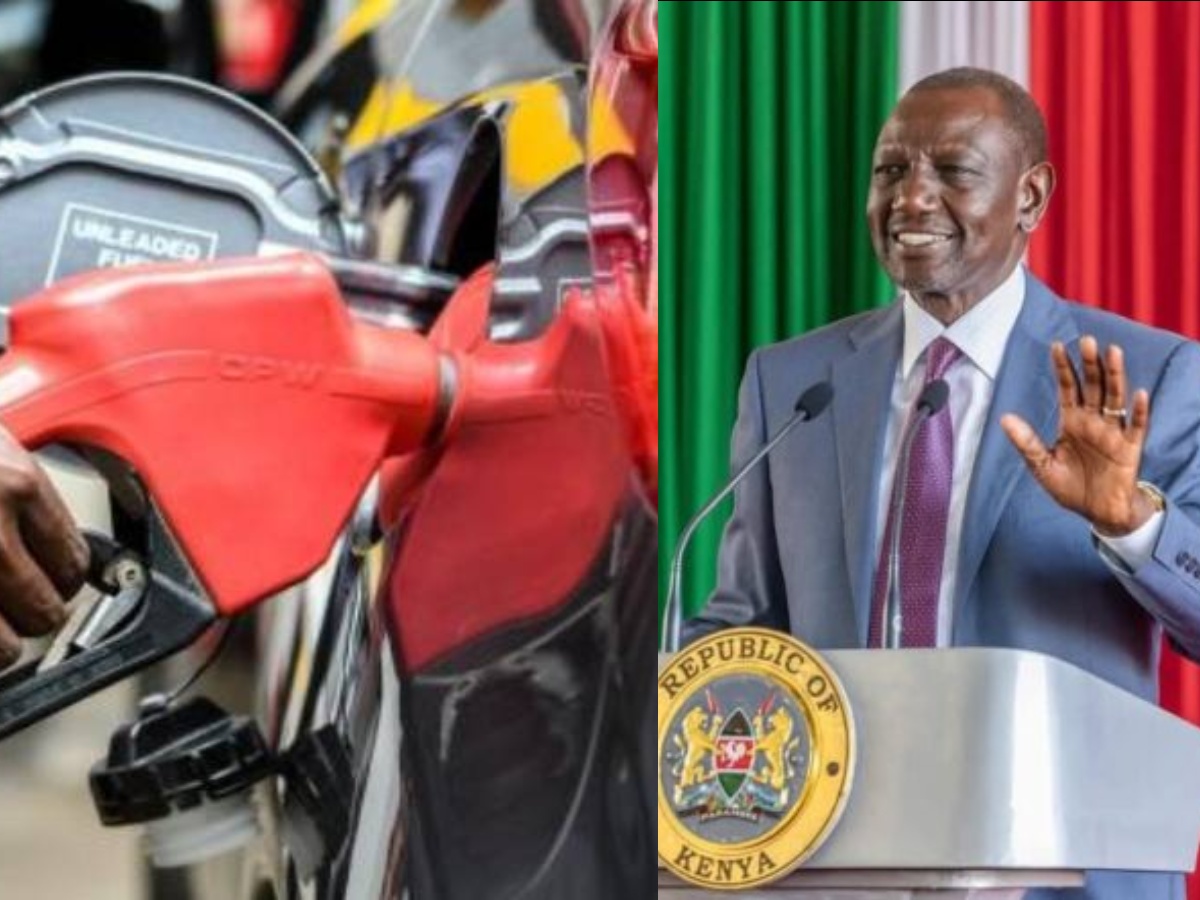
President William Ruto, on Wednesday, April 15, defended his government amid uproar over the April-May fuel price review that saw fuel prices jump from between Ksh28 to Ksh40 per litre.
Speaking in Kisii County, Ruto blamed the fuel prices on the current events at the global stage, including the Iran War, for the sharp spike in fuel costs.
Nonetheless, he stated that his administration was doing all it could to cushion Kenyans from the steep rise in petrol prices across the world.
Ruto stated that were it not for government interventions, the fuel would have retailed at higher prices than the Ksh206.97 for petrol and Ksh206.84 for diesel.
“The price of fuel has increased everywhere in the world, but in Kenya, we had planned to ensure that the prices, which would have increased very highly, were moderated.
“The government has used Ksh6.2 billion to subsidise fuel costs in Kenya. We have also reduced VAT to ensure that we moderate fuel prices, and I want to assure you that my government will do all it can,” Ruto stated.
The President praised the government-to-government arrangement, stating that it prevented Kenya from going through a fuel shortage crisis.
He argued that the arrangement ensured that the country had enough fuel, even as others suffered from a lack of fuel supply.
“God helped us, and we had the G-to-G plan, which saved us. As I speak to you, some countries do not even have fuel in their petrol stations, but here in Kenya, we do.
“The G-to-G arrangement has made Kenya a very competitive fuel destination. You cannot compare our fuel with our region or other countries; there are countries which do not have fuel, but in Kenya, we have enough,” he stated.
Kenyans have already started feeling the pinch of the rise in fuel costs as matatu owners announced an increase in bus fares.
Kenya Transporters Association Ltd (KTA) explained that fuel constitutes 55 per cent of total operating costs and advised its members to urgently review their cost structures to reflect the new fuel pricing realities.
The association also urged operators to engage customers and contractual partners transparently to ensure continuity of services.