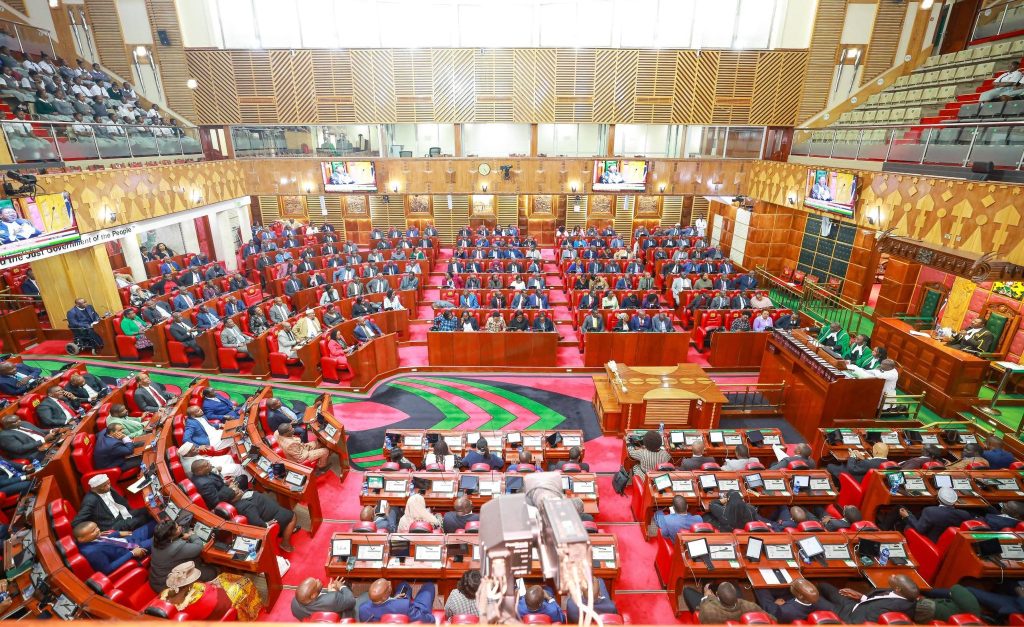
Members of the National Assembly have approved the Value Added Tax (Amendment) Bill, 2026, paving the way for a reduction of VAT on petroleum products from 16 per cent to 8 per cent in a move aimed at cushioning Kenyans from persistently high fuel prices.
The Bill, passed after debate in the House, amends the Value Added Tax Act and is expected to lower pump prices, offering relief to households and businesses grappling with the high cost of living driven in part by global oil market volatility.
Moving the Bill, Deputy Majority Leader, Hon. Owen Baya attributed the surge in fuel prices to external shocks, particularly geopolitical tensions in the Middle East that have disrupted global supply chains.
“Kenya exists within the global financial ecosystem, and therefore the wars and disruptions that have been happening in the Middle East have greatly affected our country. What we have is not domestic policies that have driven up the cost of fuel, but rather international trade dynamics and geopolitics,” said Dr Baya.

He noted that existing legal provisions under the VAT Act had been exhausted, necessitating legislative intervention. “It is therefore necessary for this House to take additional steps to enact this legislation to cushion Kenyans,” he added.
The reduction of VAT is expected to directly lower the landed cost of fuel, with ripple effects across key sectors such as transport, manufacturing and agriculture that are heavily dependent on energy.
Kitui Central MP, Hon. Makali Mulu welcomed the move but urged the government to go further by reviewing other taxes and levies imposed on petroleum products.
“We need to pass this Bill as soon as possible to cushion Kenyans against high fuel prices… We should implore the Government to look into other areas where we can reduce levies and taxes so that we make oil cheaper for Kenyans,” he said, noting regional price disparities with neighbouring countries.

Central Imenti MP, Hon. Moses Kirima challenged the country to fast-track development of its own oil resources to reduce reliance on imports. “If we had developed our own oil. We would not be facing what we are facing now,” he said.
On his part, Kabuchai MP, Hon. Majimbo Kalasinga called on the transport sector to reflect the anticipated drop in fuel costs. “If fuel prices have been reduced, they must also reduce fares instantly,” he said.
Suba South MP, Hon. Caroli Omondi, while supporting the Bill, urged scrutiny of the government-to-government fuel import framework, arguing that market inefficiencies have undermined price stability.