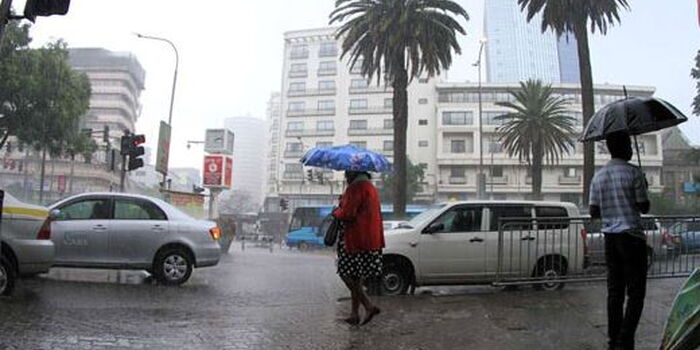
Kenya is set to experience continued rainfall across several regions through Friday, April 17, according to the latest forecast outlook from the Kenya Meteorological Department.
According to forecast maps covering the period from April 16 to April 20, rainfall will remain active over western, central, and parts of eastern Kenya, with some areas receiving moderate to heavy downpours.
Coastal regions and parts of the Rift Valley are also expected to experience intermittent showers, particularly during the early part of the forecast window.
The 24-hour cumulative rainfall outlook for April 16-17 highlights significant rainfall over western Kenya, including areas around Lake Victoria, extending into parts of the central highlands.
These regions are expected to receive moderate to locally heavy rainfall, with some pockets recording higher intensities.
Southeastern and coastal areas will also see rainfall, though generally lighter and more scattered.
For the April 17-18 period, rainfall activity remains widespread but begins to slightly reduce in intensity in some regions.
Western Kenya and the Lake Victoria basin continue to dominate in terms of rainfall coverage, while central and eastern areas experience lighter showers.
Coastal regions maintain intermittent rainfall, with localized, heavier bursts possible.
By April 18-19, the forecast indicates a noticeable decline in rainfall across much of the country. Most areas are expected to receive light showers, with only isolated pockets of moderate rainfall.
Western Kenya still shows some activity, though significantly reduced compared to earlier days, while central and eastern regions experience largely light precipitation.
The outlook for April 19-20 suggests a shift in rainfall patterns, with most parts of the country experiencing minimal precipitation.
However, isolated storms are expected to develop, particularly in northern and northeastern regions, where localized heavy rainfall could occur.
Coastal and southeastern areas may also see scattered showers, though these are expected to be less intense.