By Andrew Kariuki
Former Deputy President Rigathi Gachagua has suffered a major legal setback after the High Court upheld his impeachment, dismissing all substantive challenges to his removal from office and affirming the appointment of Prof. Kithure Kindiki as Deputy President.
In a landmark judgment delivered by a three-judge bench, the court held that it had jurisdiction to review the impeachment process but ultimately found that Parliament and the Senate acted within their constitutional mandate in removing Gachagua from office.
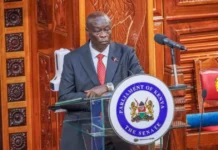
The judges rejected claims that the Speakers of the National Assembly and Senate were biased, ruling that Speakers neither debate nor vote on impeachment motions and therefore cannot be considered substantive decision-makers in the process. The court further found no evidence that public comments by MPs and Senators in support of the impeachment amounted to bias or predetermination.
The bench also upheld the public participation process undertaken by the National Assembly, finding that sufficient notice was given and multiple channels were provided for public engagement. Additionally, the court ruled that alleged non-compliance with the two-thirds gender principle did not invalidate Parliament’s authority to consider and determine the impeachment motion.
On the legality of the impeachment framework, the judges found that the Standing Orders governing impeachment proceedings are constitutional and that the seven-day timeline prescribed under parliamentary rules is not inherently unconstitutional.
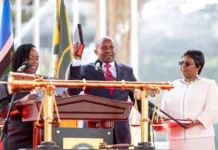
The court further held that the speed of the Senate proceedings, President William Ruto’s nomination of Prof. Kithure Kindiki as Deputy President, and Parliament’s approval of the nomination did not contravene the Constitution or any law.
The court also rejected arguments challenging Kindiki’s appointment, holding that Article 149 of the Constitution establishes a complete and self-executing process for filling a vacancy in the Office of the Deputy President.
The judges ruled that public participation was not constitutionally required in the nomination and approval of a Deputy President and further found that the absence of IEBC commissioners did not invalidate the process.
However, the court found in Gachagua’s favour on one significant issue. The judges held that the Senate violated his constitutional right to a fair hearing after declining to adjourn impeachment proceedings despite acknowledging that he was ill and unable to fully participate in his defence. According to the court, the refusal created a procedural imbalance and infringed his constitutional rights.
Despite that finding, the court declined to quash the Senate’s impeachment resolution, holding that the violation was insufficient to overturn the entire impeachment process.
As a remedy for the infringement of his rights, the court awarded Gachagua Ksh50 million in constitutional damages, payable by the Senate, stating that the award was necessary to vindicate the Constitution, restore the dignity of the affected party, and deter similar violations in future proceedings.
The court also issued a declaration affirming the constitutional necessity for Parliament to enact a dedicated statutory framework governing the impeachment of a Deputy President under Article 150 of the Constitution.
The judges made no findings regarding Gachagua’s pension and other emoluments, noting that he remains at liberty to pursue those claims before the appropriate forum.
In the final orders, the court declined the request to quash the Senate’s resolution impeaching Gachagua, awarded constitutional damages of Ksh50 million, directed each party to bear its own costs, and dismissed all other prayers not expressly allowed.
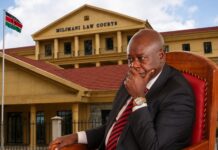
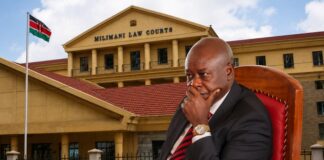
The judgment was delivered on June 8, 2026, at the Milimani High Court by a three-judge bench comprising Justice Anthony Mrima, Lady Justice Freda Mugambi and Justice Eric Ogola.
The ruling means that Rigathi Gachagua remains validly impeached and Prof. Kithure Kindiki remains lawfully in office as Deputy President, although the court found that Gachagua’s constitutional right to a fair hearing was violated during the Senate proceedings.