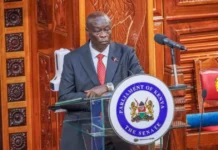
The High Court has upheld the legitimacy of the public participation process conducted by the National Assembly during the impeachment proceedings against former Deputy President Rigathi Gachagua, ruling that it met the required constitutional standards.
In its judgment, the bench found that while large-scale national processes may encounter logistical and operational challenges, such issues do not, on their own, invalidate an otherwise lawful exercise.
“It is to be expected, even accepting as we do that logistical and operational challenges may have a reason in certain isolated cases, which is not an uncommon occurrence in any large-scale nationally coordinated exercise conducted under time pressure, such localized deficiencies would not invalidate the entire process,” the court held.
The judges concluded that the evidence presented demonstrated that the exercise was conducted openly and in good faith.
“The evidence before this court shows that the door was opened widely, accessibly, and in good faith,” the bench stated.
On claims that the process was flawed because the former Deputy President’s response to the charges was not made publicly available during the public participation window, the court dismissed the argument.
The court also clarified the nature of public participation in impeachment proceedings, distinguishing it from a courtroom trial.
“The fact that His Excellency Gachagua’s response to the charges was not available to the public during the window does not without more render the exercise deficient,” the judgment read.
“The purpose of public participation in the impeachment process is substantively and functionally distinct from the adversarial hearing to which the respondent is entitled. It was not and was never intended to be a mini trial of the charges.”
The bench held that the National Assembly and Senate acted within their constitutional mandate as representative institutions, making final determinations on impeachment matters.
“The Constitution vests the final decision-making authority in the National Assembly and the Senate, both of which are representative bodies exercising a delegated mandate from the people,” the court stated.
On compliance with prior court orders requiring constituency-level engagement, the judges found that Parliament had taken demonstrable and timely steps to implement the directives, including structured nationwide public hearings and collection of views through constituency offices.
The court further dismissed claims that the participation process was merely a procedural facade, citing documentary evidence, constituency reports, and supporting materials presented by the National Assembly.
It also rejected allegations of statistical anomalies in participation data, stating that the figures were mathematically sound and within acceptable limits.