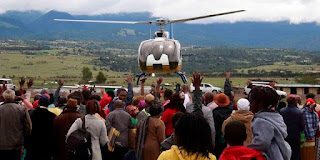
Domestic flights and helicopter trips increased by 20% in the six months to June, owing to increased political activity ahead of the recently finished elections.
According to data from the Energy and Petroleum Regulatory Authority (Epra), choppers and commercial planes burned 361.69 million litres of fuel in the period, up from 298.96 million litres in the same time previous year.
But consumption of diesel and Super grew marginally in the period under review signalling flat growth in business activity, a pointer to slow recovery to the pre-Covid-19 levels.
The surge came amid increased use of choppers as politicians campaigned ahead of the August 9 polls and also the picking up of international and domestic flights on the lifting of air travel restrictions.
“The main driver is the increased air travel domestically and internationally for business and holiday after the Covid restrictions were eased,” East Africa Managing Director of Lexo Energy Jesse Muniu said.
The political class prefers choppers, especially at the peak of campaigns due to speed and navigation, a preference that allowed oil marketers to increase sales of jet fuel.
Data by the Kenya Civil Aviation Authority shows that new helicopter registration rose by 41 last year as politicians campaigned.
The number of registered planes increased by 47, excluding those owned by the Police and the Kenya Defence Forces to 782 last year.
The data showed that motorists and businesses consumed 1.36 billion litres of diesel in the six months ended June, a two percent growth from the 1.33 billion litres in a similar period last year while the use of super grew four percent to 1.074 billion litres in the period.
The economy uses diesel for transportation, power generation and running of agricultural machinery such as tractors.
Consumption patterns of diesel mirror the economic activity and the slow growth points to an economy that is yet to fully recover to the pre-coronavirus levels.
Consumption of diesel hit 239.66 million litres in March — the highest monthly consumption so far this year. It dropped to 227.84 million litres in June. The highest consumption of Super this year was recorded in January at 191.25 million litres but declined to 175.86 million litres in June.