By Andrew Kariuki
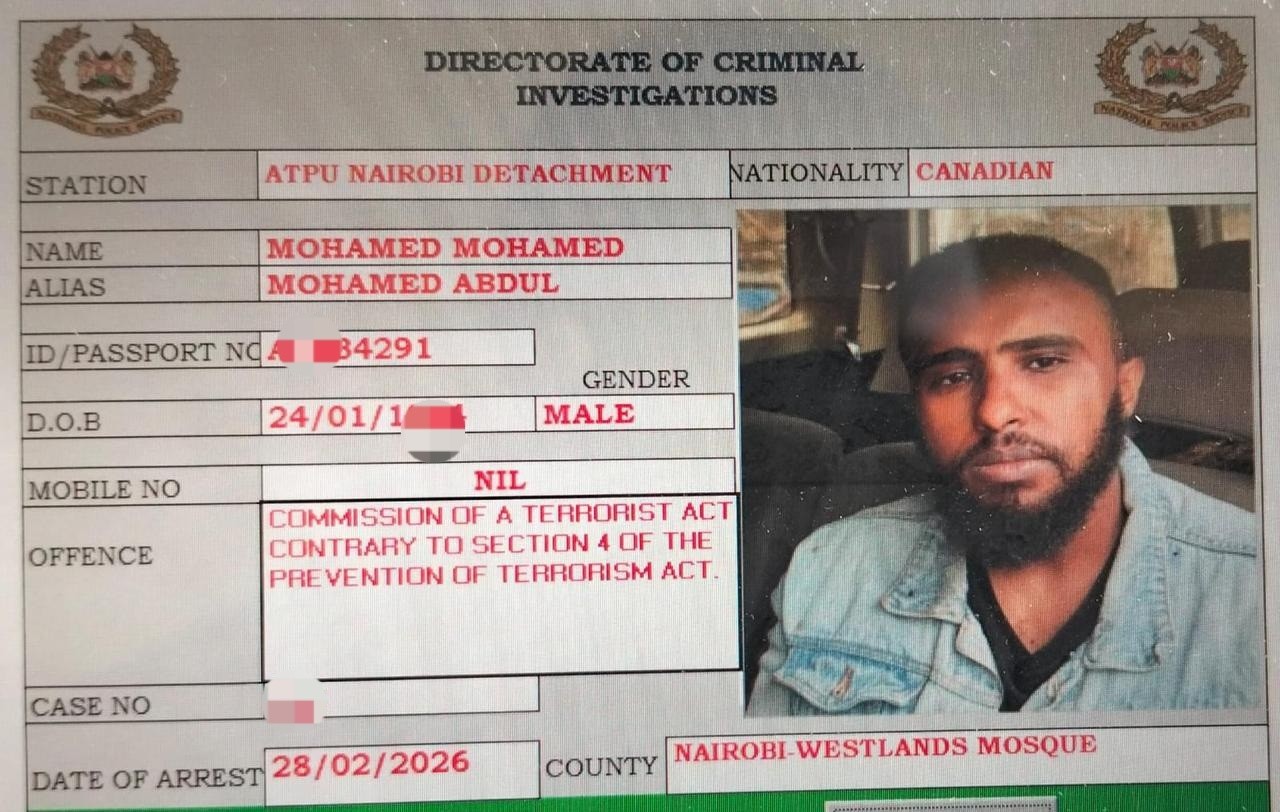
A 32-year-old Canadian national has been charged with terrorism and several related offences following a machete attack at Masjid Westlands in Nairobi.
The suspect, identified as Mohamed Mohamed alias Mohamed Abdul Mohamed, appeared before the Kahawa Law Courts on April 2, 2026, where he pleaded not guilty to all charges. He faces nine counts, including committing a terrorist act, assault causing actual bodily harm, possession of fake currency and unlawful presence in Kenya.
The court ordered that he be remanded at Kamiti Maximum Prison pending further proceedings. The case is scheduled for mention on April 13, 2026, when a pre-bail report is expected to be presented.
According to investigators, the incident occurred on February 28, 2026, at around 6:00 a.m., during Fajr prayers. The suspect is alleged to have entered the mosque posing as a worshipper before locking the main entrance and attacking congregants using a machete.
Authorities say approximately five people sustained injuries during the attack before the suspect was subdued.
Police officers from Kileleshwa Police Station responded to the scene and re-arrested the suspect, recovering the weapon believed to have been used in the attack. The injured victims were taken to hospitals within Nairobi County for treatment.
The investigation is being handled by detectives from DCI Kilimani in collaboration with the Anti-Terrorism Police Unit (ATPU). Officials say the probe has involved forensic examination of the scene, analysis of CCTV footage and a review of the suspect’s mobile phone data.
Authorities have also verified the suspect’s immigration status and engaged Canadian authorities as part of background checks.
Investigators further established that the suspect had arrived at the mosque in a black Toyota Harrier, which was recovered at the scene. A subsequent search of his residence in Riverside, Nairobi, led to the recovery of additional items considered relevant to the investigation.
The Directorate of Criminal Investigations said it continues to rely on intelligence-led operations and multi-agency collaboration in addressing cases of terrorism and violent crime.