By Peter John
Kenya is positioning itself to become Africa’s leading artificial intelligence hub following a high-level roundtable held during the KIICO 2026 in Nairobi.
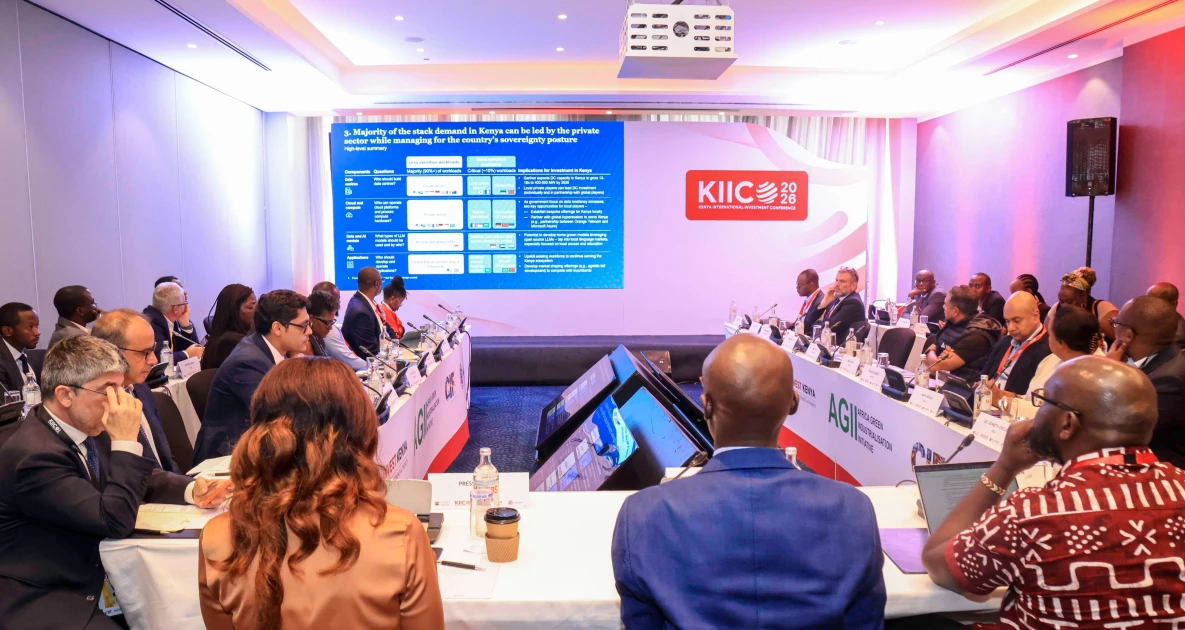
The meeting, hosted by the Office of the Special Envoy on Technology alongside KenInvest and AmCham Kenya, brought together about 50 leaders from government and the private sector to map out the country’s AI future.
Participants projected up to KSh 38 billion in artificial intelligence investments over the next year, contingent on the establishment of clear regulations, supportive policies, and targeted incentives aimed at attracting both local and international investors.
Central to the discussions was the development of a full AI ecosystem—ranging from renewable-powered data centres and research labs to scalable, locally developed AI applications.
Delegates noted that Kenya holds a competitive advantage due to its largely renewable energy grid, which can sustainably support energy-intensive AI infrastructure.
Kenya’s Special Envoy on Technology, Philip Thigo, emphasized the importance of enabling policies that encourage innovation while building public trust.
He noted that the country is not only focused on nurturing local talent but also on attracting global expertise, including diaspora professionals, researchers, and tech founders.
Rather than imposing strict regulations, stakeholders proposed the introduction of a 90-day regulatory sandbox to allow controlled experimentation and innovation.
The approach aims to strike a balance between fostering growth and ensuring accountability in emerging technologies.
The roundtable also highlighted the need to build sustainable and resilient AI systems, prioritizing long-term ecosystem development over the pursuit of short-lived startup success.
Plans include setting up sovereign data centres within Special Economic Zones, aligning digital infrastructure with national energy strategies, and strengthening partnerships between universities and industry to grow local talent.
Delegates further called for broader access to AI technologies, drawing inspiration from telecom-driven AI models in countries like India. The goal is to lower barriers to entry for young innovators and small businesses across the country.
Proposed procurement reforms would see the government play a more active role as a buyer of locally developed AI solutions, helping accelerate commercialization while improving public service delivery.
Key outcomes from the meeting include the creation of an investment signals register, policy and regulatory recommendations, and plans to map Kenya’s AI workforce and future workload demands.
With a clear strategy in place, Kenya is seeking to define its role in what participants described as the “Age of Intelligence”—not merely as a consumer of technology, but as a builder of foundational AI infrastructure and homegrown innovation.