By Peter John
The Kenya National Commission on Human Rights (KNCHR) has identified at least 1,525 victims and survivors of human rights violations, even as the 60-day deadline for submission of compensation and reparations claims expired on Friday, April 3, 2026.
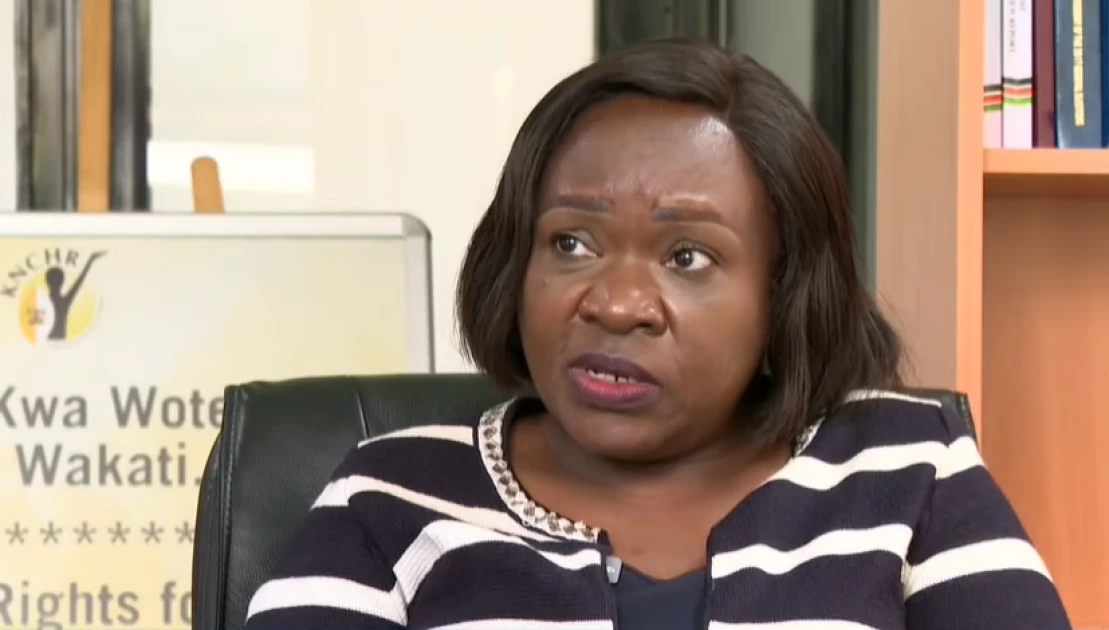
KNCHR Chairperson Claris Ogangah said the commission is currently verifying the submitted cases while working on a comprehensive compensation framework. By 2 p.m. on the deadline day, the commission had compiled the list of victims, with verification ongoing in line with established eligibility criteria.
Ogangah noted that the deadline was meant to facilitate timely data collection and processing in compliance with constitutional requirements and a presidential directive.
However, she emphasized that reporting of violations remains open despite the lapse.
The commission clarified that victims, survivors, and members of the public can continue submitting reports of human rights violations, stressing that reparations are a continuous process and not limited to the initial deadline.
According to KNCHR, the reported cases span a wide range of violations, including extrajudicial killings, torture, abductions, enforced disappearances, evictions, sexual and gender-based violence, as well as loss of property and livelihoods.
However, the commission raised concerns over limited resources, which have affected its ability to reach vulnerable populations.
Ogangah noted that many victims—particularly those who are poor, marginalised, or unable to travel—have not been adequately reached. The lack of funding has also hindered stakeholder engagement and public participation in shaping the reparations framework.
She called on the National Treasury to urgently release funds to support the verification process and enable the commission to complete its mandate within the stipulated timelines.
At the same time, she urged Parliament and the Executive to ensure KNCHR is sufficiently resourced to effectively carry out its constitutional duties.
The reparations framework is being developed under KNCHR’s constitutional mandate, supported by a Gazette Notice, a court ruling, and a Presidential Proclamation directing the commission to prepare and submit the plan within 60 days.
KNCHR remains the sole institution mandated to receive and document cases related to protest-linked human rights violations for purposes of compensation.
Victims have been encouraged to submit supporting documentation, including medical reports, P3 forms, police occurrence book (OB) numbers, and post-mortem reports where applicable.
The commission says continued cooperation from the public will be crucial in ensuring justice and compensation for all affected individuals.