By Andrew Kariuki
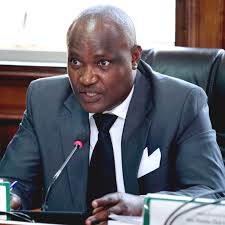
Treasury Cabinet Secretary John Mbadi has ruled out additional fuel tax cuts in the current financial year despite mounting public pressure to lower pump prices following the recent fuel crisis.
Speaking during an interview, Mbadi said the government has limited room to reduce taxes further because the financial year is almost ending and additional cuts would severely affect government revenue.
“We only have June left so the budget has largely been implemented. What are we going to reduce, are we going to reduce transfer to counties or salaries to civil servants?” Mbadi posed.
The CS acknowledged that the government could still consider temporary measures such as reducing levies or taxes on petroleum products but warned that such decisions would have major financial consequences.
“If there is any other additional action, we are going take any other action and which can only be to remove some levies or cut taxes on petroleum products which is a temporary measure in my view. But the effect is going to be dire because we are in the month of May,” he said.
His remarks come amid growing public anger over rising fuel prices that triggered nationwide protests and transport disruptions across the country.
Earlier this month, the Energy and Petroleum Regulatory Authority (EPRA) increased diesel prices by Ksh46.29 per litre and Super Petrol by Ksh16.65 before later revising the prices following negotiations with transport sector stakeholders.
Under the revised pricing, diesel was reduced by Ksh10.06 per litre while kerosene increased sharply by KSh38.60.
The current maximum prices in Nairobi now stand at Ksh214.25 for Super Petrol, Ksh232.86 for Diesel and Ksh191.38 for Kerosene.
Mbadi defended the government’s intervention measures, revealing that billions of shillings had already been used to cushion consumers through subsidies funded under the Petroleum Development Levy.
According to him, the government spent approximately Ksh6.2 billion subsidizing fuel during the initial phase of the crisis and has since injected another Ksh5 billion to stabilize prices.
The Treasury CS further disclosed that an additional Ksh5 billion has been set aside for the next pricing cycle as uncertainty continues over the ongoing global tensions affecting oil supply.
“We have another KSh5 billion going to the month of June because you could not exhaust it and we don’t know when this war will end,” Mbadi stated.
He also defended the government-to-government oil import agreement involving Middle East suppliers, arguing that the deal has helped Kenya secure fuel at lower freight and insurance costs compared to neighboring countries.
Mbadi warned that abandoning the arrangement could expose Kenya to higher fuel import costs and weaken the stability of the Kenyan shilling.