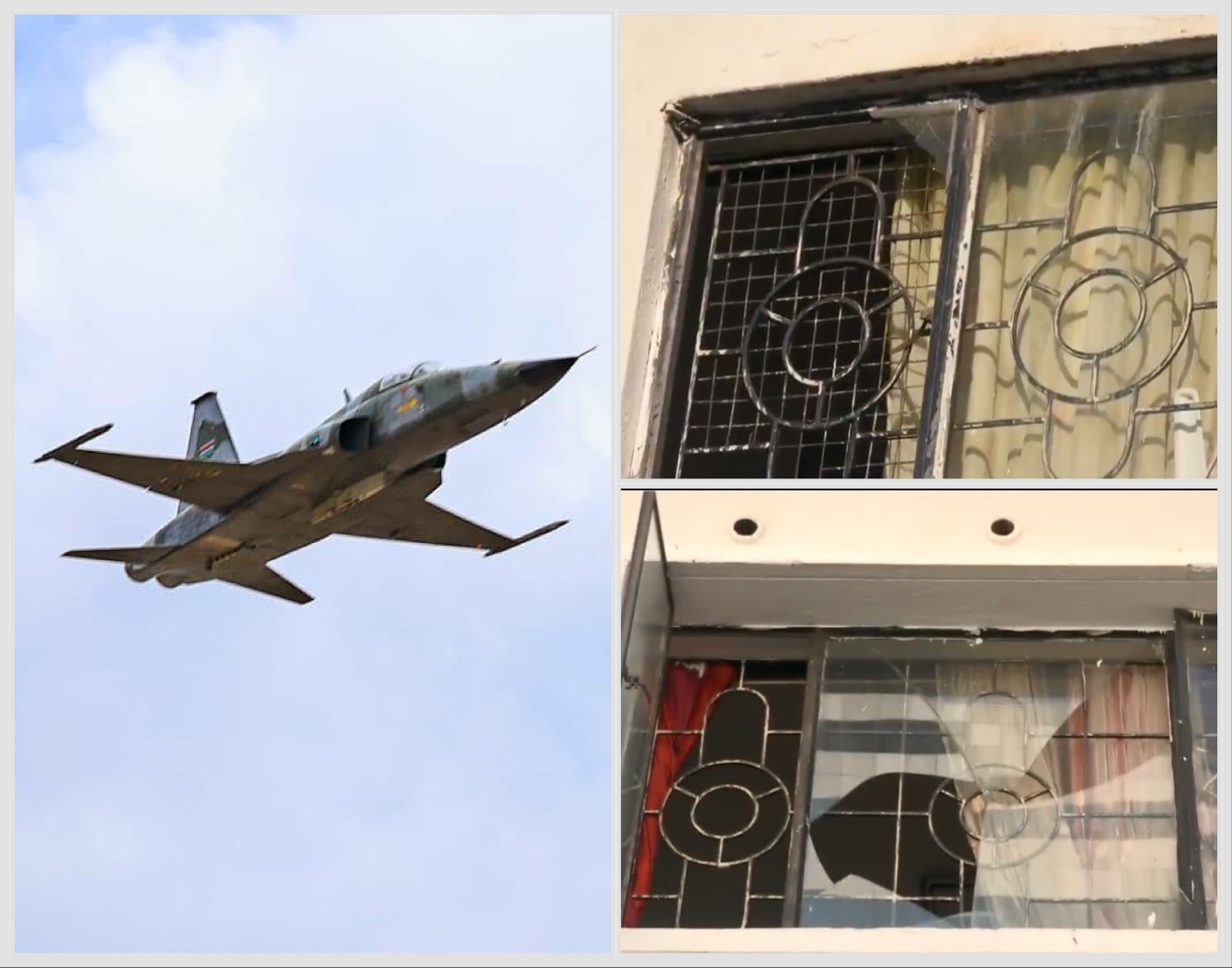
A section of Nairobi West residents is counting losses after a low-flying Kenya Air Force jet left a trail of shattered windows during the Jamhuri Day celebrations on Friday.
The dramatic aerial display, part of the annual military fly-past at the Nyayo National Stadium, sent shockwaves across nearby estates, startling residents and raising fresh concerns about safety during national holiday manoeuvres.
The jet, identified as an F-5 Tiger, flew at low altitude in a coordinated formation meant to showcase Kenya’s air defence capabilities.
However, the powerful sonic vibrations rattled houses across parts of Nairobi West, with several homeowners counting shattered window panes, damaged chandeliers and household items.
Mr. Basbra Basbra, a resident who spoke to media, said the fly-past, though visually impressive, posed significant risk to people living around the stadium.
“It was like an explosion. The windows burst inward. If anyone had been standing nearby, they would have been seriously injured,” Mr. Basbra said.
He added that the boom probably affected nearby hospitals, saying patients and staff expressed fear that the sudden shockwave could have caused harm, especially in sensitive units.
Why jets fly low during national holidays
Military fly-pasts have long been a staple of national celebrations in Kenya and the world.
Low-altitude military fly-pasts are carried out during national holidays to provide public visibility of defence assets, demonstrate pilot skill, and symbolise national strength.
The manoeuvres also serve as practical training for pilots, allowing them to sharpen precision flying in controlled environments.
In actual combat, low flying remains a critical capability.
Pilots often fly close to the ground to evade enemy radar, a tactic known as nap-of-the-earth flying. Low altitude is also essential during ground-attack missions, close air support, reconnaissance, and when using terrain features to mask aircraft from hostile detection systems.