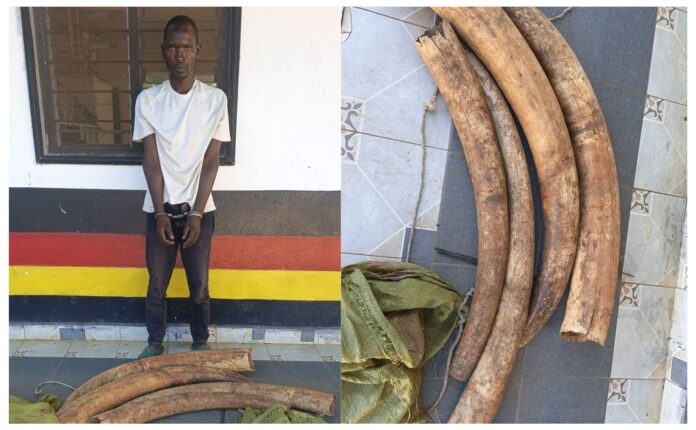
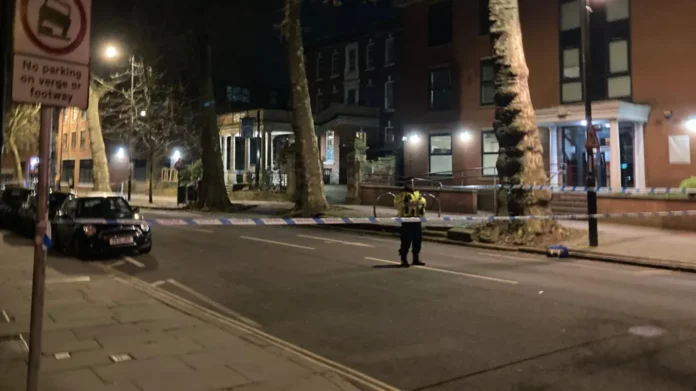
A suspected ivory trafficker is in custody after Kenya Wildlife Service officers intercepted him carrying four elephant tusks along a coastal border town in an operation that underscores the country’s intensifying crackdown on wildlife crime.
Nyamawi Mwandia Kulemba was arrested on March 28, 2026, in the Shirikisho area of Lungalunga, Kwale County, at around 3:40 in the afternoon.
Officers found him ferrying the tusks on a blue Haojin motorcycle with no registration plates, the contraband hidden inside sacks. The four tusks weighed a combined 39 kilograms.
Kenya Wildlife Service confirmed that officers had received credible intelligence about suspected trafficking activity in the area before moving in.
That tip was passed to the commanding officer at Lungalunga station, setting off a coordinated response involving multiple agencies. Kulemba remains in custody pending his appearance in court.
The recovered tusks have been secured as exhibits while investigators work to establish whether Kulemba acted alone or forms part of a wider trafficking network.
The Directorate of Criminal Investigations is involved in the ongoing probe and made clear that enforcement pressure on wildlife criminals will not ease.
Kenya remains a key battleground in the global fight against ivory trafficking, with law enforcement increasingly relying on intelligence-driven operations to dismantle trafficking networks and protect endangered species.
The National Transport and Safety Authority has announced a crackdown on unroadworthy commercial vehicles after 15 people died in a Saturday accident along Nyeri- Nyahururu Highway saying the accident was preventable.
The crash occurred on Saturday evening along the Nyeri-Nyahururu highway, near Dedan Kimathi University. Witnesses described a harrowing scene as the lorry reportedly swerved to avoid cyclists before ramming into the public service vehicle (PSV).
In a strongly worded statement, the Director General of the National Transport and Safety Authority (NTSA) labeled the incident a “preventable catastrophe.”
While a formal investigation is underway, preliminary findings suggest a combination of reckless driving, speeding, and the use of an “unserviceable” lorry caused the driver to lose control.
“Recklessness on our roads is not a mistake; it is a choice that has deadly consequences,” the Director General said, promising that those found negligent would be held “fully accountable.”
President William Ruto led the nation in mourning, expressing his “deepest sympathies” to the families affected. He confirmed that both national and county governments would provide support to the bereaved.
The NTSA has now ordered an immediate “enforcement surge” across Kenya’s major corridors.
A multi-agency team has been dispatched to the Nyeri crash site to forensically reconstruct the accident.
Officials have also launched a safety audit of the companies involved, warning that unroadworthy commercial vehicles will be forcibly removed from the roads to prevent further loss of life.
Vihiga senator Godfrey Osotsi has said he won’t challenge the decision by the Orange Democratic Movement (ODM) delegates to oust him from the deputy party leader position.
The party convened a Special Delegates Conference on Friday, March 27, where Osotsi’s removal was among the resolutions.
Osotsi belongs to the rebel faction in ODM. The faction dissents from the current party leader, Oburu Oginga.
Reacting to the resolution to remove him, Osotsi said he will not seek any legal redress against it, despite terming the delegates convention as an illegal one.
He blamed unnamed leaders from Western Kenya whom he suggested were eyeing the deputy party leader position.
Despite having the foundation for a legal challenge, Osotsi said he won’t pursue the post, saying that he will put his focus on the cause of his faction.
“I am aware of heightened political maneuvering, particularly among some governors from the western region eyeing the position of Deputy Party Leader…Although I have strong legal grounds to challenge these decisions in court, I have made a conscious decision not to pursue litigation, choosing instead to dedicate my time and energy to advancing the true ideals of ODM party,” he said.
Vihiga senator Godfrey Osotsi.
Seeming to get relief from the ouster, Osotsi said it would grant him a chance to focus on the undertakings of the ODM faction he subscribes to.
“My removal, therefore, only serves to grant me greater opportunity to engage more vigorously in championing the interests of the party and the people of Kenya,” he said.
Meanwhile, he cautioned his detractors that he won’t be moved by such moves as sidelining him from party posts.
Osotsi vowed to maintain his resolve in challenging what he said was an autocratic regime, adding that he won’t be blackmailed to change tune and join the Oburu Oginga-led faction of ODM.
“Let it be clear that I am not a politician who can be intimidated or governed by fear and I remain steadfast in my commitment to democratic principles and national transformation. I am prepared to pay any price in pursuit of a better country for all,” he said.
“We remain resolute in our mission to defend democracy and to work tirelessly towards meaningful change for the people of Kenya. I call upon my supporters and constituents to remain calm, firm and focussed for a brighter shared future,” he added.
The senator’s pronouncement came a day after embattled ODM secretary general Edwin Sifuna signalled his intention to quit ODM after the SDC called by Oburu.
Sifuna regretted that ODM’s profile had been soiled by those he claimed have been pocketed by President William Ruto.
He blatantly told Oburu to loook for another secretary general, declaring that he won’t serve a mediocre formation that is loyal to Ruto.
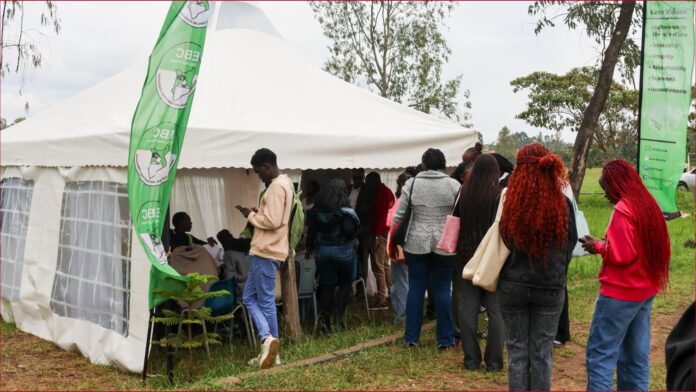
The Independent Electoral and Boundaries Commission (IEBC) has set up centres for continuous voter registration.
Enhanced Continuous Voter Registration (ECVR) will resume on Monday, March 30, after the first phase that began last October.
According to the electoral commission, the registration exercise will last 30 days between March 30 and April 28.
To enhance massive registration and see that no one is left behind, the commission has listed the places where registration will take place, from urban areas to the grassroots.
Below are the locations where members of the public can walk to enlist as voters or change their details.
County Assembly Wards on a rotational basis in accordance with the kit movement schedules.
Universities and colleges situated in their respective constituencies.
Huduma Centres.
IEBC Customer Experience Centre – Anniversary Towers, Nairobi.
IEBC Constituency offices
IEBC stated that the exercise will not be undertaken in the Emurua Dikirr constituency, which has its by-election in May, and Mbeere North, where there is an active petition against the results of the by-election held in November 2025.
An IEBC staff member helping a new voter go through the registration process.
Meanwhile, IEBC announced setting aside Ksh1 billion for the ECVR.
Commissioner Alutalala Mukhwana said the 30-day drive will target eligible voters countrywide, with personnel already in place to ensure smooth registration.
He also clarified that voters seeking to transfer polling stations must undergo in-person verification to curb irregularities.
The commissioner also revealed that as of March 24, just 250,391 Kenyans had signed up as new voters, with most registrations concentrated in urban and peri-urban areas.
Nairobi, Kiambu, Machakos, Nakuru, and Mombasa lead the tally, while Isiolo, Mandera, and Tana River lag due to sparse populations and migration trends.
He added that youth account for 32.65% of the newly registered voters.
The foregoing is way below IEBC’s target of six million new voters, which it said it was targeting at the start of the first phase of the continuous voter registration on September 30, 2025.
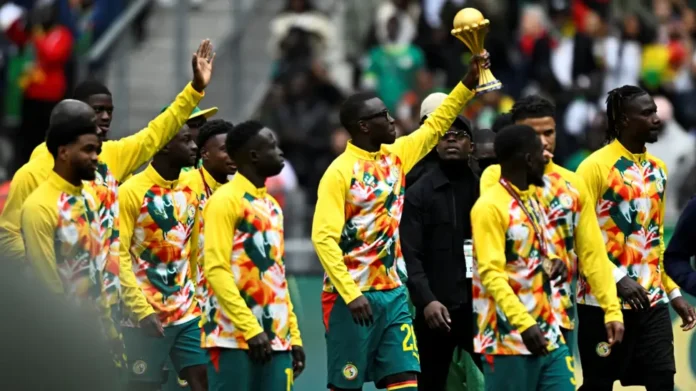
Senegal paraded the Africa Cup of Nations trophy before Saturday’s friendly match against Peru at Stade de France – despite being stripped of the title earlier this month.
Morocco were declared the winners of the 2025 Afcon tournament when the Confederation of African Football (Caf) overturned the result of January’s final.
Senegal’s players left the field in protest when, with the score at 0-0, hosts Morocco were awarded a stoppage-time penalty.
When they returned after a delay of about 17 minutes, Morocco subsequently failed to score the spot-kick and Senegal netted an extra-time winner.
Following an appeal by the Moroccan FA (FRMF), Caf later ruled that Senegal had forfeited the match and Morocco were awarded a 3-0 victory.
Image caption,Senegal added a second star to their kit to signify having won two Afcon titles
Before the match against Peru, captain Kalidou Koulibaly and his team-mates entered the pitch with the Afcon trophy for a lap of honour, before Koulibaly and goalkeeper Edouard Mendy went up to the stadium’s presidential box to place the trophy there.
Senegal also played in a kit with two stars above their badge to signify having won two Afcon titles – the disputed 2025 tournament and their previous 2021 title.
They beat Peru 2-0 following goals from Nicolas Jackson, who is on loan at Bayern Munich from Chelsea, and Crystal Palace’s Ismaila Sarr.
The friendly in Paris was Senegal’s first match since the Afcon final and forms part of their preparations for the World Cup, which starts in June.
They have been drawn in the same group as France, Norway and either Bolivia or Iraq.
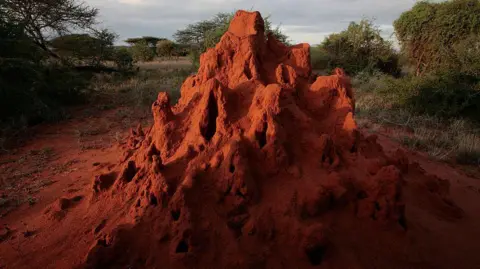
During this rainy season, swarms can be seen leaving the thousands of anthills in and around Gilgil, a quiet agricultural town in Kenya’s Rift Valley that has emerged as the centre of a booming illegal trade.
The mating ritual sees winged males leave the nest to impregnate queens, who also take flight at this time. This makes it the perfect time to chase down queen ants to sell on to smugglers who are at the heart of a growing global black market, that taps into the pet craze for keeping ants in transparent enclosures designed to observe the insects as they busily build a colony.
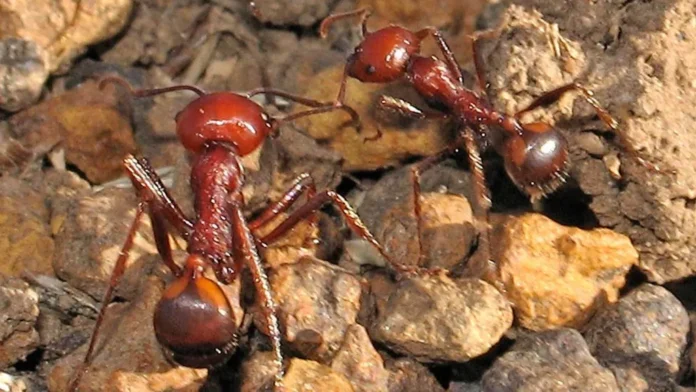
It is the giant African harvester ant queens, which are large and coloured red, that are most prized by international ant collectors – one can fetch up to £170 ($220) on the black market, which tends to operate online.
A single fertilised queen is able to create a whole colony and can live for decades – and can be easily posted as scanners do not tend to detect organic material.
“At first, I did not even know it was illegal,” a man, who asked not to be named, told the BBC about how he had once acted as a broker, linking foreign buyers with local collection networks.
Also known as Messor cephalotes, these ants are native to East Africa and known for their distinctive seed-gathering behaviour making them popular with ant collectors.
“A friend told me a foreigner was paying good money for queen ants – the big red ones which are easily seen around here,” the former broker said.
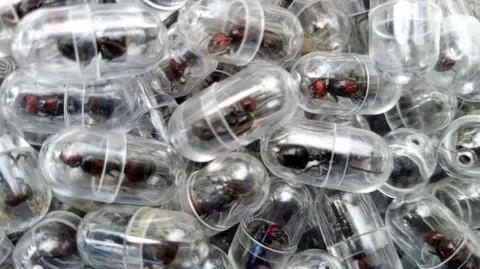
“You look for the mounds near open fields, usually early morning before the heat. The foreigners never came to the fields themselves – they would wait in town, in a guest house or a car, and we would bring the ants to them packed in small tubes or syringes they supplied us with.”
Ants can often be found in mounds like this
The scale of the illicit trade in Kenya became apparent last year when 5,000 giant harvester ant queens – mainly collected around Gilgil – were found alive at a guest house in Naivasha, a nearby lakeside town popular with tourists.
The suspects – from Belgium, Vietnam and Kenya – had packed the test tubes and syringes with moist cotton wool, which would enable each ant to survive for two months, according to the Kenya Wildlife Service (KWS).
The plan was to take them to Europe and Asia and put them up for sale.
This trade in ants has caught scientists and the authorities by surprise.
The East African nation is more accustomed to high-profile wildlife crimes involving elephant tusks and rhino horns.
“Even I, as an entomologist, have been surprised at the extent of the apparent trade,” Dino Martins, a biologist based in Kenya, where there are around 600 kinds of ants, told the BBC.
However, he can understand the fascination with East Africa’s harvester, with colonies created by a “foundress queen”, who can grow up to 25mm (0.98 inches) and who produces eggs throughout her life.
“They are one of the most enigmatic species of ants – they form large colonies, engage in interesting behaviours and are easy to keep. They are not aggressive.”
During the swarming he says the queens mate with several males.
“Then that is it for the males – their job is done… most are eaten by predators or die,” the entomologist says, going on to explain how the queen then scurries away to dig a small burrow and begin laying eggs to start her empire.
Her workers and soldier ants, those that protect the nest, are all female and will eventually number in the hundreds of thousands.
“Nests can live for over 50 years, perhaps even up to 70 years. I personally know of nests near Nairobi that are at least 40 years old as I’ve been visiting them for that long,” said Martins.
This means the queens live that long too – because as soon as she dies, the colony collapses and any surviving workers will look for another nest.
Kenyans who have had to deal with ants raiding their crops or invading their houses know this well – and to get rid of a colony someone is sent in to locate the queen, often hidden deep in one of the tunnels or chambers of an ant mound.
The former broker said ants could also be harvested by gently disturbing the mound and collecting them as they tried to escape.
“It was only when I saw the arrests on the news that I realised what I had been part of – and I immediately quit,” he said.
A large consignment of live ants was found in luggage at Nairobi’s Jomo Kenyatta International Airport bound for China earlier this month
For Zhengyang Wang, who was part of a team of researchers who published a report on the ant trade in 2023 focusing on China, this is a worry and could “wreak havoc” with local ecosystems.
“Initially, we were very excited when we learnt that many people have taken up keeping ants,” Wang, assistant professor at Sichuan University, told the BBC.
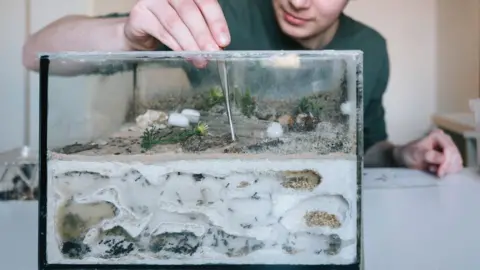
“A colony of pet ants are often kept in a formicarium, which is basically a transparent plastic box so that keepers can observe colonies at work, digging tunnels, collecting food, and guarding their queen. I’d say it’s quite charming and… can be a good way of educating people about insects and their behaviour.
“But then we realised, wait, isn’t keeping invasive species incredibly dangerous?”
Monitoring online sales – of more than 58,000 colonies – in China over six months, the researchers found that more than a quarter of the traded species were not native to China – despite it being illegal to import them.
“If the trade volume of invasive ants continues to grow, it’s only a matter of time before a few escape from their formicaria and become established in the wild,” said Wang.
The study he worked on, published in the journal Biological Conservation, explained what could happen in the case of giant African harvester, one of the most traded species in China: “For example, Messor cephalotes, an East African native, is among the largest seed harvesters in the world and could potentially disrupt predominantly grain-based agriculture in south-eastern China.”
The environmental consequences are also a concern in Kenya.
“Harvester ants are both keystone species and ecosystem engineers. They harvest seeds of grasses, and other plants and in so doing also help to disperse the seeds,” said Martins, adding that the insects “create a more healthy and dynamic grassland”.
Mukonyi Watai, a senior scientist at Kenya’s Wildlife Research and Training Institute, shares these fears.
“Unsustainable harvesting – particularly the removal of queen ants – can lead to colony collapse, disrupting ecosystems and threatening biodiversity,” he told the BBC.
It is possible to collect ants legally in Kenya – in line with various international treaties – with a special permit, which would require the buyer to sign a benefit-sharing agreement with the local community involved to split any profits.
But, according to the KWS, so far none have been applied for – with the paperwork also requiring details of how many ants are being collected and their destination.
A formicarium allows collectors to see the workings of an ant colony
Some conservationists are now calling for greater trade protections for all ant species under the Convention on International Trade in Endangered Species (Cites), the global wildlife trade treaty.
“The reality is that no ant species is currently listed under Cites,” Sérgio Henriques, a researcher into the global ant trade, told the BBC.
“Without international treaties monitoring these movements, the scale of the trade remains largely invisible to policy makers and the global community,” he said.
But for the KWS the real problem is more immediate – how to monitor and clamp down on “under-reported” insect trafficking, with the agency suggesting better surveillance equipment at airports and others border points would be a good start.
Martins agrees: “It is likely only a fraction of the actual ants being traded that are being detected, so one can only guess at the scale for now.”
Journalist Charles Onyango-Obbo argues that Kenya is overlooking a significant global revenue opportunity.
“The ants are not finite items like gold or diamonds. They are biological assets that can be bred and farmed, and their production can be scaled up to thousand a day. Yet we treat them like stolen artefacts,” he recently wrote in Kenya’s Daily Nation newspaper.
In fact, Kenya’s cabinet did approve policy guidelines last year aimed at commercialising the wildlife economy, including the ant trade.
“The guidelines seek to promote sustainable use trade of wild species such as ants to generate jobs, wealth and community livelihoods across all the counties,” said Watai.
With careful monitoring in place, it could be that future farmers around Gilgil will have special formicaria on their land expanding the yields from their fields and orchards – full of vegetables and fruits – to include lucrative queen ants.
But the debate over the dangers of exporting ants to hobby collectors in different parts of the world is yet to be settled.
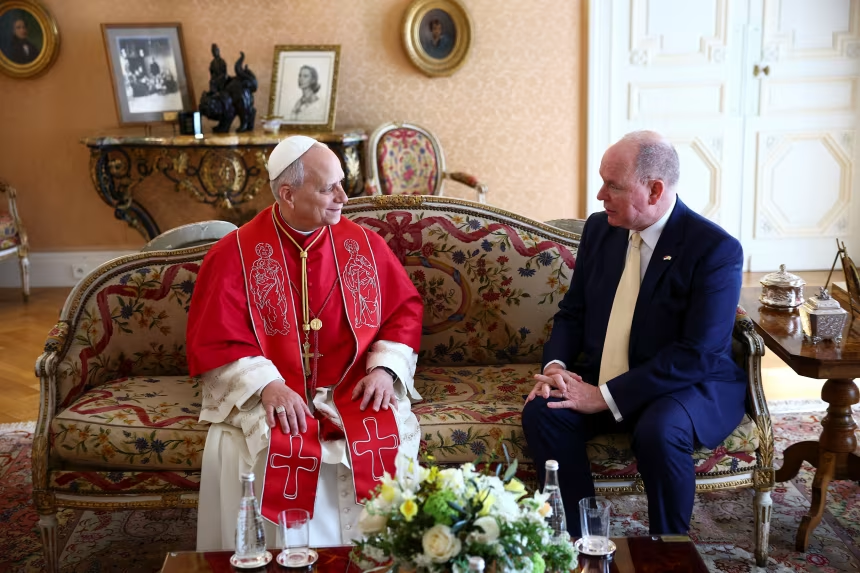
The leaders of the world’s two smallest states came together on Saturday, as Pope Leo XIV made history with the first papal visit to Monaco in modern times and called on its residents to share their wealth with those in need.
Leo traveled to Monaco from the Vatican by helicopter and was welcomed by Prince Albert and Princess Charlene and began his visit with a private meeting at the prince’s palace. A crowd waving Monaco and Vatican flags and children wearing yellow hats waited for him.
The pontiff’s visit to the principality has raised questions about why he chose a place known for its wealth and reputation as a playground for the super-rich for his first foreign trip of 2026, and his first in Europe outside Italy.
But the ties between the papacy and Monaco run deep with Catholicism the state religion in the principality, and the Vatican sees diplomatic mileage in working closely with another small state.
There is also a personal dimension: the first US-born pope and Prince Albert share American connections given Prince Albert of Monaco’s mother, the Hollywood actress Grace Kelly, married Prince Rainier III in 1956.
Leo urged Monaco’s wealthy residents “to put your prosperity at the service of law and justice” in a speech outside Albert’s residence. The pontiff added that it was needed at a time when the “display of power and the logic of oppression are harming the world and jeopardizing peace.”
Casinos not on the itinerary
Cardinal Pietro Parolin, the Holy See’s Secretary of State, said small states could still play an important moral role on the world stage as a “bulwark against authoritarian tendencies” while highlighting the shared priorities between the Vatican and Monaco.
Parolin said in an era when “international law appears weakened” along with the “dangerous return of theories that justify preventive wars,” smaller states can be “natural guardians of multilateralism.”
These include the protection of the environment – with Monaco actively pursuing a green transition – and opposition to abortion, with Prince Albert recently vetoing an abortion law in the principality.
(From left) Crown Princess Gabriella, Princess Charlene of Monaco, Pope Leo XIV, Prince Albert II of Monaco, and Crown Prince Jacques wave from the Gallery of Hercules balcony at the Prince’s Palace in Monaco on Sunday. Gregorio Borgia/AP
The ties between Monaco and the church are reflected in Princess Charlene being among a small group of Catholic royal women granted the rare privilege of wearing white in the pope’s presence, instead of the customary black.
Leo’s one-day itinerary also included a meeting with Monaco’s Catholic community, and a public Mass at the national stadium during which he urged people “not to grow accustomed to the clamor of weapons and images of war.”
In his homily, the pontiff reminded the faithful that “peace is not merely a balance of power; it is the work of purified hearts, of those who see others as brothers and sisters to be protected, not enemies to be defeated.” He also insisted that the Church in Monaco is “called to bear witness to living in peace.”
The pope, though, has no plans to visit Monaco’s famous casino district and, according to his brother John, Leo gave up gambling after his time as a missionary in Peru.
“We used to enjoy going to the boat and gambling,” John told the National Catholic Reporter. “After this experience, (he’d say) “Nuh-uh, it’s a waste. There’s better things you could do with your money.”
President William Ruto has called on Kenyan ambassadors and high commissioners to aggressively market the country abroad and convert opportunities into tangible economic benefits.
Speaking during the opening of the 19th Ambassadors and High Commissioners Conference in Nairobi, the President emphasized the need for results-driven diplomacy.
“As Kenya’s ambassadors, you are called to present to the world the full breadth of Kenya’s potential, telling our story with conviction and translating that promise into partnerships that deliver real, tangible benefits for the people of Kenya,” he said.
Ruto stressed that Kenya’s foreign policy must move beyond engagement to delivery, with diplomats expected to unlock markets, attract quality investment, and strengthen strategic partnerships that directly support economic growth.
Foreign Affairs Cabinet Secretary Musalia Mudavadi reinforced the call, urging diplomats to leverage Kenya’s growing global influence. He noted that Ruto currently serves as Chair of the Common Market for Eastern and Southern Africa (COMESA) and remains a leading voice on climate action.
“This position elevates Kenya’s influence and provides a strategic platform to advance our national, regional, and international interests,” Mudavadi said.
At the same event, Equity Group Holdings Managing Director and CEO Dr. James Mwangi challenged Kenyans to take greater ownership of investments in their country, warning that overreliance on foreign capital could strain the economy.
“I’m glad that foreign investors continue to see Kenya as a strong and attractive destination. Their confidence in our economy is important,” he said
He added that infrastructure alone cannot drive growth and called for stronger domestic savings to support investment.
He also pointed to partnerships with Trade Connect and the African Continental Free Trade Area (AfCFTA) Secretariat as key to unlocking trade, financing, and market access for Kenyan entrepreneurs.
Dr. Mwangi emphasized that diplomats are central to this agenda. “Our foreign missions are critical in promoting exports and attracting investment.
If equipped with the right tools, they can drive foreign exchange inflows, job creation, and wealth generation,” he said.
The push for economic diplomacy comes amid Kenya’s rollout of digital platforms—BiasharaLink and Deal House—aimed at transforming embassies into active trade hubs under AfCFTA.
Launched in Addis Ababa during the 39th African Union Summit, the platforms seek to address Africa’s “trade execution gap,” where thousands of trade inquiries fail to translate into actual deals.
The tools are expected to support SMEs and women-led businesses by linking them to structured cross-border opportunities and financing, marking a shift from policy ambition to practical, results-driven trade diplomacy.
A man has been arrested on suspicion of attempted murder after a car struck seven people in Derby city centre.
Derbyshire Police said a black Suzuki Swift was driven into pedestrians in Friar Gate at about 21:30 GMT on Saturday.
Seven people were seriously hurt but their injuries are not life-threatening.
Police said a man in his 30s, originally from India, was detained a short time later on suspicion of attempted murder, causing serious injury through dangerous driving, inflicting grievous bodily harm with intent and dangerous driving. He remains in police custody.
Officers said there was no further risk to the public and the investigation into the circumstances was ongoing.
The force said: “We are keeping an open mind as to the motives.”
Anyone with any information has been urged to come forward.
Friar Gate has been completely closed from the junction with Curzon Street/Cheapside up to Ford Street, and people have been told to avoid the area completely.
“Although we know this will be alarming, we would like to reassure people that we do not believe there is an ongoing risk to the public,” police said.
A local person was quoted as saying by the Derby Telegraph that they were at a bar nearby and had come outside because “someone said a load of people had been hit by a car”.
They went on: “Everyone was talking about it and panicking, we know people who were in other bars and thought it might have been them.
“It’s so sad, everyone is so shook up. People have been crying, I just can’t believe something like this has happened.”
Derby Telegraph journalist Oscar Fisher attended the scene at around midnight, noting that the streets had “fallen silent” at a time in the city centre when the streets should be “filled with students and locals enjoying the nightlife”.
He said that in Friar Gate, debris remained scattered across what is “usually one of Derby’s busiest streets”.
“My thoughts, and those of the entire city, are with those injured, their families, and everyone who witnessed this distressing event,” she said in a statement.
“We are working closely with Derbyshire Police as they investigate the circumstances.
“Please continue to avoid the affected area to allow officers to carry out their vital work.
“I want to thank the emergency services for their rapid response and professional care under such difficult circumstances.”
Led by Nderitu’s widow, Margaret Nyokabi Nderitu, the family appealed to President Ruto to order an independent probe into thealleged forgery of the deceased’s willand unlawful intermeddling in the estate.
This follows President Ruto’s outburst, in which he accused Gachagua of calling him a thief while allegedly having stolen from his own brother.
Speaking during a tour in Kirinyaga County, Gachagua warned the head of state to avoid interfering in his family affairs and focus on his own.
“Amesahau mambo ya Kenya anaingilia mambo ya familia ya Gachagua. Alijaribu kuingilia mambo ya mlima, nikamkataza. Ameshindwa kugawanya mlima, anafikiria atagawanya familia ya Gachagua? Wewe William Ruto, ukona familia yenu ya Kalenjin, kuenda ongea mambo ya familia yenu, usiingilie mambo ya familia yangu hapa milimani,” Gachagua stated.
He also urged leaders still backing the ruling administration to join the DCP party immediately, cautioning that delaying might be too late.
Gachagua emphasized that DCP nominations would be free and fair, but those still aligned with Ruto’s administration would be left out
“I’ve heard those still in Ruto’s administration plan to join DCP later, after benefiting from the current government, only to come and confuse you. Will you allow them?” Gachagua asked, as residents shouted “one term” in unison.
He urged residents to vote out leaders supporting Ruto’s administration in the next general elections, saying it’s time for change.
Gachagua, who is touring Kirinyaga to popularize his DCP party, visited Mwea, Kirinyaga Central, and Gichugu, where he urged residents to reject leaders backing Ruto.
“When William Ruto visits, hear what he says, take his money, but don’t let other leaders accompanying him speak because they are traitors,” Gachagua said, warning residents to be cautious of politicians with hidden agendas.