Sponsored Ad

Ad 1
Ad 2
Ad 3
Ad 4
Ad 5
Ad 6
22.2 C
Kenya
Sunday, April 26, 2026
Home Blog Page 1954

Uncertainty grips family of Indian tech boss detained in Qatar

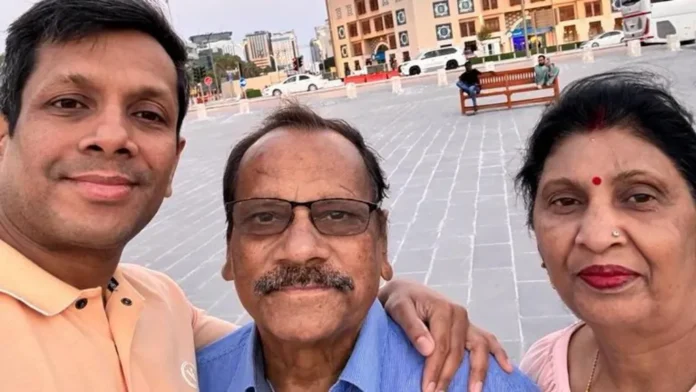
Every week, JP Gupta’s heart sinks when he hears his son cry on the phone.

The grim ritual began in January when Amit Gupta, a senior Indian technology officer in Qatar, wasdetained on charges that haven’t been made public yet.

Almost three months on, his family in India say they still don’t know what crime he is accused of.

“He is allowed to speak to us for just five minutes [a week] and all he says is: ‘Dad, I have not done anything wrong’, and then breaks down,” his father says.

Amit Gupta is the country head for Indian technology company Tech Mahindra in Kuwait and Qatar. He moved to Doha, Qatar’s capital, for work in 2013.

His father told the BBC that he was “picked up by Qatar state security department officials from a restaurant near his office on 1 January” without being given a reason.

Qatar’s interior ministry has not responded to the BBC’s questions on why Amit Gupta was detained.

The BBC has approached Tech Mahindra for comment.

A company spokesperson earlier said it was in close contact with the family and providing “necessary support” to them.

“We are also actively coordinating with authorities in both countries and adhering to the due process. Ensuring the wellbeing of our colleague is our top priority,” the company said.

Tech Mahindra, an Indian software services and consulting company, operates across 90 countries including Qatar and has more than 138,000 employees.

The Indian government hasn’t officially commented yet on Amit Gupta’s case. But sources in the country’s foreign ministry told the BBC that the Indian embassy in Qatar was “closely following the case”.

“The mission has been in touch with the family, the lawyer representing Amit Gupta and Qatari authorities on a regular basis,” the sources said. “Our embassy continues to provide all possible assistance in the matter.’
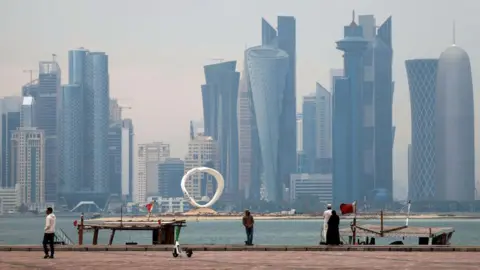
Getty Images People walk on the Doha waterfront before sunset with the a view of the Qatari capital's skyline in the background on March 9, 2025, ahead of the iftar fast-breaking meal during the Muslim holy month of Ramadan.
Hundreds of thousands of Indians work in Qatar

Amit Gupta’s wife Aakanksha Goyal, however, says the government should do more to secure her husband’s release.

She wrote a letter to Prime Minister Narendra Modi’s office, saying that her husband was “under immense mental pressure/trauma”.

“Our frequent appeals to the concerned authorities in Doha have not yet yielded any positive response,” she wrote.

The letter was acknowledged on 18 February and referred to India’s foreign ministry but nothing has happened since then, Ms Goyal told the BBC.

“We have sought a meeting with Prime Minister Modi and Foreign Minister S Jaishankar. Until they intervene, we don’t expect anything will happen,” she said.

In February, Amit Gupta’s parents travelled to Doha and managed to meet him with the help of Indian embassy there.

“When we saw him, he just hugged us and cried. He kept repeating that he had done nothing wrong,” his father said, adding that his son hasn’t been questioned by investigators in Qatar yet.

“If they have not found anything against him, he should be released,” he said.

Hundreds of thousands of Indians live and work in Qatar. This is the second high-profile case of Indians being detained or arrested in Qatar to make headlines since 2022.

Last year, a court in the Gulf country released eight former Indian naval officers who had been sentenced to death. Neither Qatar nor India revealed the charges against the men, who were working for a private firm in Qatar. But media reports said the men were charged with spying for Israel.

The commuting of the death sentences was seen as a diplomatic triumph for Modi, whose administration shares a warm relationship with Qatar. In February, Sheikh Tamim bin Hamad Al Thani, the Emir of Qatar, paid a state visit to India, accompanied by a high-level delegation. During the visit, the two countries elevated their relationship to a strategic partnership.

While Amit Gupta’s anxious family wait anxiously, Ms Goyal says she is finding it hard to answer questions from their children, aged 11 and four.

“My children keep asking me what happened to their father. My son’s birthday is in April and he is expecting Amit to be there as usual,” she says.

Whisky barrel scam cons victims out of life savings

Victims have been conned out of millions of pounds in a whisky barrel investment scam, a BBC investigation has found.

Hundreds of people were duped into ploughing their life savings and pensions into casks that were overpriced or did not exist, while some individual casks were sold multiple times to different investors.

The victims include one woman with terminal cancer who invested £76,000 and another woman who spent more than £100,000 on casks which experts say were only ever worth a fraction of the price they paid.

The BBC can reveal that police are investigating three Scotch whisky companies over fraud allegations, with investments running into the millions.

The market’s popularity has grown rapidly in recent years because of the reports of huge returns being made from rare whiskies.

Investors buy a cask of whisky when it is first produced and then hope that it rises in value as the spirit ages in the barrel.

It takes three years for spirit to become Scotch whisky in a cask, and investors are encouraged to keep barrels for up to 10 years or more to maximise returns.

Getty Images Whisky glasses on a barrel in a distillery
It takes three years for spirit to become Scotch whisky in a cask

There are many legitimate traders – but a lack of regulation has enabled fraudsters to exploit the market. They use misleading claims and even outright fabrications to lure in unsuspecting investors.

There is no central authority regulating or tracking the ownership of casks, making it difficult to verify claims.

As a result, many investors find themselves entangled in complex legal disputes or left with assets worth far less than they were led to believe.

Alison Cocks, from Montrose, invested £103,000 in a company called Cask Whisky Ltd, run by a man calling himself Craig Arch.

She initially bought a single whisky cask for £3,000, and at first everything appeared legitimate.

Mrs Cocks was given certificates, and the company provided an online portal where she could track her investment. Her portfolio appeared to grow, on paper at least.

Comforted by the projected returns she was being promised, which started at 12% and were forecast to increase to as much as 50% over time, she was convinced to invest more.

She bought another three casks for a total of £100,000.

However, she said that the problems started when she told the company she wanted to sell.

“Suddenly they didn’t want to talk to me anymore. They were avoiding my calls. I was really panicking,” she said.

“I decided I would start investigating my own casks.

“On my certificates, it showed where my casks were, allegedly. When I actually contacted those warehouses, they weren’t there.”

Mrs Cocks was told by independent whisky valuers that she paid five times what her barrels were actually worth.

She has since been able to track down three of the four casks in warehouses, but none is in her name. One has also been bought by someone else.

The most expensive cask she bought – which cost her £49,500 – does not exist.

Craig Brooks
Brooks and his brother were jailed in 2019 for fraud

Alison Cocks is one of 200 people who invested with Cask Whisky Ltd and are trying to work out if they actually own their casks.

The BBC has discovered that Craig Arch – the company’s CEO – is actually Craig Brooks, a disqualified director and convicted fraudster.

In 2019, Brooks and his brother were jailed for a £6.2m fraud, where 350 victims were cold called and convinced to invest in carbon credits and “rare earth metals”.

The City of London Police Serious and Organised Crime team is now investigating Brooks’ whisky company.

But the BBC can also reveal that Brooks is running another cask whisky company, Cask Spirits Global Ltd, under another false name, Craig Hutchins.

As a disqualified director, it is illegal to run or control a company.

Yet, using the name Hutchins, Brooks told an undercover BBC reporter that he was in charge of “decision making” and that he dealt with finances.

When confronted, Brooks admitted his name was not Hutchins, but maintained all of the whisky casks he sold existed. He said he never told the reporter he made the company decisions.

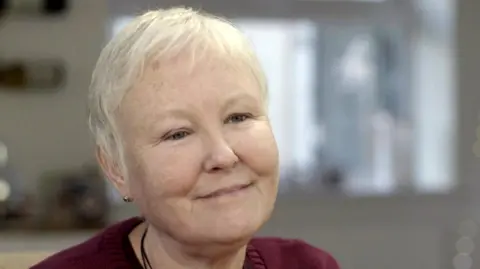
Jay Evans facing the camera, wearing a burgindy jumper. She has short white hair.
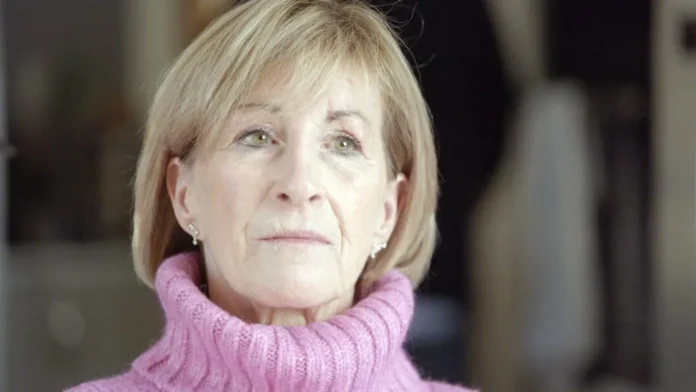
Jay Evans invested almost £76,000 in Whisky Scotland after being promised lucrative returns

Another company, called Whisky Scotland, has also left a trail of dissatisfied investors.

They include NHS worker Jay Evans, who was diagnosed with terminal cancer in 2021. She put her home in Brighton on the market so she could make investments to provide long-term security for her loved ones.

She invested almost £76,000 in Whisky Scotland after being promised lucrative returns from a company director.

Mrs Evans, 54, sold her home and moved to Peacehaven in East Sussex, then used the money from the sale to invest in seven casks.

The company’s director sent her voicemails from across the world, telling her she was his “favourite ever client” and that he would “always look after her”.

But two of the casks did not exist, and the other five had been sold at a much higher cost than their true worth.

Mrs Evans has been told it would take 25 years to recoup what she has paid.

Whisky barrels stacked in rows in a warehouse.
There are many legitimate traders in whisky casks

The company and directors have now vanished. Its Glasgow office is just a rented space and a BBC reporter was told they were never there.

“They’ve made somebody who’s facing end of life at an early age, they’ve made it infinitely more difficult. None of it will matter to people like this,” Mrs Evans said.

Her wife Susie Walker said it was “heart-breaking” that the money Jay had worked for had gone overnight, and that she would now need to carry on working.

Self-employed locksmith Geoff Owens, from Wrexham, invested his life savings – more than £100,000 – with Whisky Scotland.

He and other investors are now trying to track down their casks and their investments.

Mr Owens says he will not stop until he finds out what has happened to his money.

“No-one is going to rip me off and walk away from this, without me facing you,” he said.

“I will get an army together who you’ve ripped off, and we will try and do something about it.”

The BBC asked the directors of Whisky Scotland for a comment. They did not respond.

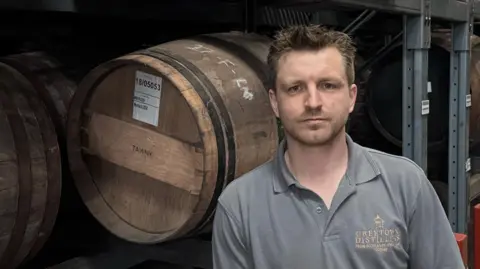
Martin Armstrong Martin Armstrong, wearing a grey polo shirt, standing in front of barrels in his warehouse
Martin Armstrong runs a warehouse which stores tens of thousands of casks

Martin Armstrong runs Whisky Broker, a bonded warehouse in Creetown, near Dumfries, which stores 48,000 casks.

He says he is being contacted “almost every day” by investors looking for casks sold by unscrupulous companies.

Asked if he thought that fraud could ever be so rife in the sector, he said: “No. But I knew it was possible.

“When there’s money involved, then everything follows.”

Kenny Macdonald – a legitimate whisky cask broker who runs his own company, Dram Mor – said there were other “good guys” operating in the industry.

He said there were “a huge amount of people” who were “profiteering” – but that in those cases, investors were at least getting a product.

“And then you get the ones who are downright nasty. And they’re selling somebody a piece of paper, for a cask that just never existed.

“The sharks are circling. They know there’s blood. They can smell it.

“And unfortunately, in this particular case, the blood is whisky.”

Trump a menace, fuels economic uncertainty

The world has changed, said the chancellor – and hours later it did, again.

It is a phrase that has become a familiar one at Westminster in the last few days and the line used to justify the shift in priorities and spending cuts Rachel Reeves announced in her Spring Statement.

When folk in government say the world has changed what they mean, at least in part, is Donald Trump is back in the White House and they can’t be remotely certain what is going to happen next.

In the latest example of stagecraft and statecraft amounting to the same thing for America’s president, he set out in a news conference that Washington would be imposing an import tax or tariff of 25% on all cars America buys from abroad.

For the UK, the US is the second largest car export market after the EU, according to the Society of Motor Manufacturers and Traders.

Two and a bit months in to Trump’s second term, the strategy from the government in the UK has been to wrangle in private and say as little as possible in public.

“If in doubt, say nowt” is how you might colloquially describe the approach, resisting the temptation to be drawn into commentary about the president’s actions for fear of provoking a blast of his ire.

And alongside this, work has been under way to agree a US-UK trade deal, which may provide some insulation from the whims and broadsides of Trump.

But all this underlines that uncertainty is the new certainty and considerable bandwidth is absorbed within government anticipating what might be around the corner and then seeking to negotiate about and/or mitigate the consequences of whatever is expected to change.

The independent forecaster, the Office for Budget Responsibility (OBR), tasked with the near impossible job of economic projections amid such swirling uncertainty, nonetheless has a go.

With more than a splash of understatement, the OBR writes in its latest economic and fiscal outlook – which accompanied the chancellor’s Spring Statement – that “following the election of a new US administration in November, US trade policies and those of its major trading partners remain in flux”.

You can say that again.

Across five pages, the OBR works through various scenarios following a hike in tariffs of 20 percentage points by the US.

Firstly on countries other than the UK, then on all countries including the UK and finally again on all countries including the UK but where those countries reciprocate with equivalent tariffs on US goods.

The most severe, involving retaliation, the forecaster reckons, “would almost entirely eliminate the headroom against the fiscal mandate” – in other words, near nuke on its own all the budgetary shuffling and trade-offs Reeves has been juggling with in recent weeks.

Blimey.

For this reason among many ministers will be desperate to avoid anything close to this scenario playing out.

And all of this just days before what Trump has dubbed “Liberation Day” next Tuesday, when, yes, a huge number of new tariffs are anticipated.

The world has changed, and continues to change.

Joey Barton guilty of kicking wife in the head

Former footballer Joey Barton has been found guilty of assault by beating after pushing his wife to the floor and kicking her in the head.

The midfielder, 42, who played for Manchester City and QPR, assaulted Georgia Barton, 38, in June 2021 during a drunken row at their family home in Kew, south-west London.

The pair, who had been drinking with two other couples while their children slept upstairs started arguing after Barton threatened to fight his wife’s brother and father, Westminster Magistrates’ Court previously heard.

Barton, who was the manager of Bristol Rovers at the time, was given a 12-week suspended prison sentence.

Mrs Barton was left with a lump on her forehead and a bleeding nose, the court previously heard.

She had called police immediately after the attack, saying her husband had “just hit” her, but later sent a letter to the prosecution retracting her allegations.

Chief magistrate Paul Goldspring rejected Barton’s account of events and described them as “vague” as he convicted him.

While he acknowledged Barton had “a record of violence”, the magistrate said: “I am satisfied that it is not necessary to impose an immediate custodial sentence.”

Mr Goldspring said a mitigating factor was that the couple remained in a “happy relationship” with a young child, adding: “That is not something I want to interfere with.”

‘Clearly no accident’

Speaking outside court after the sentencing, Barton said he was “really disappointed” with the magistrates’ verdict and intended to appeal to decision at the High Court.

Prosecution barrister Helena Duong told the court Mrs Barton’s 999 call to police on the night of the assault was “compelling evidence”, as she had described it in “clear terms”.

Ms Duong said Mrs Barton’s bloody nose was “an injury that really requires an explanation”, adding: “It was, plainly, something not caused by an accident.”

Barton previously told the court he admitted getting into an argument with his wife, but denied that anything “physical” had happened.

He was arrested in his bedroom on the night of the incident, where he had been asleep and was still drunk, the trial was told.

PA Media Georgia and Joey Barton both walk while wearing sunglasses and scarves outside Westminster Magistrates' Court on 24 January.
Georgia and Joey Barton previously attended Westminster Magistrates’ Court in January ahead of proceedings

The former footballer was due to face trial at a magistrates’ court in 2022 but the case was adjourned after Mrs Barton sent a letter retracting her allegations.

In the letter, she said her injuries had been caused by accident when a friend moved in to separate the pair.

A judge ordered that proceedings be paused over concerns a trial would be unfair to Barton after the prosecution said they did not plan to ask Mrs Barton to give evidence in court.

The Director of Public Prosecutions (DPP), Stephen Parkinson, appealed against the decision at the High Court in London, with barristers claiming at a hearing that a fair trial could go ahead.

In a judgment in June, two senior judges ruled in the DPP’s favour and said Barton should face a trial over the allegations in front of a different judge.

Barton was also ordered to pay £2,183 in victim surcharge and prosecution costs within seven days.

South Africa sweat over potential 2026 World Cup sanction

South Africa are waiting to discover if they will be sanctioned for fielding an ineligible player in their 2026 Fifa World Cup qualifying victory over Lesotho last Friday.

Bafana Bafana midfielder Teboho Mokoena should have served a one-match ban after picking up yellow cards against Benin and Zimbabwe earlier in the campaign.

Instead the 28-year-old helped his side to a 2-0 win in Polokwane, and Lesotho have submitted a query to world governing body Fifa about the incident.

“We are hoping for them to respect their own regulations and act appropriately,” Lesotho Football Association secretary general Mokhosi Mohapi told BBC Sport Africa.

“Even if they just caution South Africa, it will be okay. If they give us the points, so be it. [It would be] the cherry on top.

“There’s no malice but it’s just that we are looking for the regulations to be adhered to. If it were us who had defeated South Africa, wouldn’t [they] do the same?”

The South African Football Association declined to comment when contacted by BBC Sport Africa.

Mokoena was withdrawn from the squad to face Benin in Tuesday’s qualifier and, after the 2-0 win that took his side five points clear at the top of Group C, national team coach Hugo Broos said the matter is “something that will be sorted over the next week”.

Fifa’s competition regulations state that any protest about player eligibility should be lodged within 24 hours of the end of a match.

Should South Africa be punished with a points deduction, their hopes of appearing at the World Cup for the first time since hosting the tournament in 2010 will be back in the balance.

Instead of the 2-0 win for Bafana Bafana, Lesotho could be awarded a 3-0 technical victory that would move them up to second in the table and one point behind South Africa.

It would also boost Nigeria’s chances of qualification, given the Super Eagles sit six points adrift of top spot with four rounds of fixtures remaining after drawing 1-1 with Zimbabwe.

Only the group winners are assured of a place at next year’s 48-team tournament in the United States, Mexico and Canada.

Dean Sturridge: ‘I was a rich footballer – and a gambling addict’

“When I couldn’t play football because of injury, I’d be sat on my settee. I’d have boredom, I’d have time – and I’d have the money. That’s when the bets escalated and I was totally out of control,” says a former professional footballer.

Dean Sturridge, born in Birmingham, was a successful striker, notably playing in the Premier League for Derby County, Leicester City and Wolverhampton Wanderers, as well as having spells at Sheffield United and Kidderminster Harriers.

But behind the scenes, he was struggling with a serious gambling addiction.

After five and a half years in recovery, Sturridge is using his experience to help others stuck on what he calls the “desert island” of addiction.

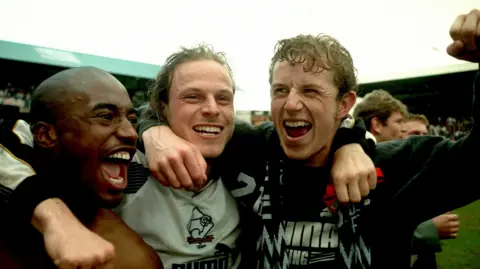
Getty Images/Allsport Former Derby County footballers Dean Sturridge, Robin Van Der Laan and Gary Rowett, all have their arms around each other as they appear to shout in joy on a football pitch. Rowett's fist is raised in triumph.
Sturridge, pictured left with team-mates Robin Van Der Laan and Gary Rowett, spent most of his career at Derby County

Sturridge is the newest ambassador for the gambling support charity Gordon Moody, which first brought the Gamblers Anonymous concept from the US to the UK in 1971.

“I know the feeling of being in addiction, being lonely, being isolated, feeling guilt, feeling shame, feeling embarrassment,” said Sturridge, now 51. “Everybody’s story is unique, but I’m hoping I can inspire just one person.”

Sturridge’s gambling problem began when he was young but became worse when he was faced with the fame and fortune of becoming a professional footballer. He remains Derby County’s record goalscorer in the Premier League.

“My first signing-on fee was a big figure,” he explained. “It was supposed to be going down to buy my first car, a Ford Fiesta Firefly.

“I couldn’t pay for it because I’d lost my signing-on fee within hours of it going into my account.”

Sturridge ended up borrowing money from a team-mate to pay for the car.

“I’d be going from the bookie to the bank… writing cheques out and going into the branch, then withdrawing money.

“By the end of the day you see nil in your account, when at the start of the day it had thousands in it.”

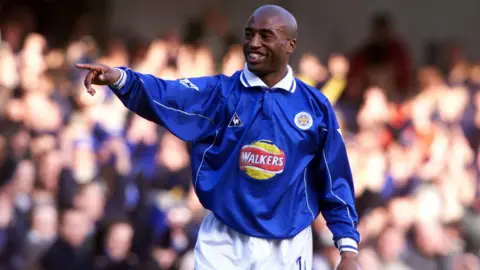
Getty Images/Allsport Footballer Dean Sturridge is wearing a blue Leicester City football shirt, emblazoned with the Walkers logo, and white shorts. He is smiling and pointing at something off-camera. A large out-of-focus crowd is behind him.
Sturridge, pictured playing for Leicester City, is hoping to use his own experiences as a gambling addict to help others

Sturridge acknowledges his salary allowed him to finance his addiction – but he felt the impact in other areas.

“When I’d be with my children [and my wife], some of the time I’d be on my phone putting a bet on,” he remembers. “I wasn’t present in the conversations.

“And that’s the most disappointing thing for me that I have regrets about. But I’m glad now that I’m in recovery, I’m a better person.

“And I have a great opportunity now with my grandson, who’s a year old, that I can show him the new improved Dean.”

Things came to a head when Sturridge’s wife came home early one day and found him watching horse racing and placing bets. Within 24 hours, he was at a Gamblers Anonymous meeting.

“Walking through those doors, it was the catalyst for me understanding myself.

“As a gambler, I think you shut off [your emotions]; you compartmentalise, and I did that as a sportsman as well.

“I was always pushing my emotions to the side and trying to mask them.”

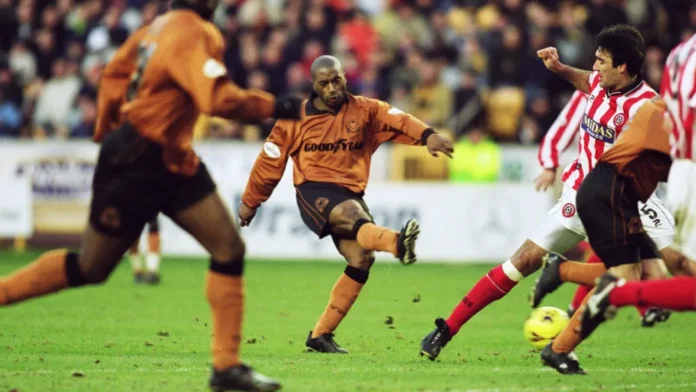
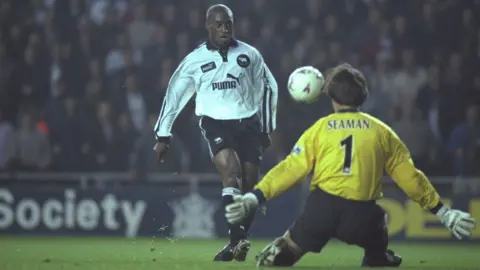
Getty Images/Allsport Footballer Dean Sturridge, wearing a white Derby County shirt emblazoned with "PUMA", is playing a match. He is facing towards the camera and looking at the ball, which is off the ground and between him and goalkeeper David Seaman, identifiable by his name on the back of his yellow shirt. Seaman, wearing goalkeeping gloves, is also watching the ball and is crouched down.
Sturridge now works as a football agent

Now a football agent, Sturridge believes young players are more equipped to deal with the trappings of fame – but stresses that they still need support.

“It’s important… for people like myself, for people in organisations like Gordon Moody, to go into schools and into football clubs and just help them on their journey.”

Female footballers might need ‘different pitch type’ to cut injury risk

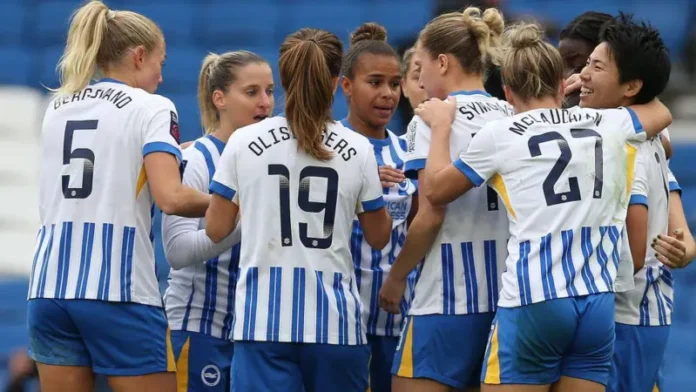
Brighton chief executive Paul Barber believes female footballers might need “a different type of pitch” to reduce the risk of injuries.

Barber says the club are exploring the safety of various surfaces as part of plans for a purpose-built stadium for their Women’s Super League team.

Brighton are finalising an agreement on the chosen location for the ground, which will be close to the men’s team’s Amex Stadium.

Barber says he is “convinced” surfaces built for men’s football can be a contributing factor to injuries sustained by female players and has called for more research.

Brighton are preparing their own research, likely to be in partnership with local universities, to ensure the surface of their new women’s pitch is suitable.

“If pitch surfaces are contributing, is that because we are preparing them for male athletes?” Barber told BBC Sport at a Women In Football event.

“We are starting to pull together a brief. If we’re building this pitch and investing that kind of money, it makes absolute sense to get it right.

“There has been a lot of coverage recently on the quality of surfaces women’s footballers have been asked to play on and for us, the whole basis of building a women’s stadium is to show as much respect to the female athletes as we do to the men’s.

“That should include the quality of surfaces as well. That is from the base point of how they are built to how they are surfaced and prepared on match days.”

Stadium to feature breastfeeding rooms and baby changing areas

Barber says the new stadium will provide facilities catered towards women’s football fans and will be more family-orientated.

Among the facilities will be breastfeeding rooms, baby changing areas and ‘buggy parks’ for prams to be stored.

“In most football stadiums in our country, we don’t have [those facilities] because they were not built for female athletes or an audience that follows women’s football,” said Barber.

Brighton are yet to receive planning permission for the women’s stadium but are “inching towards the final piece of the puzzle”.

“We have a location that we are now finalising with the landowner. It’s complex because of where it is, who owns it and how it’s got to work,” Barber added.

“We’re really excited and it’s something we’re really committed to delivering. We’ve always said we wanted to be as close to the Amex as possible.

“Logistically that means we can share resources there like groundstaff, machinery and equipment for example. It will be closer to the Amex than Brighton’s city centre.”

Relegation, investment and FFP

The Women’s Professional Leagues Limited (WPLL) are currently proposing several changes to the structure of the women’s game with the aim of helping to grow it.

Clubs will be asked to discuss and vote on any proposals at their quarterly shareholders meetings – one possible change would be the temporary scrapping of relegation from the Women’s Super League.

Barber says it is not something Brighton’s board have addressed but he welcomes proposals for change.

“I think it is right that the WPLL are looking at every single avenue to accelerate the growth of the women’s game,” said Barber.

“If that means we need to give owners more security in order to invest faster, we have to consider that. I’m not saying it’s right or wrong – but just that we need to have every argument on the table.”

Barber said WSL clubs “understand” they will endure financial losses for a period of time as they invest in women’s football but added that they must look to make it sustainable.

“The most important thing is that we are investing in the right things to turn around that position in the not-so-distant future because we can’t just run women’s football clubs at a loss forever,” he added.

“That doesn’t make any sense for anyone and isn’t healthy for aspiring future female athletes who want to come into an environment, be paid properly and looked after.

“We have to create a business that is sustainable for the future.”

Asked whether he would welcome Financial Fair Play regulations in the WSL, Barber added: “I think it’s a balance of not constraining investment but at the same time not accelerating losses. It’s so difficult.

“The key thing is learning as many lessons as we can from the men’s game so we don’t lead football clubs into more precautions positions.

“I would expect in the new governance bill, that in time, there will be more parameters around spending [in the WSL].”

‘I won’t let this define me’- Boothroyd on Parkinson’s diagnosis

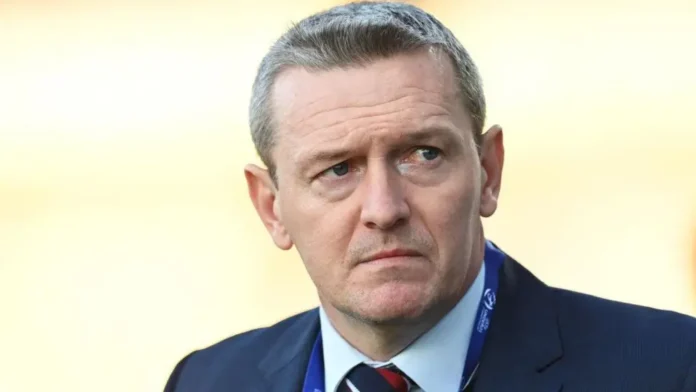
Former Watford manager Aidy Boothroyd says he “doesn’t want pity” after revealing he has Parkinson’s disease and plans to continue coaching.

The 54-year-old says he was diagnosed three years ago following a routine health check seven months after leaving his role as England under-21s manager.

Parkinson’s disease is a progressive neurological disorder affecting the brain and nervous system.

“All I want is to get back on the pitch. I won’t let this define me,” Boothroyd said in a video interview with the League Manager’s Association (LMA).

‘Then came the bombshell’

Boothroyd said he was “shocked” after his diagnosis in November 2021, which followed a ‘fit to manage’ health check organised by the LMA.

He was referred a neurologist but was still expecting to get a clean bill of health.

“I thought everything was fine and then came the bombshell,” he said.

“I remember it well. It was raining and pouring. It was an awful day. And the guy [neurologist] said to me, this is a picture of a normal brain, and this is the picture of your brain. You can see the difference. You have Parkinson’s. I’m very sorry.

“I didn’t know what to do, what to say. I didn’t really know what Parkinson’s was. I just kept thinking about my kids. I wasn’t sure what was next. I was shocked.”

Boothroyd only shared news of his diagnosis with a handful of people, saying he “wasn’t ready” to announce it more widely.

‘Hopefully I can get a job with a purpose’

A person with Parkinson’s disease can experience a wide range of physical and psychological symptoms.

Boothroyd says his main symptom is facial masking, which impacts the facial muscles and makes it hard for others to interpret your mood.

“My face in my opinion could be outwardly smiling but actually it’s not doing that at all,” he said.

“I’ve had so many people say ‘you’re not your normal self, you’re so quiet’.

“Nothing could be further from the truth. I’m enthusiastic, I’m excited. I still enjoy the job and working with people, but that was a tough one to take.”

Despite the diagnosis Boothroyd was keen to continue working, having short coaching spells with Sheffield United and Northern Ireland before a year managing Indian side Jamshedpur.

He says going public with his disease brings a sense of relief, but he does not want it to prevent him from doing what he loves.

“I don’t want to wallow. I don’t want pity,” he said. “I’ll continue, I’ll keep fit. I’ll do whatever I have got to do in the gym and hopefully, I can get a job with a purpose.

“But for now it’s about getting this off my chest and seeing if I can bring more awareness to this condition.”

‘Aidy’s attitude has been an inspiration’

Boothroyd managed Watford from 2005-2008, winning promotion to the Premier League in 2006 and reaching an FA Cup semi-final the following season.

He also managed Colchester United, Coventry City, Northampton Town and from 2014-2021 was in charge of various England’s youth teams.

LMA chief executive Richard Bevan said: “Aidy has displayed incredible positivity, resolve and determination since his Parkinson’s diagnosis three years ago.

“We care deeply for all our members, and Aidy’s attitude since his diagnosis has been an inspiration to our entire team as we continue to support him and his family throughout this unexpected and challenging time.”

Parkinson’s disease, external affects nearly 10 million people worldwide and more than 150,000 in the UK.

There is no cure and no treatment to slow or stop the disease, although therapies exist to help manage symptoms.

Which is the biggest football club in Britain?

It’s the age-old debate – which is the biggest football club in Britain?

Is it the one with the most trophies? The one with the highest revenue, or the greatest social media following? The biggest stadium, or the best average league position? Or perhaps it’s a happy medium of all those things.

Most importantly, it’s a debate nobody can win, one we all have a different take on and will all be offended by no matter how convincing someone’s argument may be.

To bring the most unserious of serious topics to life, BBC Sport recently asked about 250 of its staff across the UK to take on the unanswerable question.

There were a lot of arguments. And a lot of unhappy people.

But at the end we averaged out the lists and came up with a top 10 below.

Agree with it? Of course you don’t.

No doubt many of you will feel enraged at where your club has ended up. So please, all we ask is that you remember a) this is an average and there were lots of different versions b) we’re not saying we’re right c) you can leave your top 10 below and d) it’s just a bit of fun.

BBC Sport’s top 10 British football clubs

  1. Manchester United
  2. Liverpool
  3. Arsenal
  4. Manchester City
  5. Celtic
  6. Chelsea
  7. Tottenham Hotspur
  8. Rangers
  9. Aston Villa
  10. Newcastle United

In an attempt to be more scientific, we have also taken a look at certain factors in isolation to see which clubs lead the way.

Which club has won most major trophies?

Traditionally, clubs are deemed big if they win things.

When it comes to major trophies, Glasgow giants Celtic and Rangers lead the way with significantly more silverware than any side in the English game.

Liverpool are the most successful club in England, with Manchester United a close second – and the Reds look likely to equal United’s record 20 top-flight titles this season.

They also have more European trophies than any other English side while Arsenal have the leading FA Cup tally.

Manchester City’s recent dominance has shot them up the rankings, winning six of the past seven Premier League titles and securing a historic Treble in 2022-23.

Of course, trophies are subjective and it might be that you think European titles are bigger than domestic ones or vice versa.

Which club has biggest social media following?

Some of the more traditional among you may disregard social media followings as a bit of a gimmick.

But it does give us a good indication of just how big a reach clubs have not just in this country but globally, as well as their ability to engage fans.

Manchester United have the highest combined social media following across the four major platforms, while some clubs fare better on individual platforms.

Manchester City have a lower combined social following than their city rivals but fare better on Tik Tok while Tottenham are sixth overall but have the best Tik Tok following of any club.

The traditional ‘top six’ occupy the top spots but Leicester City’s title win in 2015-16 boosted their profile globally and puts them seventh in the ranking.

Which club generates most revenue?

Is it really all about the money? If you think it is, Manchester City are the standout candidate.

According to Deloitte’s Money League study, City earned the most revenue in 2023-24 of any English club with £708m, second only in the world to Spanish giants Real Madrid.

Nine Premier League clubs featured in the world’s top 20 with a further five in the top 30 as Brighton moved up the rankings after competing in the Europa League for the first time.

Which club has biggest stadium?

If big club means big stadium to you then it’s Manchester United who sit top of the pile.

Wembley is currently the largest, with a 90,000 capacity but Old Trafford is the biggest club stadium and United have also also announced plans to build an arena bigger than Wembley – a new £2bn 100,000-seater ground close to it.

Everton’s new Bramley Moore Dock stadium will be ranked seventh in the top 10 once it is in use from next season with a capacity of 52,888 while Manchester City are undergoing an expansion that will increase Etihad Stadium’s capacity to 61,474.

Though Queen’s Park play their home matches at Hampden Park, which has a capacity in excess of the Stadium of Light, the ground is not fully open for Scottish Championship matches, with an average crowd this season of less than 2,000.

Which club has highest average Premier League position of past 10 years?

When it comes to football, consistency is key.

And that’s exactly what Manchester City have been over the past 10 years. Their six Premier League titles – including a record four in a row – means their average league position sits at an impressive 1.7.

As for the chasing pack, there’s barely anything to separate Liverpool, Manchester United, Arsenal, Tottenham and Chelsea in their respective average finishing positions.

West Ham, Everton and Crystal Palace are in having consistently finished mid-table over the years.

Having spent one year in the Championship, many might be surprised to see Leicester City inside the top 10. They have their incredible 2015-16 title victory partly to thank for that.

Celtic and Rangers have not been included in the above table because they do not play in the Premier League but Celtic have finished top of the Scottish Premiership nine out of the past 10 seasons.

In 2020-21, they finished second to Rangers, who were runners-up on five occasions.

Ruthless Lyon beat Bayern 4-1 to reach women’s Champions League semis

Lyon comfortably beat Bayern Munich to set up a Women’s Champions League semi-final tie with Arsenal.

Eight-time winners Lyon went into Wednesday’s game with a 2-0 lead from the first leg but missed a number of early chances and went behind on the night at Groupama Stadium.

Klara Buhl opened the scoring for the visitors, finding the bottom corner with a low drive across goal which went in off the post.

But Joe Montemurro’s side made amends for their wasted efforts and Melchie Dumornay restored their two-goal lead in the tie just 27 seconds after the break, heading past Maria Luisa Grohs from Kadidiatou Diani’s cross.

Giulia Gwinn was punished for a heavy touch on the edge of her own penalty area as Diani pounced to sidefoot a first-time finish and put the French side ahead on the night.

Diani then turned provider again as her low drive across goal teed up Tabitha Chawinga to fire home from close range.

Bayern rarely threatened again and Lyon saw out the game with a late Ada Hegerberg strike as they reached the last four of the competition for a 14th time.

Montemurro will face his former side Arsenal in the last four after the Gunners completed a brilliant two-goal comeback against Real Madrid.

Semi-final ties will be played on 19-20 and 26-27 April.

•

Create a free account, or log in.

Gain access to read this content, plus limited free content.

Yes! I would like to receive new content and updates.

Sponsored Ad

Ad 1
Ad 2
Ad 3
Ad 4
Ad 5
Ad 6